
Morphological characteristics and toxic properties of European wild ginger seed
1 min read
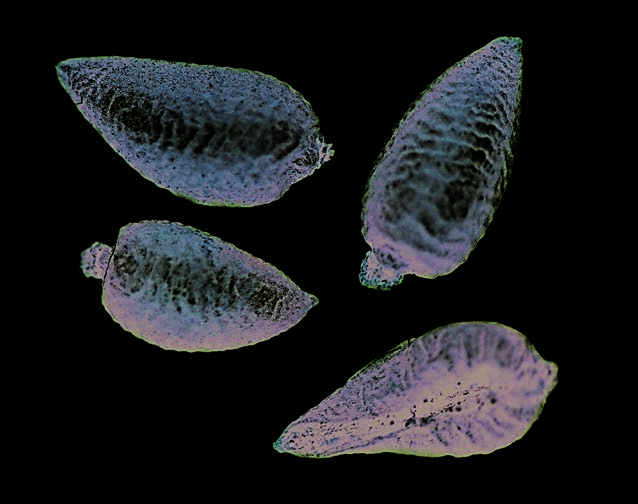
Asarum europaeum is a poisonous plant found in the European part of Russia and Western Siberia. For an agronomist, it poses a threat as a dangerous weed in hayfields and pastures. The presence of this weed in green forage or hay leads to serious livestock poisoning. Therefore, it is important to recognize its seeds in time when checking the purity of seed material.
Seed morphology and toxicity of Asarum
The plant belongs to the Aristolochiaceae Juss. family, and its fruits are capsules. Asarum seeds have a characteristic pear-like shape: they are convex on one side and concave on the other, and are also equipped with a seed appendage. The surface of the seeds is dark brown with distinct transverse grooving.
- Seed length — 34 mm
- Seed width — 22,5 mm
- Seed thickness — 22,5 mm
The entire plant is poisonous. It contains essential oil, which includes asarone, the alkaloid asarine, and glycosides. In cases of poisoning, the toxins cause myocardial excitation, acute inflammation of the gastrointestinal tract, and an increase in blood pressure.
Read next
Seeds and varieties For agronomists
Aristolochia clematitis is a dangerous poisonous weed of gardens and vegetable plots.
Seeds and varieties For agronomists
Characteristics of fruitlets and harmfulness of the weed Heliotropium europaeum
Seeds and varieties For agronomists