
Features of forming and pruning tree-type and bush-type cherry cultivars
7 min read
Cherry trees, more than any other pome fruit or stone fruit species, require pruning. However, only healthy, vigorous trees with good growth potential should be pruned. When pruning weak or diseased trees, wounds heal poorly, and gummosis may occur. Consequently, before pruning stone fruits, it is essential to first improve the overall care of the plantings.
All cherry cultivars are divided into two groups: tree-like and bush-like. The classification is based not on the shape of the canopy, as plants in both groups can be trained into either a bush or a tree form, but on the nature of growth and fruiting.
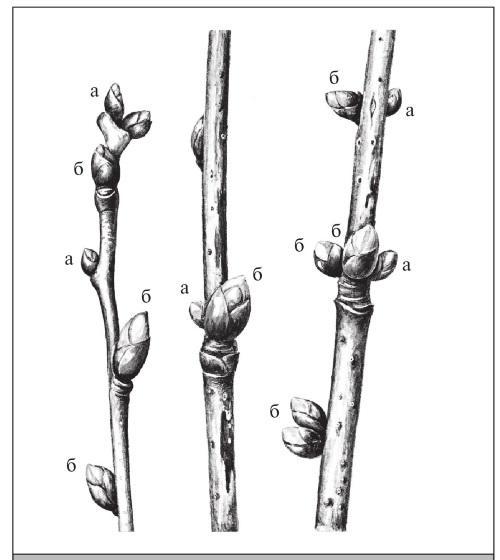
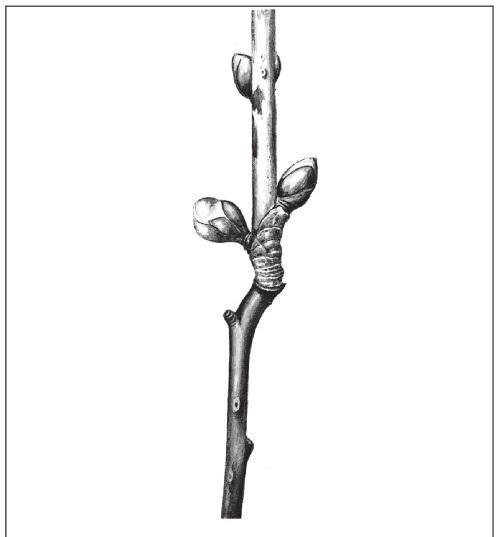
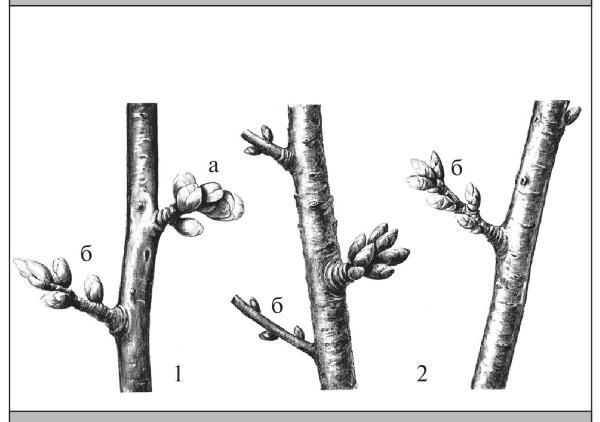
Trees of bush-like cultivars (Vladimirskaya, Molodezhnaya, Lyubskaya, Shirpotreb chernaya, Plodorodnaya Michurina, etc.) fruit mainly on elongated branches formed from terminal buds.
Structural features of bush-like cultivar branches:
- On branches shorter than 20 cm, all buds are usually fruit buds, except for the terminal one. After fruiting, such branches become bare.
- On branches 30–40 cm long, some lateral buds are arranged in groups of 2–3, where one bud may be a growth bud and the others are floral. Such branches also have single growth buds.
- On very vigorous branches (50–60 cm or more), almost all buds are vegetative.
Fruiting on spurs (bouketnaya vetochka) is uncharacteristic for bush-like cherry cultivars. In such cherry cultivars, the branches are thin, very long, and bare due to the gradual shifting of the growth and fruiting zone to the periphery.
In tree-like cherries (Zhukovskaya, Griot moskovskiy, etc.), the majority of the harvest is located on spurs, which, along with producing fruit, form a short shoot from the terminal growth bud. With good care and proper pruning, stronger shoots can develop from terminal buds, which later turn into strong branches.
Dependence of buds on branch length in tree-like cherries:
| Branch type | Bud condition |
| Weak branches | Almost all lateral buds are fruit buds (they become bare after fruiting) |
| Very strong branches (40–50 cm) | Almost all buds are growth buds |
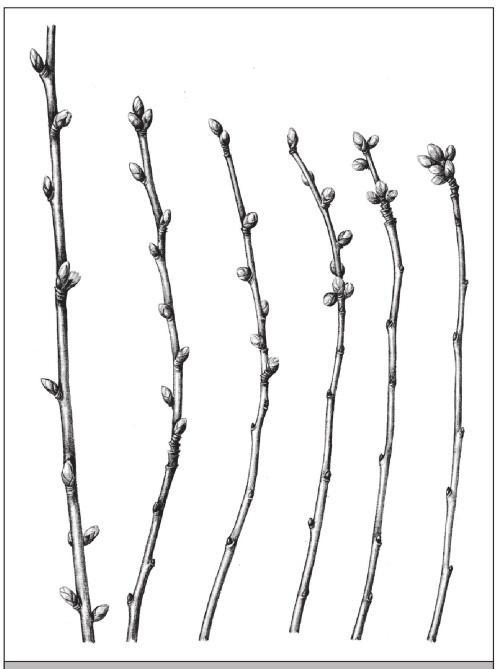
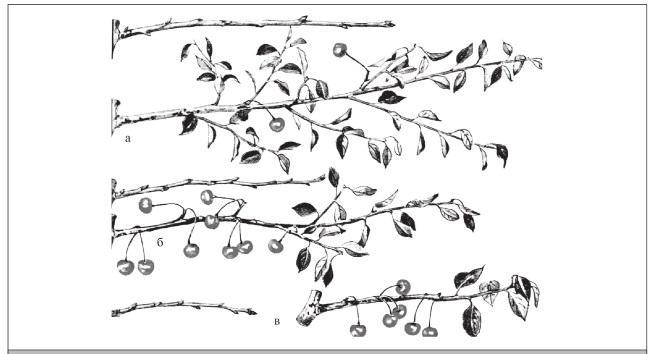
When growth weakens, mainly flower buds are initiated on the shoots. Spurs hardly form. Tree-like cherries begin to fruit like bush-like ones.
Sometimes, steppe cherry cultivars (e.g., Polevka) are classified into a separate group. They enter fruiting early and, due to strong shoot-forming ability, are prone to overcrowding. They fruit both on spurs and on one-year-old branches, so yields are usually high.
For trees of all cultivar groups, shoots of medium strength (within 30–40 cm) are most valuable, as the fruit buds forming on them provide the current year's harvest, while growth buds provide the future harvest.
Based on the onset of fruiting, the following cherry groups are distinguished:
- early-bearing (Lyubskaya, Sklyanka rozovaya) — enter fruiting in the third to fourth year;
- mid-bearing (Vladimirskaya, Shubinka, Griot moskovskiy) — begin to produce yields from the fourth or fifth year;
- late-bearing — fruit from the fifth or sixth year after planting in a permanent location.
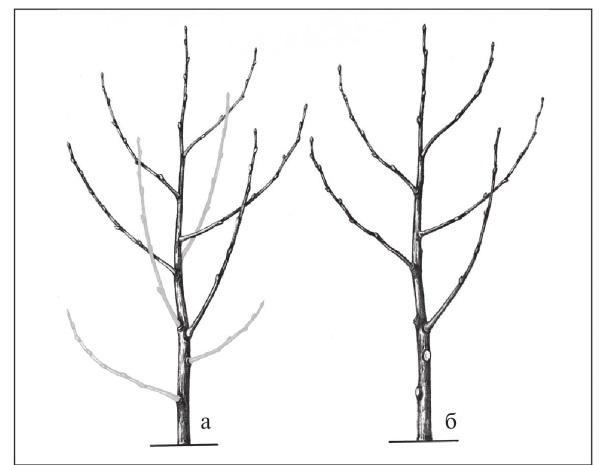
How to properly establish the canopy framework of a young cherry tree
The life cycle of a cherry tree is 3–4 times shorter than that of an apple tree. Any mistakes made during canopy establishment in the first years will quickly affect the productivity of the orchard; therefore, forming a strong tree skeleton is the primary task of the agronomist at the start.
Cherry grows and develops significantly faster than pome fruit crops. The main task in the first years after planting is to ensure the uniform development of skeletal branches and prevent canopy overcrowding. To do this, it is necessary to remove all weak and unproductive shoots in time. Proper training will allow for stable yields throughout the entire operational period of the orchard.
- Trunk height — 25–40 cm
- Interval between branches — 8–15 cm
- Leader extension — 15–20 cm
- Optimal tree height — 2–2.5 m
In the first year after planting, establish the basis of the canopy using a modified central leader system. To do this, leave from 3 to 5 (or up to 7, if the nursery plant has developed well) strong branches. Select shoots that do not grow from adjacent buds but are evenly distributed along the trunk. The central leader must necessarily rise above the ends of the skeletal branches.
Carry out the first post-planting pruning strictly in early spring before the start of sap flow. If you are late for the beginning of the growing season, postpone shortening the branches until next year. In the current season, limit yourself to light thinning if the canopy is excessively dense.
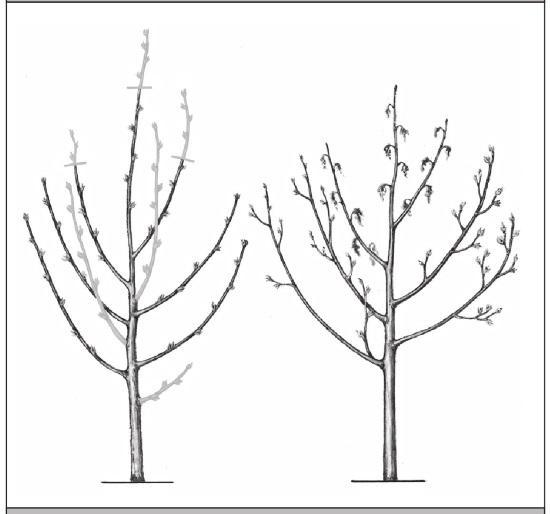
Before the tree reaches the fruiting stage, pruning is aimed exclusively at shaping the canopy. Buds on young cherries awaken easily, and shoots grow actively, which quickly leads to densification. All branches growing into the canopy and interfering with other shoots should be cut off at the branch collar. At the same time, continue to establish new scaffold branches.
| Cherry type | Number of main branches during formation |
|---|---|
| Tree-like | 10 |
| Bush-like | 15 |
Leave a surplus for the number of branches indicated in the table, as some of them will have to be removed later during thinning. Establish secondary branches only in orchards where manual harvesting is planned. Maintain a distance of at least 40 cm between them. Lateral branches of the second and subsequent orders should grow freely, but any shoots directed into the canopy must be cut out.
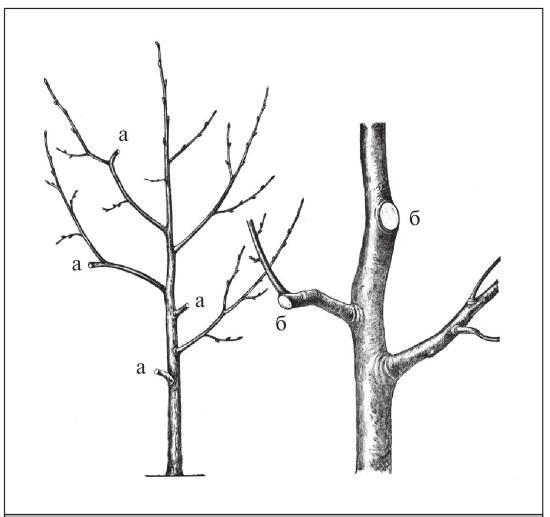
During the formation of the tree scaffold, avoid shortening branches. This operation is allowed only for subordinating shoots, leveling their growth vigor, or preventing narrow crotches in tree-like cultivars. Excessive shortening will provoke rapid growth of lateral ramifications. This will require even stronger and more labor-intensive pruning in the next season.
Specifics of pruning bush-like and tree-like cultivars
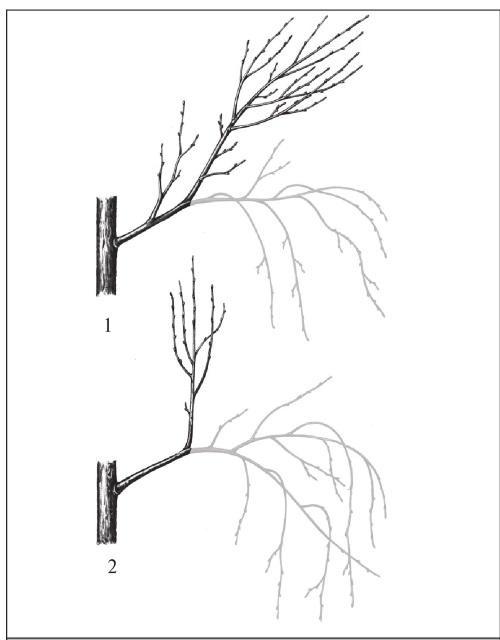
When caring for bush-like cherries, it is important to maintain an annual shoot growth of 30–40 cm and ensure good lighting inside the canopy. As soon as growth weakens, branching ceases, and the branches quickly become bare. If the length of one-year-old shoots drops to 15–20 cm, the trees require light rejuvenation. For this, the first and second-order branches are cut back to the first strong ramification.
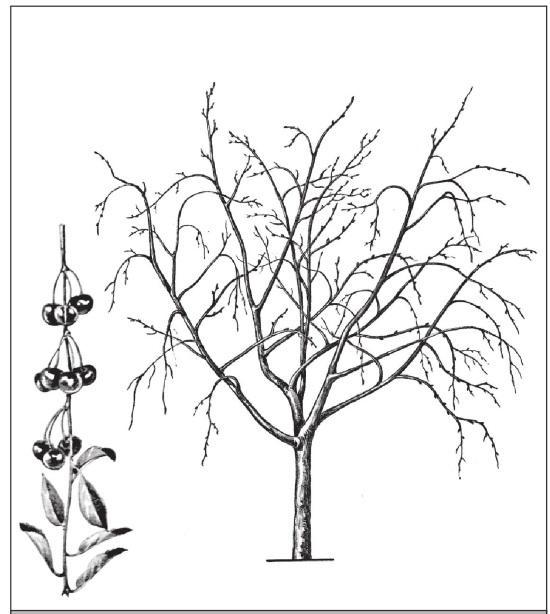
For neglected bush-like cherry plantings, a phased restoration scheme is applied. It allows returning productivity to an aging orchard without a sharp harvest loss. The work is carried out in strict sequence:
- Perform thorough thinning of the canopy.
- Carry out rejuvenating pruning of the branches.
Intensive thinning does not reduce the overall cherry yield in the orchard. During this operation, mainly long but already bare branches that do not bear fruit buds are removed. And the water sprouts appearing after such pruning can be used to form a new canopy and restore the tree's productivity.
In tree-like cherry cultivars, the pruning technology has its own features. When forming a young canopy, be sure to shorten shoots longer than 50–60 cm. If this is not done, vegetative buds on them will only produce weak bouquet branches, and the branch itself will quickly become bare. For well-growing, fruit-bearing trees, regular thinning is sufficient.
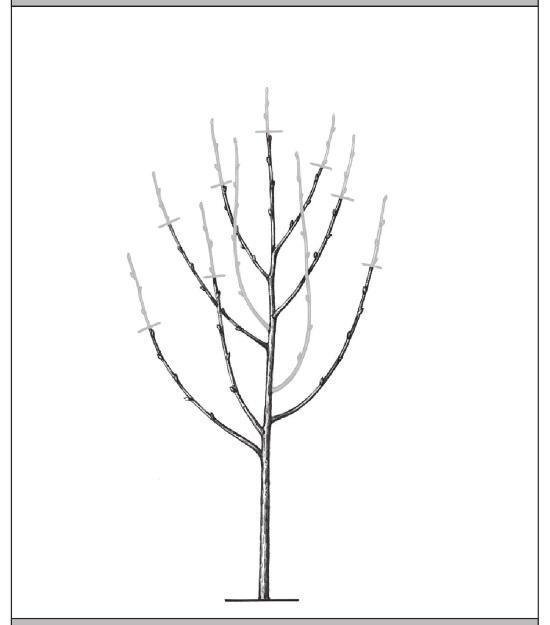
When the annual growth in tree-like cultivars decreases to 20–25 cm, rejuvenation is carried out using the same method as for bush-like ones. However, tree-like cherries react to this operation differently. Bouquet branches sprout actively on them, and strong water sprouts form on the scaffold branches. These are purposefully used to replace the old branches being removed. Before starting rejuvenation, the canopy must also be thoroughly thinned.
Tree-like cherry cultivars are extremely sensitive to a lack of light, so regular canopy thinning is a mandatory practice in the orchard. Shading negatively affects productivity, although slight densification at the very periphery of the canopy is permissible. When pruning, it is important to subordinate branches and prevent the formation of narrow crotches, which over time can lead to breakage under the weight of the harvest.
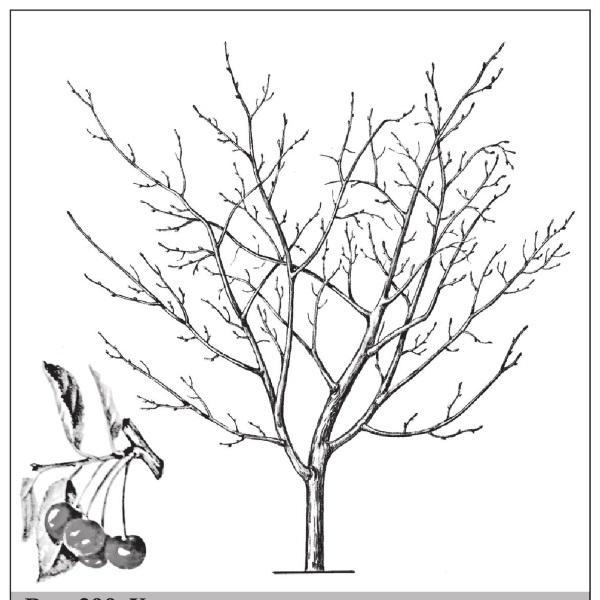
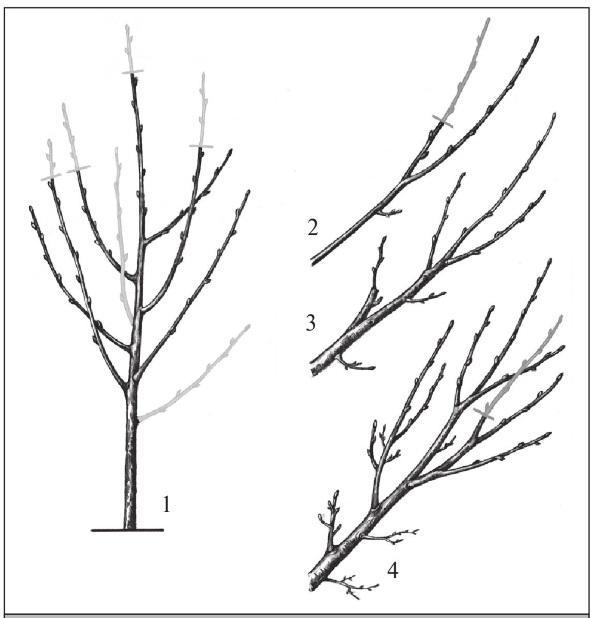
By approximately 15 years of age, cherry trees begin to age, which provokes active growth of root suckers. In own-rooted cultivars, these shoots fully retain all the properties of the mother plant, so they are used to rejuvenate the orchard and form a sparse bush. In grafted trees, however, all root suckers must be removed quickly and completely, as they do not inherit the qualities of the target cultivar.
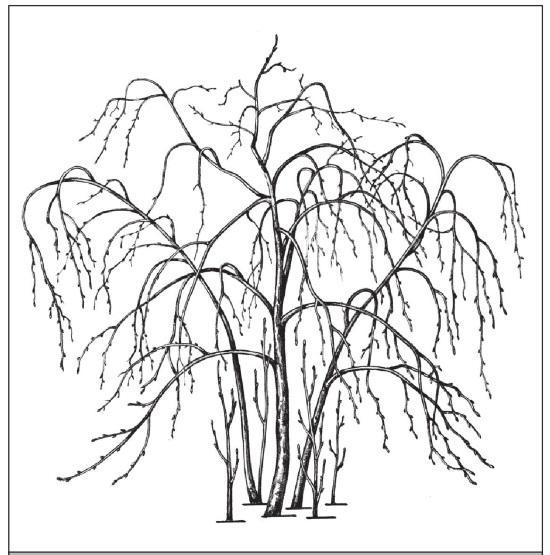
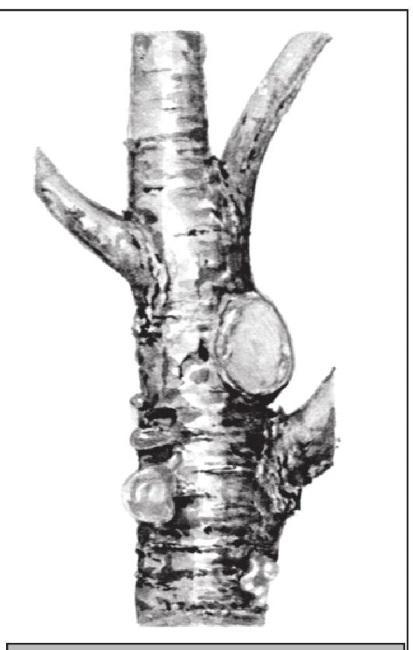
Remove suckers from grafted cherry trees completely. Remember that pruning can trigger severe gummosis. Usually, this problem occurs due to poor overall orchard maintenance or on weakened trees.
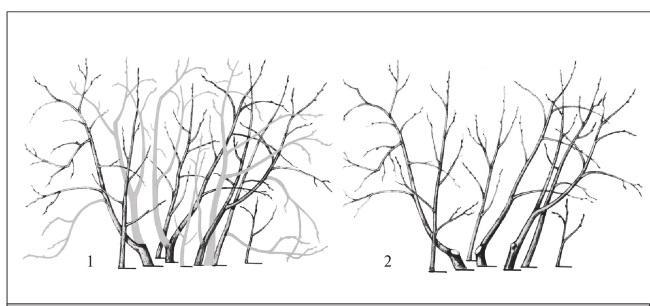
To rejuvenate a self-rooted cherry bush using young suckers, follow a strict sequence of operations. In this process, the canopy is formed as a single mass, without focusing on which specific branch the branching originates from. The result is a productive bush with branches of two or three different ages.
- Leave the strongest and best-positioned sucker branches to form new axes.
- Completely remove old, drying branches.
- Using pruning, clear space within the canopy for the unimpeded growth of new branches.
- Cut out suckers located far from the base of the bush to avoid hindering inter-row tillage and tree care.
- Age of onset of senescence — 15 years
- Canopy height — 2.5 m
Canopy formation and mechanized pruning
For cherries, the best canopy shapes are the delayed open-center, the modified leader, and the central leader. In commercial orchards, mechanized pruning is initiated when trees reach full fruiting. The technology for contour machine pruning here is similar to that applied in apple plantations. Regular and timely pruning ensures consistently high yields and significantly increases the frost resistance of fruit trees.
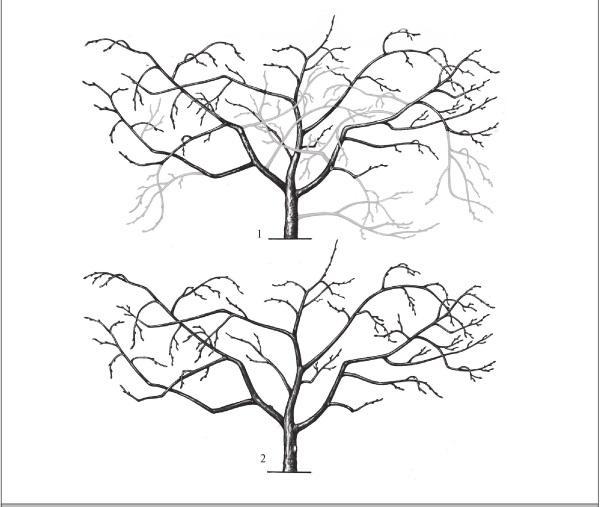
Contour pruning does not have a negative impact on the growth and fruiting of healthy stands. However, the machine pass must be accompanied by manual touch-ups. During manual correction, the agronomist must open the center of the canopy, thin out branches, and perform thinning of regenerative shoots.
Read next
Pruning and training For gardeners
Training and pruning of plum trees considering the type of fruiting and cultivar
Pruning and training For gardeners
Specifics of pruning and forming red and white currant bushes
Pruning and training For gardeners