
Housing and feeding technology for pedigree poultry for the production of hatching eggs
9 min read
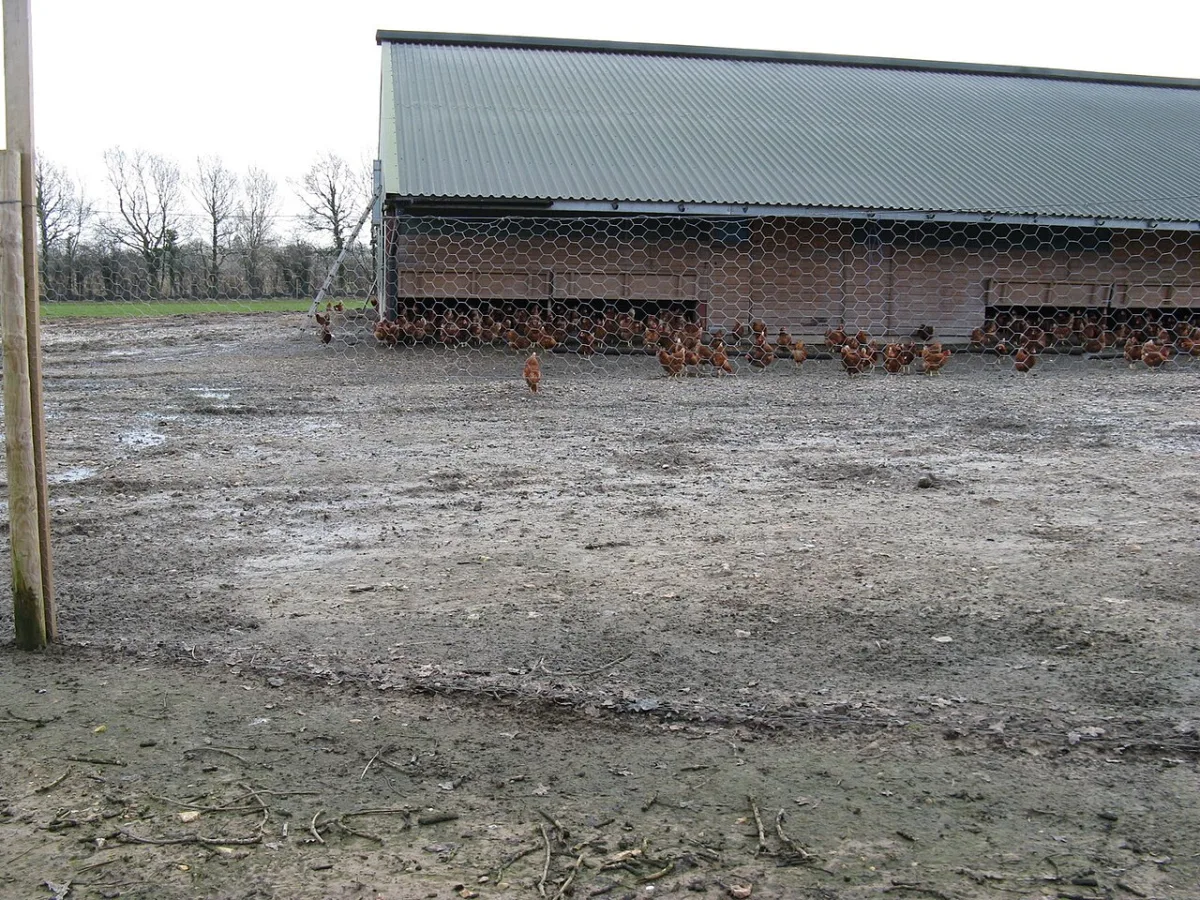
Parent stock geese are kept in groups of 2000 in poultry houses on litter at a density of 1 goose per 1 m² of floor area. The facility is divided into sections, with 100—200 birds placed in each. The air temperature in the poultry house should be about 10—15°C, and the duration of daylight during intensive egg laying is 14 hours. Throughout the year, geese are released into outdoor runs.
For the rearing of young birds and the housing of adult poultry, the optimal relative humidity of the air in the facilities is 60—70% for chickens and turkeys and 65—80% for ducks and geese. The premises are illuminated using lamps at a rate of 3—5 W per 1 m² of floor area.
In the production technology of high-quality hatching eggs, a special role belongs to the complete feeding of breeding poultry. Young and adult birds of highly productive lines are very demanding regarding the feeding level and the quality of feed. During the period of growth, development, and subsequent productivity, the level of metabolic processes changes in the bird's organism. If the physiological needs of the organism for nutrients are not fully met, productivity decreases and the quality of products deteriorates, while an excess leads to the bird’s body weight exceeding the norm and fat deposition.
Breeding poultry of different species are fed mainly with high-quality dry compound feeds, balanced in all necessary nutrients, especially amino acids, vitamins, macro- and microelements, taking into account their species, age, productivity, housing method, and purpose. Scientifically based feeding of breeding poultry makes it possible to improve the growth, development, and viability of young birds, as well as to increase the egg production of adult birds and obtain high-quality hatching eggs.
The feeding of replacement young birds is monitored by weighing the birds at different stages of rearing and checking the compliance of their live weight with zootechnical standards, while for adult birds, these criteria include the vitamin content in hatching eggs, embryonic viability, and egg production. In addition, the quality of compound feeds is periodically checked in a zootechnical laboratory. Breeding chicks and chickens of egg-laying lines are fed according to the same standards as commercial ones (p. 231), but compound feeds for breeding poultry are enriched with a larger complex of vitamins, amino acids, and mineral elements.
A critical period in the feeding of breeding young egg-laying chickens is the age over 140 days at the onset of egg laying. At this time, the compound feeds previously fed to the birds no longer meet the increased need of pullets for nutrients. Therefore, they begin to be accustomed to the compound feed intended for adult hens by gradually increasing its ration, and the birds are completely switched to it when egg production reaches 50%. For 1.5 months before the start of egg laying, in order not to slow down the growth of the pullets, no more than 1.2% of calcium is included in the complete compound feed. In addition to physiological characteristics of the organism, the shell strength is significantly influenced by the amount and ratio of calcium, phosphorus, and manganese in the diet, provided that the bird has a necessary supply of vitamin D. The calcium-to-phosphorus ratio for laying hens is 3.3—3.9:1.
For feeding replacement chicks of meat lines, three compound feed recipes are used depending on the age. In the first month of life, chicks receive compound feed with a high energy value, 100 g of which contains 1214 kJ of metabolizable energy and 20% crude protein. At this age, technical fat is not fed. In compound feeds for the second and third age stages, the level of energy value and crude protein is reduced, while the fiber and calcium content is increased to 7 and 1.3%, respectively, after 3 months of age. Young birds are fed specifically after 2.5 months to prevent obesity and the onset of early sexual maturity.
To this end, the nutritional value of rations is reduced or feeding is restricted. Adult hens of meat lines are given two types of compound feed depending on their age and productivity, which differ in nutritional value. Granulated compound feeds are usually not used, as they contribute to an increase in the bird's live weight and fat deposition. During the egg-laying period, meat-egg and meat-type chickens are fed 135—160 g of dry feed mixture per day; if the birds become obese, feeding is restricted. Breeding turkey poults up to 120 days, ducklings up to 50 days, and goslings up to 60 days are given the same compound feeds used for rearing meat-type young birds of these species.
Before the start of egg laying, replacement young turkeys, ducks, and geese, just like chickens, are fed compound feeds with reduced nutritional value but higher fiber content. The transition from using compound feeds for one age stage to another is carried out gradually. When keeping breeding turkeys and ducks, combined feeding can also be used. Ducks are characterized by a fast growth rate, good appetite, and high egg production; therefore, they are fed abundantly.
Compared to other poultry, geese consume and digest large amounts of grass and grass meal well — up to 25–30% of their total feed ration. The best results in rearing breeding young stock and keeping adult geese are achieved by using granulated compound feed. Tables 24 and 25 provide recipes for complete compound feeds.
Collection, storage, and transportation of hatching eggs. When producing hatching eggs, special attention is paid to the cleanliness of the nests for the birds, containers, packaging material, and transport vehicles. All operations related to egg collection, sorting, storage, and transport are carried out in such a way as not to impair the biological quality of the poultry hatching eggs.
In intensive poultry farming, egg collection is carried out depending on their purpose, bird species, level of selection, and housing conditions. Egg-laying in layers of different poultry species begins and continues at different times of the day. Chickens and turkeys mainly lay eggs in the morning and afternoon, and the majority of females finish laying by 12:00. More than 60% of geese lay eggs before 9:00. Ducks lay eggs from 2:00 to 10:00. Accordingly, duck eggs are collected starting from 6:00–7:00, goose eggs in the first half of the day, and eggs from other species at 7:00–8:00 and throughout the day.
Hatching eggs from chickens and turkeys are collected in special containers at least once every two to three hours, and from ducks and geese every hour. Hatching eggs are collected particularly often from poultry in breeding houses with control nests, as the birds cannot leave them on their own. Eggs are collected every half hour. Egg collection in breeding and testing poultry houses is carried out manually, while belt conveyors are used in multiplier poultry houses. During egg collection, it is ensured that the rubber mats and the conveyor belt are clean.
Table 24. Recipes of complete compound feeds for breeding young stock and chickens of meat lines (%)
Bird age (days) Ingredients 1-30 | 190 | 91209 | 210—330 |931 ster
Corn 35 25 — 21.5 20 Oat flour — — 6 6 — Wheat 20 20 30 35 20 Millet — — 6 — — Barley 12* 25.5 34 8.5 34 Peas 2 1.5 — — — Wheat bran — 2.7 t — — Sunflower meal 14.5 9 2 8 2 Sunflower cake — — 2.5 — 1.9 Hydrolysis yeast 3 3 — 3 3 Meat and bone meal 7 5 1 — — Fish meal 1 1 — 5 3 Clover meal 4 5.1 7 6.7 9 Bone meal ” — 1 27 1.4 1.7 Shell 1 — — 1 4.9 5.3 Chalk 1.5 1.2 — — ° — Salt — — 0.1 — 0.1
Total 100 100 100 100 100 100 g of compound feed contains (%); metabolic energy, kJ 1227 1156 1063 1122 1089 crude protein 20.0 17.5 13.5 16.0 14.0 crude fiber 5.0 5.6 1.0 5.5 538 calcium 1.2 1.2 1.3 2.8 2.8 phosphorus 0.8 0.8 0.8 0.8 0.8 sodium 0.3 0.2 0.2 0.3 0.3 lysine 0.84 0.63 0.47 0.68 0.62 methionine-- cystine 0.68 0.45 0.41 0.58 0.46 tryptophan 0.28 0.24 0.19 0.20 0.14 ME-to-protein ratio (kJ: crude protein) 613 661 787 101 777
On the day of collection, hatching eggs are delivered to the egg storage room. Chicken eggs are sorted by weight on corresponding machines. Hatching eggs within one bird species are grouped by nests, lines, breeds, and poultry houses, and incubated in separate batches. Before being placed in the incubator, eggs are stored in a storage room equipped with a cooling system and forced ventilation. The air temperature in the storage room for hatching eggs should be 8–12 °C, and the relative humidity 75–80%. Without preliminary heating, chicken and turkey eggs are stored for no more than 5–6 days, duck eggs for 2–3 days, and goose eggs for 5–7 days.
Table 25. Recipes of complete compound feeds for breeding young stock and adult turkeys, ducks, and geese (%) turkeys ducks geese Ingredients 18 and 151 and 181 and 121—180} older 56— 150 older 61— 180 older Corn 18 43 12 33 NI 9.7 Oats 5 7 30 — 10 37 Wheat 8 — — 8 — — Millet 10 1.5 13 — 28 15 Barley 37 10 17 20 19 10 Peas — 7 —_ — — — Wheat bran — — 10 10 10 9.8 Sunflower meal — — 4.3 — 4.3 4.3 Sunflower cake 3 5 — 5 — — Hydrolysis yeast 2 4 — 3 — — Meat and bone meal 2 1 — 2 — — Fish meal 3 5 3.6 4 4 831 Clover meal 9 — 7 — 3 7 Alfalfa meal — 5 — 10 — — Bone meal 1.5 — 1 0.3 1 1.2 Shell 1.5 1 2.1 4.7 3.7 2.3 Chalk — 3.5 — — — — Phosphorin — 1 — — — — Total 100 100 100 100 100 100 100 g of compound feed contains (%): metabolic energy, kJ | 1130 1168 1055 1105 1084 1043 crude protein 14.6 16.0 14.0 16.0 13.9 14.0 crude fiber 6.8 5.2 8.8 6.0 71.5 9.3 calcium 1.5 25 1.5 2.5 2.0 1.6 phosphorus 0.8 0.8 0.8 0.8 0.8 0.8 sodium 0.2 0.3 0.2 0.3 0.2 0.2 lysine 0.64 0.79 0.56 0.76 0.53 0.55 methionine-- cystine 0.48 0.55 0.46 0.54 0.47 0.47 tryptophan 0.19 0.17 0.18 0.20 0.17 0.21 ME-to-protein ratio (kJ: crude protein) 779 730 754 691 780 745
Read next
Poultry For agronomists
Organization of poultry feeding in industrial and farm holdings
Poultry For agronomists
Technology of hatching egg production and management systems for breeding poultry
Poultry For agronomists