
Methods and efficiency factors of soil disinfection in agricultural technologies
4 min read
Methods and objectives of soil disinfection
To eliminate soil-borne pathogens, thermal or chemical soil disinfection is applied. This process is called sterilization, but strictly speaking, this is not an entirely accurate term, since even with the most effective treatment, some living organisms remain in the soil, i.e., it does not become sterile. Obviously, it would be more correct to speak of partial sterilization or pasteurization; these terms are usually applied to characterize the selective or partial destruction of microorganisms in a specific environment.
The goal of soil disinfection is to destroy all pathogens, pests, and weed seeds while preserving populations of beneficial microorganisms, in particular nitrifying bacteria and their antagonists. Since this process is most often called disinfection, we will adhere to this term.
Factors of soil tillage efficiency
The efficiency of soil tillage with steam or a chemical depends on a number of factors:
- soil type and its preparation for treatment;
- method of using steam or chemical;
- soil temperature and its moisture content at the start of disinfection;
- drainage, type of pathogen or pest;
- inoculum concentration, rate of pathogen re-establishment in the soil;
- duration of the growing season of a given crop on the treated soil.
If a pathogen has penetrated deep into the tissues of plant residues, for example, into pieces of woody roots of tomatoes, it will likely be possible to destroy it completely only with a very long exposure of the plant material to a fumigant. Removing large fragments of plant material when preparing the soil for disinfection increases its effectiveness.
Similarly, in soils where plant roots grow at least a meter deep, steam or a fumigant is unlikely to penetrate to a depth sufficient to completely suppress the inoculum, and the roots of the next crop, gradually reaching the lower layers of the soil, will also turn out to be infected. However, at great depths, the inoculum concentration is rarely high, and the degree of infection will be significant only in cases of soil infestation with vascular wilt pathogens.
Proper conduct of soil disinfection is accompanied by a decrease in the infection load to a level at which the pathogen will not cause economic damage to the crop. The efficiency of the treatment largely depends on the method of its application, although the results are quite often determined by the operator's experience as well.
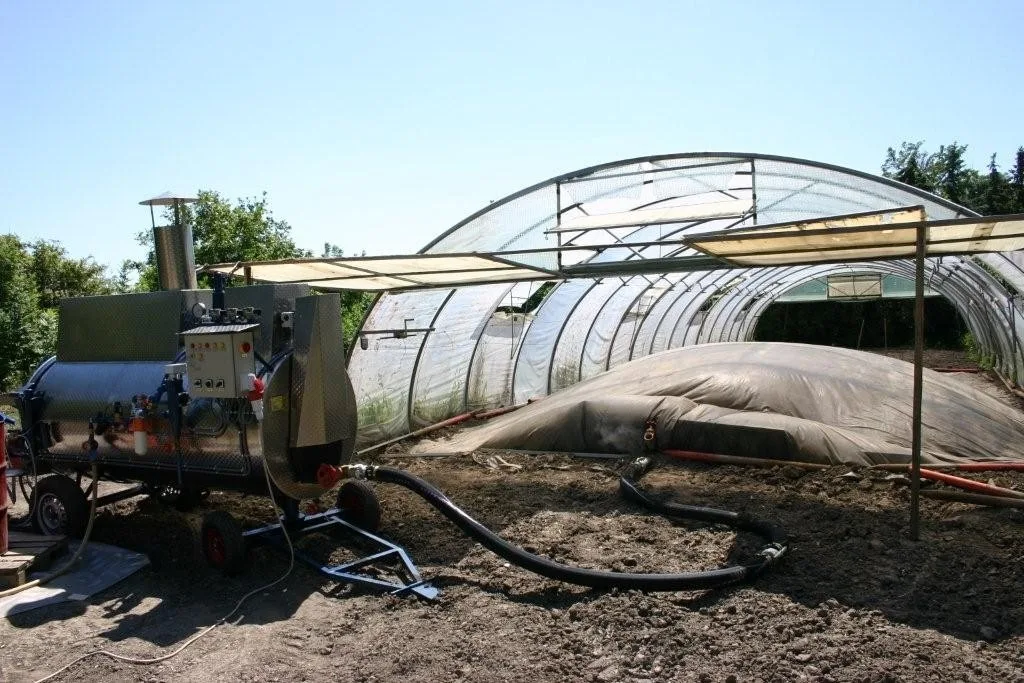
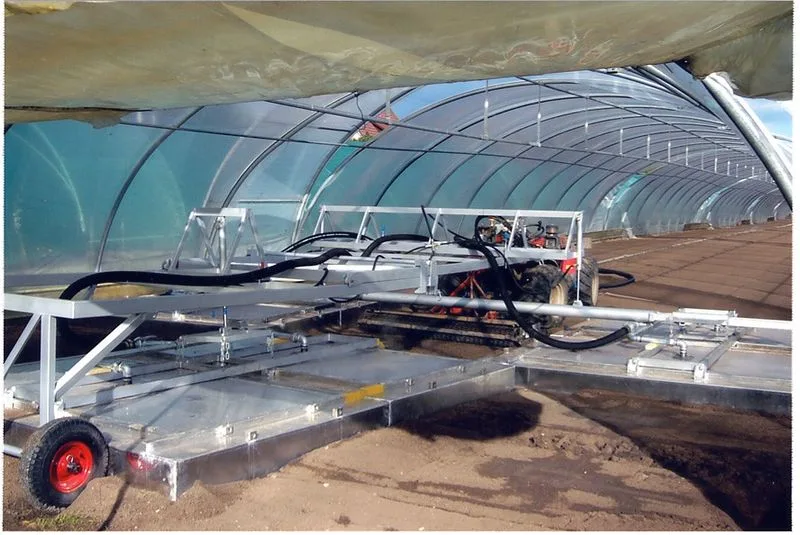
THERMAL TREATMENT Until recently, the most common method of soil disinfection was steaming. According to 1977 data, approximately half of the farmers in the UK growing tomatoes resorted to steaming before planting transplants. In previous years, the number of such farms was higher, but at present, steam is rarely used, and fumigants are finding wider application, which is associated with the rise in fuel prices. Soil steaming is the most effective method for controlling soil-borne pathogens and pests. Only a few organisms survive in moist soil heated to 65 °C for 10 minutes. Wireworms and other insects, nematodes, weed seeds, and most fungi and bacteria die at this as well as at lower temperatures. In general, the soil temperature should be brought to 50 °C before the result is noticeable, and heating at 60 °C and above is accompanied by a sharp increase in treatment efficiency. It is especially difficult to eradicate tomato mosaic virus by steaming: accumulating in plant residues, in particular in fragments of large roots, this virus withstands a 10-minute heating even up to 90 °C. Naturally, no farm can carry out treatment at this level for the entire volume of soil in which transplants will subsequently be planted. Uniform heating of the soil is very difficult to achieve. There are always colder areas remaining in it, and, besides, steam Soil Organic nitrogen 8 9106 manure Decomposition = Fertilizers Bacterial decomposition of plant residues (Agrobacter) Absorption and conversion of nitrates (Nitromonas) by plants Steam Treatment at 90-100°C Conversion to nitrates | | | inhibited due to the death of heat-sensitive In some soils, manganese ions are released bacteria in toxic concentrations Fig. 5.6. The effect of soil steaming on the nitrogen cycle in the soil.
rarely penetrates below the plough layer. The most economical method of steaming consists of bringing the temperature of the top 20-centimeter layer of soil to 75 °C. In this case, even the colder areas of the soil are almost guaranteed to be heated to the thermal death point of most pathogens, pests, and weed seeds. If the temperature rises above 82 °C, phytotoxic concentrations of ammonium, nitrite, and manganese ions accumulate in the soil, especially with a high content of organic matter, manganese, and low pH. However, the problem of phytotoxicity can generally be solved by starting to plant transplants only 6 weeks after disinfection (see the section on steam-air mixtures).
Read next
Plant protection For agronomists
The influence of soil conditions on pathogen development and plant protection
Plant protection For agronomists
Genetic plant immunity and modern methods of soil disinfection
Plant protection For agronomists