
Fundamentals of the theory of plant diseases and plant protection in a greenhouse
13 min read
| — dei y | | № Ia 7 27; | | p r y ch\ nii i; \ se me ykh Ya Ch. me it” =. i kolenei! ‚: i sha | | |. UV $ Sh | l r ‚5: ti tk set delam bolezney v teplitsakh
22 o t. Z., A 58 o kh: | v t;
i g =” a E S i * Ya = | \ re 3 #. i.. | l | 74 o { | TZh vs y Introduction Healthy — possessing health, not sick. Health — the correct, normal activity of an organism. S.I. Ozhegov, Dictionary of the Russian Language
It is impossible to find a plant in nature without foreign microbiota. Many plants contain pathogens in a latent form. Non-pathogenic plant diseases caused by the impact of unfavorable environmental factors (overheating, overcooling, lack of nutrients, etc.) are also common. A special group of diseases of crops is represented by various forms of developmental defects — teratoplasia of non-parasitic etiology. They manifest themselves increasingly as a result of the destabilization of the ecological situation in the Earth's biosphere.
However, against all logic, contrary to the facts cited above, the vast majority of plants are actually healthy, i.e., they function normally. This means that all basic biochemical and biophysical processes in the organism take place within certain, average statistical limits. The parameters of a normal state can be characterized by quantitative and qualitative indicators: the color of individual organs, their temperature, the magnitude of transmembrane potential, internal pressure, the concentration of certain substances, etc.
A plant disease is a disruption of the normal metabolism of cells, organs, and the entire organism under the influence of a phytopathogen or unfavorable conditions.
Disease, as a disruption of the normal activity of an organism, always manifests itself as a violation of normal vital activity parameters. It is known that viral diseases of plants first manifest in an increase in temperature, while fungal diseases often, on the contrary, cause a decrease in temperature.
A seemingly simple term like "disease" is more often defined by negation, as a deviation from a normal state, i.e., a violation of homeostasis. For example, according to De Candolle's definition, "Every more or less significant deviation from the normal physiological state is a disease." But then one should provide a definition and description of the normal state of an organism, which is extremely difficult, because organisms are subject to various changes throughout their life (age-related, seasonal, geographical, etc.); moreover, every healthy organism has a specific reaction norm to the influence of external factors.
Plants have a certain rate of growth and development, by the change of which one can judge the intensity and direction of a particular influence on the plant organism. That is why, when diagnosing plant diseases, observations of changes in morphological signs acquire special significance. It should be understood that disease symptoms are real but have been classified by humans. Not all morphological changes are the result of a disease; on the other hand, not every disease causes symptoms, as evidenced by asymptomatic forms of viral and fungal diseases.
Plant diseases are usually divided into two groups: infectious and non-infectious. Infectious, or parasitic, diseases are caused by pathogenic microorganisms; the main sign of these diseases is contagiousness, i.e., the ability to be transmitted from plant to plant. The causative agents, or pathogens, of diseases can be fungi, bacteria, viruses, viroids, phytoplasmas, and actinomycetes. Non-infectious diseases are the result of exposure to unfavorable environmental conditions.
The pathological process manifests itself in physiological-biochemical and related morphological changes. Abnormalities in the appearance of plants (symptoms), characteristic of a particular disease, appear already during the period of formation of irreversible changes. They are expressed in the disruption of the growth of the whole plant or its individual parts, in the curvature of individual organs, the appearance of tumors, growths, necrosis of the epidermis, parenchyma, phloem, etc. And in the early stages, physiological changes occur in the diseased plant (disruption of the water regime, photosynthesis, respiration, carbohydrate and nitrogen metabolism), the consequences of which only become noticeable at a certain stage. Therefore, it is necessary to distinguish between primary signs (associated with the disruption of the functioning of cells and tissues) and secondary ones, which manifest at the level of the plant.
The metabolic disturbance occurring in a diseased plant depends on the intensity of the influence of pathogenic factors and on the functional state of the organism. In connection with this, typical and atypical symptoms are distinguished. Typical symptoms manifest themselves on the main host plant, which does not have resistance to the disease, and during the normal course of the disease. Atypical symptoms appear on plants possessing species- and cultivar-specific resistance, on secondary host plants, and as a result of synergism in complex infections. Therefore, for a correct diagnosis of a disease, not only individual symptoms are considered, but also the nature of the relationships in the pathogen-host system.
If conditions favor a pathogen that has penetrated plant tissues, the disease begins to develop. The time interval from infection (the entry of the pathogen into the plant) to the manifestation of the first symptoms is called the incubation period. Its duration depends on the biological characteristics of the pathogen, the degree of plant susceptibility, and environmental conditions. The shorter the incubation period, the higher the rate of disease spread, because upon its completion, the plant becomes a source of infection. Exceptions include cases where the pathogen is transmitted via sap. In this scenario, the infected plant becomes a source of infection earlier: during the latent course of the disease.
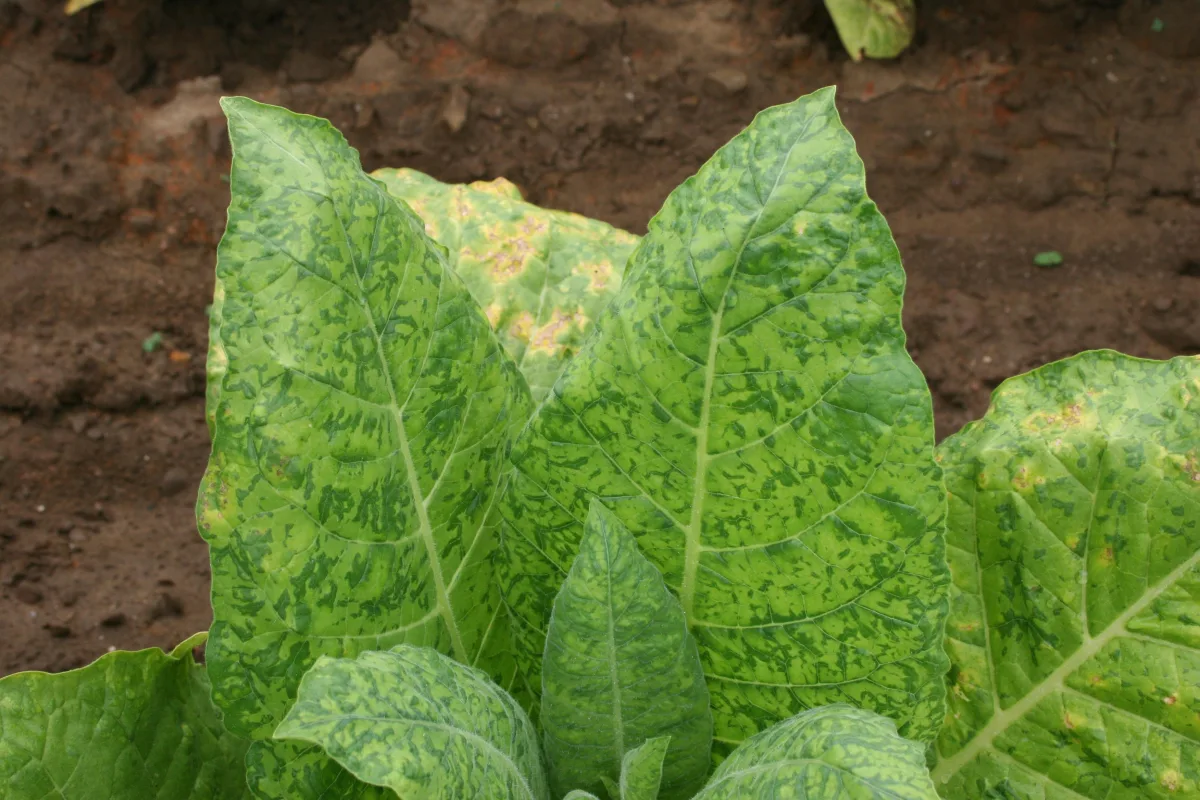
After the incubation period ends, a new stage of the pathological process begins, characterized by the manifestation of external signs of damage, or symptoms. Their diversity can be categorized: Necroses, or spots — areas of dead cells and tissues on the surface of affected organs. They differ in color, shape, size, and location.
Rots — the appearance of extensive areas of dead tissue, primarily in organs containing a reserve of water and nutrients. They are a consequence of the destruction of cell walls and/or middle lamellae by enzymes secreted by pathogens.
Rots can be:
- wet (if the consistency of the affected tissue is softer than that of healthy tissue);
- firm (if the consistency of healthy and affected tissues is approximately the same);
- dry (due to dehydration of the affected tissue).

Wilting — the reversible or irreversible loss of turgor by a plant or its individual organs due to the disruption of water intake or poisoning by toxins.
Infectious diseases are based on the phenomenon of parasitism, the essence of which is that the pathogen is unable to independently produce organic matter and is therefore forced to take it from the plant, resulting in the disruption of the plant's normal vital functions. The pathogen's ability to cause disease is determined by such properties as pathogenicity, virulence, and aggressiveness.
Pathogenicity is the specific ability of a microorganism to cause disease. A qualitative indicator of pathogenicity is virulence, which can be defined as the ability of a phytopathogen to cause disease in a specific species or cultivar of the host plant. There are specialized pathogen races (physiological races) that are virulent to some cultivars and avirulent to others. A quantitative indicator of pathogenicity is aggressiveness, reflecting the pathogen's ability to reproduce in the tissues of the plant it parasitizes. Aggressiveness is assessed by the length of the incubation period, the speed of the pathological process spreading through plant tissues, the number of infectious units capable of causing infection, and the intensity of sporulation (in fungi). Like any quantitative trait, aggressiveness can vary over a wide range depending on environmental conditions. SOIL ACIDITY Phytopathogenic organisms can be divided by degree of parasitism (type of nutrition) into the following categories. Species that use the living matter of other organisms for food are parasites, while those using dead matter are saprotrophs. Obligate saprotrophs colonize only dead remains; conversely, obligate parasites feed exclusively on living organisms. Facultative parasites are capable of developing inside or on the surface of living organisms, but also lead a saprotrophic lifestyle. Most phytopathogens belong to this group, including the causative agents of root rots, tracheomycoses, and gray and white rot. Their degree of parasitism varies, and their life cycle can take place both on living plants and in the external environment, with a parasitic lifestyle being less characteristic for them. Control of facultative pathogens is based primarily on creating unfavorable conditions for their growth and development and, conversely, on creating optimal conditions for plants. In such conditions and in the absence of traumatic factors, the probability of plants becoming diseased with these pathogens is low. However, in extreme conditions, these pathogens can cause significant damage in a short time, resulting in the rapid death of many plants.
Obligate parasites, which are at the highest evolutionary stage of parasitism, most often cause chronic diseases. Existence on the host allows these organisms to more fully realize their reproductive potential over a long period. In some cases, after the pathogen has a stimulating effect on the host's metabolism, growths such as cancerous tumors, galls, etc., form in the infected tissues. These pathogens are diverse and include fungi from various systematic groups and viruses. Changes in environmental conditions usually affect only the timing and intensity of the disease. The use of resistant cultivars and hybrids is a radical method of controlling obligate parasites.
Each pathogen has adapted to parasitize specific species, cultivars, and the most suitable developmental phases of plants. Some pathogens choose specific plant organs and tissues for their survival. Due to such selectivity in the nutrient substrate, several types of specialization are distinguished:
Phylogenetic specialization — manifests as the adaptation of pathogens to feed on plants of a certain family, genus, species, and even cultivar. Broadly specialized pathogens, or polyphages, parasitize plants of different families or different genera within a single family.
Effective plant protection of greenhouse crops begins with understanding pathogen specialization. Some pathogens are capable of infecting dozens of diverse crops, while others are strictly limited to one host. For example, the gray mold pathogen — affects the following crops:
- strawberry;
- cucumber;
- cabbage;
- carrot;
- rose and many other crops.
In contrast, the bacterium causing pith necrosis of tomato stems affects only tomato and is considered a narrowly specialized monophage. Within a single species, pathogens are divided into physiological races — forms that are capable of parasitizing only on certain cultivars of the host plant. There is also ontogenetic specialization based on crop development phases and organotropic specialization based on tissues. An example of tissue specialization is the powdery mildew pathogens, which feed primarily in epidermal tissues.
Concomitant diseases and mixed infections
Some diseases in a greenhouse develop in a chain, where one lesion makes the plant susceptible to a concomitant pathology. A primary infectious disease often creates favorable conditions for the entry of other pathogens. Quite often, a plant is infected not by one species, but by several pathogens simultaneously — in this case, a mixed infection develops.
Physiological stresses sharply reduce the natural resistance of crops in a greenhouse. Damage from irrigation with cold water or sudden temperature fluctuations weaken plants and provoke the subsequent development of root rots. Excessive nitrogen nutrition also increases risks, leading to an increase in powdery mildew diseases on a more favorable nutrient substrate.
Mixed infections in a greenhouse most often develop independently of each other. However, an agronomist should remember that sometimes a weakening of the symptoms of one of the concomitant diseases is observed. This can mask the real threat during visual monitoring.
Read next
Plant protection For agronomists
Diagnostics and prevention of diseases in tomatoes and eggplants
Plant protection For agronomists
Diagnosis and prevention of rare viral diseases in greenhouse lettuce
Veterinary medicine For students