
Fundamentals of epizootiology and patterns of the epizootic process in livestock animals
12 min read
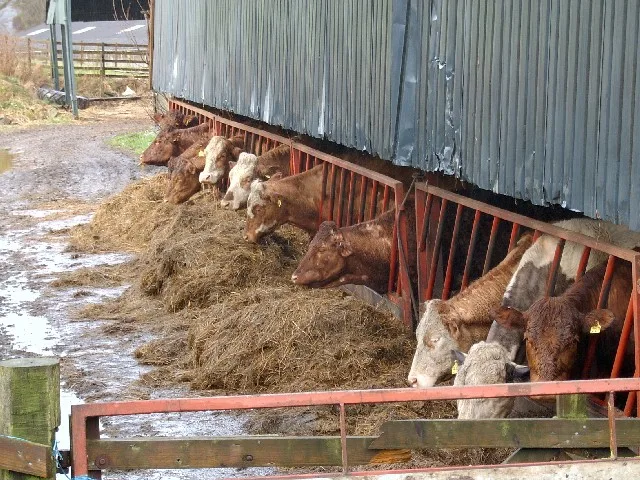
General information on infection, preventive measures
Epizootiology is the science that studies the patterns of the epizootic process and develops methods for prevention and measures to combat infectious diseases of livestock animals based on these patterns.
Infection is a complex biological process of interaction between an organism and a pathogenic microorganism — the causative agent of a disease, occurring under specific environmental conditions. The manifest form is an infectious disease. The latent form is microbe carriage (swine erysipelas, pasteurellosis).
The reservoir of infection is the totality of various animals, plants, and soil in which the pathogen lives and multiplies and from which it can be transmitted to a susceptible animal, for example, leptospirosis (in rodents), rickettsiosis (in ticks).
An epizootic focus is the place of infection and stay of a diseased animal and the territory within which the transmission of the infectious agent to a healthy animal is possible. If a focus exists in nature, it is called a natural one, and the infection is called a natural focal infection.
A mandatory prerequisite for the emergence and spread of any infectious disease is the presence of three elements (links) of the epizootic chain, connected to each other in a specific sequence: 1) the source of the infectious agent – a sick animal; 2) the mechanism of transmission of the infectious agent – pathways and factors of pathogen transmission; 3) a susceptible animal – a healthy animal that, under certain
Mechanism of transmission and pathways of spread is the ability of the pathogen to move from one organism to another. Factors of transmission are those environmental elements that participate in carrying the pathogen from the source to healthy animals. The release of the pathogen into the external environment occurs through secretions, excretions (feces, urine, milk), during coughing, sneezing, vomiting, and in pathological processes – discharge from ulcers, abscesses, erosions, and scabs. Pathways of transmission include: contact (direct or indirect contact of a sick animal with a healthy one); airborne (via air); food and water-borne (alimentary); transmissive (carried out by living vectors, primarily arthropods).
The epizootic process is the interaction of the source of the infectious agent, the mechanism of its transmission, and susceptible animals, which leads to the appearance, spread, and disappearance of manifest and latent infections among animals. In spontaneously occurring epizootics, it manifests in stages, in the form of emergence, spread, and extinction. The patterns of its manifestation allow us to distinguish six stages in the dynamics of an epizootic: inter-epizootic, pre-epizootic, development, maximum peak, extinction, and post-epizootic.
Inter-epizootic stage — the time interval between two epizootic waves, characterized by isolated cases of the disease that maintain the epizootic process but do not lead to a sharp increase in incidence and wide spread of the disease. Microbe carriage and asymptomatic infection prevail; many animals still retain immunity, but the number of susceptible animals gradually increases.
Pre-epizootic stage — a period when real conditions are created for the emergence of an epizootic due to the loss of immunity by animals, the birth of non-immune young, and the introduction of susceptible animals; it is characterized by an increase in the number of diseased animals (sources of the infectious agent) and the first cases of typical clinical manifestation of the disease, and favorable conditions for the transmission of the pathogen of a given infection are created.
The development stage of an epizootic follows the pre-epizootic and is characterized by favorable conditions for the further spread of the disease and the prevalence of typical clinical forms of its acute and hyperacute course. The activity of individual links of the epizootic chain and the connections between them increase, which leads to an increase in the number of newly diseased animals. But at the same time, the number of immune (recovered) animals is already growing, which creates a basis for the subsequent fading of the epizootic.
The maximum peak stage of an epizootic, following the development stage, is the culmination point. It is characterized by the highest number of newly diseased animals recorded per unit of time (day, week, month). Along with the acute course, cases of a subacute course of the disease are noted. The number of immune animals continues to increase.
The extinction stage of an epizootic is characterized by a decrease in the number of new cases of animal disease; the number of animals immune to the pathogen of the given disease increases significantly; the mechanism of transmission of the infectious agent is disrupted. During this period, blurred signs of the disease, subacute and chronic courses, and the abortive form prevail.
Post-epizootic stage — a period when the disease does not spread, and the number of animals with a high degree of immunity tension reaches its maximum level. New cases of animal disease are reduced to isolated instances. During this period, asymptomatic infection and microbe carriage prevail.
Anti-epizootic work includes: 1. Carrying out preventive measures in disease-free farms, preventing the spread of diseases. 2. Carrying out rehabilitation measures in affected farms. 3. Protecting humans from infection.
The system of state preventive measures that ensure the prevention of the emergence and spread of infectious diseases: 1) protection of borders from the introduction of infection from abroad; 2) veterinary and sanitary supervision during the transport of animals, products, and raw materials; 3) veterinary and sanitary supervision at markets; 4) veterinary and sanitary supervision at meat processing plants and enterprises for the processing of raw materials; 5) protection of livestock farms from the introduction of pathogens; 6) educational work.
General prevention is a set of veterinary-sanitary and organizational-economic measures: 1) protection and restrictive measures during the transport of livestock animals 2) preventive quarantine for animals newly introduced into the farm 3) selection of animals with hereditary resistance 4) adequate feeding and maintenance 5) veterinary control, isolation, and treatment of sick animals 6) disinfection, disinsection, deratization 7) removal of manure
9) adherence to a closed cycle in livestock production
11) construction of livestock facilities according to veterinary and sanitary requirements
Specific prevention is a system of measures aimed at preventing a specific infectious disease:
1) conducting special diagnostic examinations (tuberculin-
3) immunoprophylaxis – use of vaccines, sera, immunoglobu-
Specific agents include: live vaccines, inactivated vaccines, chemical vaccines, toxoids. Vaccines are divided into monovaccines, polyvalent vaccines, and associated vaccines, depending on the number of antigens (infectious agents) they contain.
Methods of vaccination: parenteral, enteral, aerosol. Immunity is created during vaccination. Immunity is resistance to infection. Immunity can be active (after recovering from a disease, or receiving a vaccine or toxoid) or passive (colostral and after receiving serum).
Immunity is also classified as innate (species-specific, inherited, e.g., poultry do not get anthrax); acquired natural (after recovering from a disease), and artificial (after immunization).
Antigen is a substance that induces the production of antibodies upon administration. Antigens are contained in vaccines and are represented by infectious agents (bacteria, viruses), their parts, or metabolic products. Antibodies are specific blood plasma proteins (immunoglobulins) produced in response to the effect of an antigen on the organism.
Methods of diagnosing infectious diseases: 1. Epizootological – identifying epizootological features. 2. Clinical – conducting a clinical examination, recording clinical signs of the disease. 3. Pathological-anatomical – performing an autopsy on a dead livestock animal and establishing the cause of death based on pathological changes in internal organs; collecting samples for examination. 4. Allergic – diagnostic studies using al-
Bacteriological – laboratory testing of samples for the presence of relevant bacteria (antigens) - pathogens of the disease. 6. Virological – laboratory testing of samples for the presence of relevant viruses (antigens) - pathogens of the disease. 7. Biological – performing a biological assay on laboratory animals (white mice, guinea pigs, rabbits, etc.) to confirm the established diagnosis. 8. Serological – testing blood serum to identify infected livestock animals using reactions based on the detection of specific antibodies in the serum: RA (agglutination reaction), RP (precipitation reaction), CFT (complement fixation test), etc.
In affected farms, veterinary examinations, thermometry, serological, and allergic tests are carried out. Based on the results of mass examination, animals are divided into 3 groups:
Clearly sick – they are isolated, treated, or culled (depending on veterinary regulations).
Suspected of disease — these are animals that have been in contact with sick ones; they are isolated separately and examined further; if the disease manifests, they are transferred to the group of sick animals.
Suspected of infection – these are clinically healthy animals located on a farm where an outbreak has occurred; they undergo observation, diagnostics, and immunization.
Complete identification and neutralization of the disease source.
Interruption of the transmission mechanism – disinfection, disinsection, and deratization.
Quarantine is a system of anti-epizootic measures aimed at completely separating groups of animals and the territory where they are kept from healthy farms and territories, in case of infectious diseases, in order to eliminate the disease and prevent its spread.
Quarantine is imposed for particularly dangerous diseases: foot-and-mouth disease, anthrax, classical swine fever, African swine fever, etc. Quarantine is applied to yards, herds, districts, farms, regions, and cities. Barriers and sanitary inspection points are set up on roads.
In the event of a highly dangerous, rapidly spreading infectious disease of animals (foot-and-mouth disease, African swine fever, and others), an epizootic focus, an affected site, and an at-risk zone must be defined. Epizootic focus is the place where sick animals are detected. Affected site is the settlement where an epizootic focus is identified; quarantine or restrictive measures are carried out in accordance with veterinary regulations. At-risk zone is a territory that is currently healthy but where the introduction of the disease pathogen from the affected focus is possible; preventive measures, including vaccination of susceptible animals, are carried out.
Restrictive measures – less stringent measures (than quarantine) for diseases not prone to wide spread or with a chronic course (brucellosis, tuberculosis, bovine leukemia, necrobacillosis, strangles).
Types, methods, and stages of disinfection
Disinfection destroys pathogenic microflora in the external environment and prevents the spread of infection in the herd. Depending on the epizootic situation and the production schedule, several types of treatment are used. Preventive disinfection is carried out on healthy farms twice a year, and pre-commissioning disinfection is performed before livestock facilities are put into operation.
Technological disinfection is tied to the production cycle: it is timed to coincide with the transfer of young stock to older age groups or the regrouping of livestock for fattening. Emergency disinfection is carried out during a disease outbreak. It includes routine treatments (from the moment the first sick animal is detected, with each new case, or at 7-day intervals) and terminal treatment before the lifting of quarantine or restrictions.
For facility decontamination, mechanical cleaning, physical factors (drying, radiant energy, high temperature, steam, boiling water, ironing), and chemical agents—alkalis, acids, phenol, and formalin—are used. The disinfection process itself includes three mandatory steps.
- Mechanical cleaning of all surfaces from contaminants.
- Disinfection proper via spraying of chemical solutions (hot 2% caustic soda, 5% carbolic acid solution, or 20% lime solution) with mandatory exposure time to ensure the death of microorganisms.
- Neutralization of the disinfectant followed by quality control via laboratory analysis of swabs.
Use of vaccines and sera in the herd
Vaccines are biological preparations made from specific strains of microbes, viruses, fungi, or their toxins, which generate active immunity. Protection is developed 1–2 weeks after administration and lasts from 6 months to a year or more. The preparations are produced in dry and liquid forms, as mono-, bi-, and polyvalent types, often with the addition of depot substances (aluminum hydroxide, alum, oils) to prolong the immune response.
- Vaccine storage temperature — 5–15 °C
- Immunity development period — 1–2 weeks
- Duration of protection — from 6 months to 1 year or more
- Interval between serum and vaccine — 12 days
- Medical exemption before and after giving birth — 20–30 days
- Observation period after vaccination — 10–12 days
In veterinary medicine, three groups of vaccines are used: live attenuated strains (against anthrax from strain No. 55, swine erysipelas from strain VR-2, salmonellosis, brucellosis from strains Rev-1, No. 82, No. 19); inactivated preparations (against symptomatic anthrax, pasteurellosis, leptospirosis, rabies); and toxoids (concentrated tetanus toxoid, toxoid vaccine against infectious enterotoxemia in sheep). Live vaccines are handled with extreme caution: spilled preparations and vials are immediately neutralized.
A vaccine vial must be discarded if the seal is compromised, the label is missing, or there is presence of mold, non-dissolving flakes, impurities, or a putrid odor. The preparation also cannot be used if the vial was opened and not consumed on the same day.
Only healthy animals are vaccinated: preventively (if there is a threat of introduction) or as an emergency measure (during an outbreak). It is forbidden to vaccinate emaciated livestock, animals with an elevated body temperature, dams 20–30 days before and after giving birth, and young animals of early age. In affected farms, animals are first administered a protective serum, and only after 12 days is the vaccine applied.
Injections are performed with sterile syringes and needles (or disposable ones), disinfecting the skin with 70° ethyl alcohol. The vaccinated herd is monitored for 10–12 days, ensuring improved care and feeding. During this period, slaughter, transportation, and regrouping of animals are strictly prohibited.
Sera are obtained from the blood of hyperimmunized animals and are used primarily for therapeutic purposes, and less frequently for prophylactic purposes, to create passive immunity. By composition, they can be mono-, bi-, and polyvalent. The requirements for storage, suitability testing, and disposal of sera are similar to the rules for handling vaccines.
Schemes for serum application and documentation of treatments
The use of sera is based on the introduction of ready-made antibodies into the organism, which neutralize the disease pathogen, bind its toxic products, and stimulate the animal's defense mechanisms. For therapeutic purposes, the preparation is administered to sick individuals and animals suspected of having the disease. If no therapeutic effect is observed after administration, it is recommended to repeat the serum dosage in the same amounts after 8–12 hours.
- Repeat of therapeutic dose — after 8–12 hours
- Duration of passive immunity — 8–14 days
- Risk of anaphylaxis — from 12 days to 2 years
- Initial dose for anaphylaxis prevention — 1–2 ml
- Interval before re-administration — 1–2 hours
For prophylactic purposes, sera are used in affected farms on animals suspected of being infected. In healthy farms, they are prescribed to animals for whom vaccination is contraindicated at the given time: emaciated, pregnant, and sick individuals. The formed passive immunity persists for 8–14 days.
Upon re-administration of heterogeneous sera after 12 days or over a longer period (up to 2 years), animals may experience anaphylactic reactions.
- Inject a small amount of serum into the animal, in a volume of 1–2 ml.
- Wait 1–2 hours to check for individual sensitivity.
- Administer the remaining part of the dose if no negative reaction occurs.
Vaccinated animals are subject to precise recording, the results of which must be documented in an official report.
Read next
Veterinary medicine For students
Characteristics of the pathogen and specific features of the epizootiology of anthrax in livestock animals
Veterinary medicine For students
Characterization of epizootiology and clinical features of strangles in horses
Veterinary medicine For students