
Biological plant protection of greenhouse crops against pests and diseases
7 min read
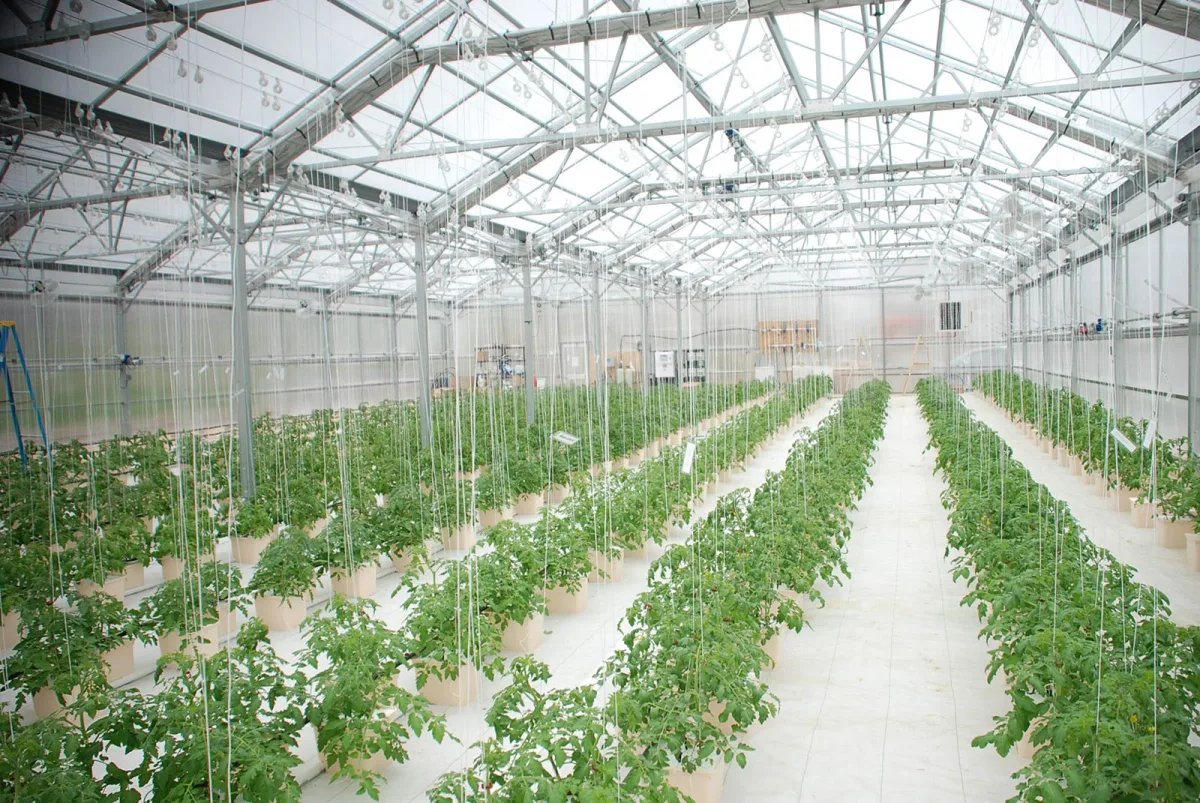
In many greenhouse operations, the use of Encarsia formosa to control whitefly and the predatory mite Phytoseiulus persimilis to suppress spider mites on tomato, cucumber, and chrysanthemums is widely and successfully practiced. In recent years, the aphid-pathogenic fungus Verticillium lecanii has found use under production conditions; its formulations (e.g., Vertalec) are available for sale. When carrying out biological pest control, it is necessary to apply pesticides with great caution. Chemical control is one of the links in an integrated protection system, but pesticides must be safe for beneficial insects or fungi. It is known, for example, that fungicides can suppress the activity of certain beneficial organisms.
Biological control of fungal diseases of greenhouse crops has not yet found wide application under production conditions, although various attempts in this direction have already been made. For example, the fungus Ampelomyces quisqualis is a parasite of the cucumber powdery mildew pathogen (Sphaerotheca fuliginea), and this type of parasitism has already been tested in a number of cases. In France, one of the Trichoderma species has been isolated and used to suppress the pathogen of dry bubble disease of mushrooms — Verticillium fungicola. Experiments on the biological control of black root rot of cucumber have been conducted, but this method of control is not yet used under production conditions. The biological control system is at the stage of development; Fig. 5.15. a — preparation for the release of predatory mites to control the red spider mite in a cucumber greenhouse, b — the importance attached to detecting whitefly infestation at the initial stages determines the effectiveness of biological or other control (on the flyer: "A reward of £2 to anyone who finds the first whitefly in each section").
SUITABILITY OF FUNGICIDES FOR USE IN BIOLOGICAL PEST CONTROL
Fungicide* Application method Eggs Larvae Pupae Adults Benomyl Spraying S I - H Benomyl Soil drench I I S S Bupirimate Spraying S S - S (w. p.) Bupirimate Spraying I S - - (e. c.) Captan » S S S S Carbendazim » S I S S Chlorothalonil » S S S S Copper oxychloride » S S S S Copper oxychloride** "Turb-air" S S S S Copper ammonium carbonate Spraying S S S I Dichlofluanid » - S S S Dicloran Fumigation - - - - Dinocap Spraying - S S H Dodemorph » - S - - Drazoxolon » - - - - Etridiazole » - - - - Fosetyl-aluminium Soil drench - - - - Imazalil Spraying I S H I Iprodione » S S - S Iprodione** "Turb-air" S S S S Mancozeb/zineb Spraying - S - - Maneb » - S S I Nabam » - - S I Nabam Soil drench - - - - Nitrothal-isopropyl » Spraying I - S Oxycarboxin Spraying S S - S Pyrazophos » H | H H Quintozene » - - - S Tecnazene Fumigation - - - - Thiophanate-methyl Spraying H S - S Thiram » I S - S Vinclozolin » - S - S Zineb » - S - S Zineb** "Turb-air" S S S S * S — safe, I — intermediate, H — harmful. ** Aerosol treatment using a "Turb-air" machine. the possibility of its use and the need for further research in this direction are beyond doubt.
One of the variants of biological control of tomato mosaic virus tomato was widely used in Europe before the appearance of cultivars resistant to this pathogen. To protect susceptible tomato cultivars from highly damaging and widespread virulent strains of ToMV, plants were inoculated at early developmental stages with a virus strain of attenuated pathogenicity. It provided plant protection, which was accompanied by an increase in productivity and fruit quality (see page 179).
Baker, K. F. and Cook R. J. (1974) Biological Control of Plant Pathogens, Freeman, San Francisco.
Voape, S. W. (1973) Trends in Breeding for disease resistance in crops, Annual Review of Phytopathology, 11, 463—86.
Bussel, A. E. (1978) Plant Breeding for Pest and Disease Resistance. Butterworth, London.
Scopes, M. and Lee, M. (1979) Pest and Disease Control Handbook. The British Crop Protection Council Publications, London.
Miller, R. E. W. (1975) The Control of Plant Disease, Oxford Biology Readers No. 74, Oxford University Press, Oxford. CHAPTER 6. FUNGICIDES
Some fungicides are used for plant protection against possible infection, others — to suppress a pathogen that has already affected its host, although the eradicant (curative) effect of the product persists only for a short time after infection. Fungicides do not suppress pathogenic organisms to a level at which signs of damage disappear from plants, and most of them possess contact action, i.e., the pathogens perish only upon direct contact with the product. Over the past decade, several systemic fungicides have been developed. They are transported within the plant to a minor extent, namely in the acropetal direction with the transpiration stream, and accumulate at the edges of leaf blades. To date, only a few products have been found to have the ability to move very weakly from leaves to roots.
An ideal fungicide for greenhouse crops is characterized by the following properties:
— safety in application for the operator and for the plant;
— strong fungicidal effect, i.e., the ability to destroy the pathogen, rather than just delay its development;
— minimal toxicity to warm-blooded animals, which allows starting maintenance work in the planting shortly after spraying and obtaining marketable produce;
— sufficient persistence, allowing for the minimization of the number of required treatments. At the same time, excessively high persistence is a disadvantage, as such products decompose very slowly and a significant waiting period is required after their application;
— a mechanism of action that excludes the emergence of resistant (insensitive or tolerant) races (strains) of pathogens.
Sometimes preference is given to products with systemic action or volatile substances, although such properties are often associated with the accumulation of persistent pesticide residues and a specific type of action, which may contribute to the development of resistance in pathogens.
Most modern fungicides possess some necessary properties, but none is ideal.
Strategies for fungicide application in protected soil
The use of fungicides is carried out in two ways:
- 1 — through standard treatments at a specific phase of crop development, as well as at some period after its sowing (planting);
- 2 — upon the first appearance of disease symptoms or when its development reaches a threshold level.
Each option has its own advantages and disadvantages; one cannot draw general conclusions here and choose a single method suitable for all crops and diseases.
The positive side of standard fungicide application is that it is easy to implement and does not require regular inspections of the crop to make a decision on the necessity of spraying. Furthermore, this method ensures a sufficient level of disease suppression, as the parts of the plant developing after treatment are already protected from the pathogen, i.e., conditions for its development are less favorable. The main disadvantage of the standard method is the possibility of excessive fungicide treatments, since sprayings are carried out regardless of whether they are necessary or not. This can lead to significant expenditure of funds on chemicals and labor that could have been avoided.
Organization of phytosanitary monitoring of crops
The application of fungicides at the first appearance of a disease or at a critical stage of its development requires regular crop inspections to identify damage and, depending on the area of the crop, is time-consuming; however, such inspections are absolutely necessary to obtain positive results. In general, it can be said: the lower the number of treatments, the lower the costs and the accumulation of toxic residues of the products, although there is a danger here, because with insufficiently thorough inspection, the disease may develop so strongly that it will be difficult to combat with conventional methods.
This system is not applicable to all diseases, as in some cases damage to the crop occurs at the appearance of the very first symptoms of damage, when fungicide treatment will no longer yield the desired effect.
Read next
Plant protection For agronomists
Methods of fungicide application and pathogen resistance management
Plant protection For agronomists
Regulations for the application of Rovral and Kemicar fungicides in plant protection
Plant protection For agronomists