
Modern technologies for harvesting and preparing high-quality forage crops
8 min read
All feed and raw materials for feed preparation entering the farms must comply with standards, as well as technical and zootechnical requirements. In livestock farming, they are classified by origin into plant-based, animal-based, and mineral. The use of balanced compound feed—feed mixtures made from various dry products, enriched with vitamins and micronutrients—significantly increases the productivity of the livestock. Natural hayfields and sown grasses remain the main sources for feed harvesting on farms.
- Plant-based feed: roughage (hay, straw, chaff), succulent (silage, root and tuber crops, cucurbits), green (grasses, tops of forage crops), concentrates (grain feed, compound feed, oilseed cakes, meal, dry beet pulp, bran, dry food waste), and artificially dried (from woody greens, grass and coniferous meal, dried potatoes).
- Feed of animal origin: fish and whale meal, meat-and-bone, meat, blood, and bone meal, skimmed milk powder, sericulture waste (silkworm pupae), feather meal, casein, and fats.
- Mineral feed: common salt, chalk, mollusk shells, travertine (mineral salt deposits from Caucasian healing springs), limestone, and feed phosphates.
Hay, haylage, grass briquettes, and high-nutrient grass meal are prepared from grasses, while a portion of the standing forage is ensiled. Traditionally, corn, sunflower, and tall-stemmed grasses are grown to produce silage. The main requirements for feed harvesting are minimizing losses during harvesting and strict compliance with GOST standards. Feed quality directly depends on adhering to mowing schedules and raw material humidity.
- Increase in animal productivity from compound feed — by 20–30% or more
- Humidity of silage chaff during harvesting — 70–75%
- Stem length of chopped hay — 3–5 cm
Violation of the growing season phases during mowing drastically reduces feed quality. Grass for hay is mowed at the beginning or during full flowering, for haylage — strictly at the budding stage. Perennial grasses for grass meal are harvested before flowering, while annuals — during the flowering period or at the beginning of fruit formation.
Hay harvesting technologies: from loose to compressed
In modern feed production, four technologies have become the most widespread: harvesting hay, silage, haylage, and grass meal. Hay, in turn, is harvested in a loose, compressed, or chopped form. Each method has its own peculiarities in organizing field operations and requirements for machinery.
Harvesting loose hay requires a minimal set of equipment but is highly dependent on the weather. The mowed mass must dry quickly and evenly in the field to reach optimal soil moisture/humidity. Delaying the process leads to a loss of nutrients. Each machinery pass must be strictly coordinated in time.
- Mowing or mowing with conditioning of the standing forage.
- Natural drying of the mowed mass under field conditions.
- Tedding of mown swathes for even drying.
- Raking of dried hay and forming windrows.
- Picking up windrows while simultaneously forming cocks or stacks.
- Transporting finished stacks or cocks to the storage site.
Hay losses are reduced and its quality improves if under-dried grass is picked up from windrows by stackers and then dried at a stationary site using active ventilation systems.
Harvesting hay in compressed form, especially in large bales, is a progressive and high-capacity method. It minimizes mechanical impact on the mass, reduces the influence of precipitation, and cuts the total cost of operations. The formed bales and rolls are much easier to transport, store, and dry using active ventilation.
- Mowing or mowing with conditioning.
- Tedding the mowed mass in swathes, raking, and forming windrows.
- Picking up windrows while simultaneously compressing the hay into bales or rolls.
- Picking up from the field and transporting the bales or rolls.
- Stacking the resulting bales or rolls into piles for storage.
The technology of harvesting chopped hay allows for the automation of unloading and storage placement. The mass is picked up from the field in a semi-dry state and brought to condition using artificial ventilation. This reduces the time hay spends in the field and protects it from nutrient leaching by rain.
- Mowing of grasses with simultaneous stem conditioning.
- Tedding, raking, and turning of the formed windrows.
- Picking up windrows with chopping of stems to a length of 3–5 cm.
- Transporting the chopped mass to the hay storage.
- Unloading feed into the hay storage.
- Drying the mass with heated or ambient air.
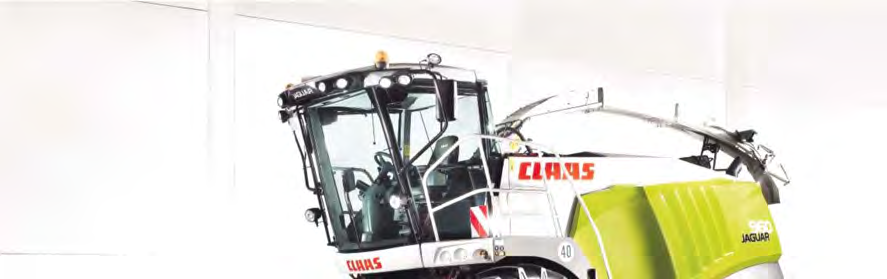
Silage is feed prepared from fresh green mowed mass, preserved in anaerobic conditions by organic acids formed as a result of lactic acid bacteria activity. Thus, ensiling feed is preserving it with lactic acid. The technology for harvesting silage crops consists of timely execution of plant mowing, chopping, and loading the chopped mass into a transport vehicle by one machine—a forage harvester. Chopping green mass when placing silage and haylage into storage is absolutely necessary for tighter packing, which displaces the air contained between the chopped plant particles, and also to slow down air access to the silage during its storage and extraction. High-quality chopping of the plant mass being ensiled promotes better feed fermentation and, ultimately, increased animal productivity. The quality of silage also depends on the duration of filling the trenches (storage facilities), which should take no more than three to four days. This condition can only be met with high-capacity forage harvesters. In accordance with agrotechnical requirements, the content (by mass) of chopped particles no longer than 10 mm when harvesting corn at the dough stage for silage should be at least 80%. Feed prepared from such corn is a mixture of succulent and grain feed, and its nutritional value reaches 0.36 feed units/kg. Preparing silage from dough-stage corn requires solving the problem of high-quality plant mass chopping and ensuring complete grain crushing. Otherwise, losses occur due to the indigestibility of uncrushed corn grains by animals, as well as the need to harvest feed from large areas within the agrotechnical feed harvesting period, which lasts eight to ten days. Operations: mowing with chopping; transportation; unloading into silage trenches; packing of the mass; covering with straw and a layer of soil. Parameters: Trenches: width – 10–15 m, length – 30–50 m, and height – 3 m. Towers can have a capacity of 200, 250, 300, 400, 600, 700, and 1000 t, their diameter – 6–10 m, height – up to 16 m.
HAYLAGE HARVESTING TECHNOLOGY Haylage is feed prepared from grasses harvested during the early growing season, wilted to a humidity of 45–55%, and preserved under anaerobic conditions. In mass wilted to the specified humidity, putrefactive and butyric acid bacteria develop poorly, which contributes to its preservation. In haylage, lactic acid is mainly formed – 78–95% of the total acids. Without air access, the respiration of plant cells ceases, and the possibility of significant heating of the plant mass is eliminated.
The technology of harvesting grasses for haylage preparation differs from the previous one in that the grasses are first mowed with simultaneous conditioning and placement into windrows for wilting, and then the mass is picked up from the windrow, shredded (into 20–30 mm segments), and loaded into a transport vehicle. At the first stage, the work is performed by a windrower-conditioner, and at the second – by a forage harvester. From field shredders, the mass is transported to haylage towers or trenches, placed in them, compacted, and sealed. Parameters: Trenches: width – 6–9 m, length – as required (30–60 m), and height – 2.5–3.0 m. Towers have a capacity of 260, 400, 520, and 700 tons. Internal diameter – 7–9 m, and height – up to 24 m.
HERBAL MEAL HARVESTING TECHNOLOGY
Operations: mowing with conditioning; tedding, raking windrows; windrow pickup and plant shredding; transportation, artificial drying in drum dryers;
Crushing the artificially dried mass allows for obtaining vitamin herbal meal or processing it into pellets. The main advantage of this technology is the preservation of the maximum amount of vitamins in the finished feed. However, production requires significant fuel consumption for artificial drying. According to scientific and production experiments, introducing such feed into the diet significantly increases the productivity of livestock animals and poultry.
The main advantage of herbal meal is the high preservation of vitamins and nutrients, which directly increases milk yield, live weight gain, and egg production.
| Group of animals and type of feed | Effect of feeding |
|---|---|
| Laying hens (herbal meal) | Egg production increases by 10–20 % |
| Young poultry, piglets, and calves (alfalfa meal) | Live weight gain increases by 12–17 % |
| Dairy cows (alfalfa meal) | Milk yield increases by 17–24 % |
| Pigs (replacing purchased concentrates with herbal meal) | The replacement share is 20–25 % (with sufficient supplies of meal) |
| Cows and sheep (replacing purchased concentrates with herbal meal) | The replacement share is up to 40–50 % (with sufficient supplies of meal) |
| Sheep (adding herbal meal to the diet) | Wool clip increases by 15 % |
To simplify transportation, avoid dusting, and better preserve nutrients, herbal meal is pelletized. The high mechanical strength of the pellets allows them to be transported in bulk without using packaging. At the same time, standard mechanization means are suitable for loading and unloading operations.
Preservation methods and harvesting rules
To reduce nutrient losses during hay harvesting, chemical preservation is used. The preparation is distributed over the plant mass at different stages of harvesting. A chemical preservative can be applied in four ways:
- by spraying standing plants before mowing;
- during the grass mowing process;
- while weighing the plant mass in the transport vehicle;
- during the process of placing the preserved mass into the silo.
When mowing and tedding, it is important to strictly observe agrotechnical regulations. Natural and perennial sown grasses are mowed strictly slightly above the root collar. With a lower cut, the plants will regrow poorly, and with a high one, the farm will receive a lower yield. Leguminous grasses must be mowed with simultaneous conditioning.
It is not recommended to use conditioning for cereal grasses, as well as when harvesting legumes in rainy weather.
Grass should be tedded in swaths and windrows turned after rain. This technological operation is also performed in areas with high yield. Monitoring mass humidity and compliance with loss standards during pickup allow for preserving the maximum amount of feed nutrients.
- Pellet density exceeding loose meal — by 5–6 times
- Grass humidity for tedding and turning windrows — 50–60 %
- Hay losses during pickup into cocks and stacks — no more than 5 %
- Losses during pickup with baling — no more than 2 %
- Losses during bale collection and loading — no more than 2 %
Read next
Farm machinery For agronomists
Technical features of mower-choppers and modern CLAAS forage harvesters
Farm machinery For agronomists
Technical specifications of machinery for hay harvesting and transport
Livestock For students