
Quality standards for livestock animal feed according to GOST
19 min read
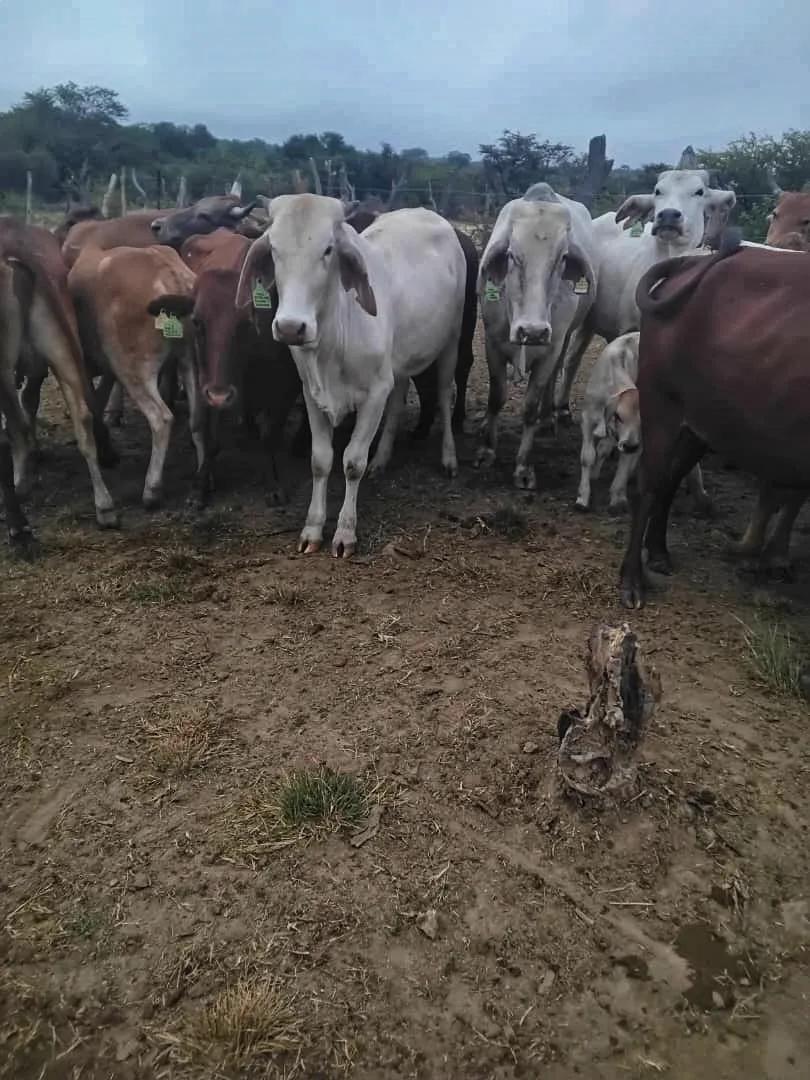
To improve productivity and maintain the health of livestock, it is important to use high-quality feed.
Requirements for feed quality Table 1 – Indicators and standards for determining the quality class of hay
Mass fraction in dry Norm for class matter in hay 1 2 3
"Crude" protein, %, not less than: Sown legumes 15 13 10 Sown grasses 12 10 8 Sown legume-grass mixtures 13 11 9 Natural hayfields 11 9 7
Sown legume-grass mixtures 29 31 32
"Crude" ash, %, not more than 10 11 12
Nutritional value of 1 kg of dry hay matter, feed units/EKE, not less than:
Legume hay 0.65/0.90 0.61/0.87 0.57/0.87
Grass hay 0.61/0.87 0.57/0.84 0.53/0.81
Legume-grass hay 0.62/0.88 0.58/0.85 0.57/0.82
Natural hayfields 0.61/0.87 0.57/0.84 0.53/0.81
Table 2 – Indicators and standards for determining the quality class of silage
Mass fraction of dry matter, %, not less than, in silage from:
Annual legume grasses 28 26 25
Annual legume-grass mixtures 25 20 18
Annual grass grasses 20 20 18
Perennial wilted grasses 30 30 25
Mass fraction of "crude" protein in dry matter, %, not less than, in silage from:
Maize and sorghum 7.5 7.5 7.5
Grass-legume grasses and mixtures of other plants with legumes Grass grasses, sunflower, other plants and their mixtures 13 11 9 11 9 8 "Crude" fiber, %, not more than 30 33 35
"Crude" ash, %, not more than, in silage from:
Butyric acid, %, not more than 0.5 1.0 2.0
Lactic acid in total quantity (lactic, acetic, butyric) acids, %, not less than, in silage from: Maize, sorghum, Sudan grass 55 50 40
Maize, sorghum, Sudan grass 3.8–4.3 3.7–4.4 3.6–4.5
Other plants 3.9–4.3 3.9–4.3 3.8–4.5
Nutritional value of 1 kg of dry silage matter, feed units/EKE, not less than:
0.76/0.97 0.64/0.89 0.56/0.83 and legume-grass grasses Their annual grass 0.73/0.95 0.60/0.86 0.53/0.81
From maize, sunflower, etc. 0.79/0.97 0.69/0.92 0.63/0.88
Table 3 – Quality requirements for compound feed – concentrates for cattle aged 6–12 months in 6–12 months in Indicators from 1 to 6 stall pasture pasture-
EKE, 100 kg 105 100 95 100 100
19.0 17.0 13.6 16.0 12.0 in, not less than, %
6.5 11.0 10.0 10.0 10.0 ka, not more than, %
Ca, not less than, % 0.6 0.6 0.6 0.6 0.6
P, not less than, % 0.7 0.8 0.7 0.8 0.6
NaCl, not less than 0.4 1.0 1.0 1.0 1.0 not more than, % 1.0 1.5 1.5 2.5 2.5
Regulatory GOST GOST GOST GOST GOST document 9268-90 9268-90 9268-90 9268-90 9268-90 period EKE, 100 kg 100 100 110 108 110 Crude protein,
11.0 16.0 18.0 13.0 18.0 not less than, % Ca, not less than, % 0.5 0.5 0.65 0.6 0.7 P, not less than, % 0.7 0.7 0.85 0.83 0.8 NaCl, not less than, 1.0 1.0 1.0 1.0 1.0 not more than, % 1.5 1.5 1.5 1.5 1.5 Regulatory GOST GOST GOST GOST GOST document 9268-90 9268-90 9268-90 9268-90 9268-90
EKE, 100 kg 105 95 95 125 110 100 Crude prote-
12.0 15.0 11.0 21.0 16.0 13.0 in, not less than, % Crude fiber-
– – – 4.9 7.5 10.0 ka, not more than, % Ca, not less than, % 0.7 0.5 0.5 1.0 0.7 0.7
P, not less than, % 0.8 0.7 0.7 0.6 0.5 0.3 NaCl, not less than, 1.0 1.0 1.0 – – – not more than, % 1.5 2.0 2.0 1.0 1.0 1.5 Regulatory GOST GOST GOST GOST GOST GOST document 9268-90 9268-90 9268-90 9268-90 9268-90 9268-90
Indicator 9-42 days 61–120
SK-4 SK-6 SK-7 ME of pigs, not less than,
14.3 12.1 12.1 11.6 2.2 MJ/kg Crude protein, % not less than, 19.9 17.2 15.1 14.5 13.0 not more than 21.9 19.2 17.1 16.5 15.0 Lysine, % not less than 1.1 0.84 0.73 0.66 0.55 Methionine+cystine, % not less than 0.7 0.54 0.47 0.45 0.40 Crude fiber, % not more than 3.6 5.0 5.0 6.0 5.5 Calcium, % not less than 1.0 0.9 0.9 0.7 0.6 not more than 1.5 1.3 1.1 1.0 0.8 Phosphorus, % not less than 0.9 0.9 0.8 0.7 0.6 not more than 1.4 1.4 1.1 1.0 0.8 not less than 0.4 0.4 0.4 0.4 0.4 not more than 1.0 0.9 0.9 0.8 0.8 Regulatory GOSTR GOSTR GOSTR GOSTR GOSTR document 50257-92 50257-92 50257-92 50257-92 50257-92
Table 4 – Quality requirements for compound feed – concentrates for sheep
Lambs Indicator older than 4 suckling period
1 2 3 4 5 6 EKE, 100 kg 90 85 80 89 89
ME, MJ/kg 9.0 8.5 8.0 8.9 8.9 Crude protein, % not less than, 19.0 17.0 13.5 17.0 14.5 not more than 21.0 19.0 15.5 19.0 16.5 Crude fiber, % not more than 10.0 12.0 12.0 12.0 12.0
1 2 3 4 5 6 Ca, % not less than 1.0 0.5 0.5 0.5 0.4 P, % not less than 0.8 0.8 0.8 0.9 0.9 Regulatory GOST GOST GOST GOSTR GOST document 10199-81 10199-81 10199-81 10199-81 10199-81
Task 2. Study methods for harvesting roughage and succulent feed
Succulent feed contains more than 40 % water. Silage is preserved feed made from freshly harvested or, less frequently, wilted green plants.
Requirements for maize for successful silage preservation:
– 11.1 MJ ME/kg DM;
– more than 300 g starch/kg DM;
– 180–210 g crude fiber/kg DM;
Haylage is preserved feed prepared from grasses previously wilted after mowing to a moisture content of 45–55 % and preserved under anaerobic conditions.
Preservation of haylage occurs due to the low availability of water for bacteria and soluble cells, caused by an increase in their osmotic pressure during plant dehydration when wilting the mass.
– little organic acid is formed, the feed is slightly acidic, pH 4.5–5.9;
– sugar preservation is more than 20 %. And biological losses are up to 10 %;
– mowing height in steppe hayfields is 4–4.5 cm, for sown annual legume-grass mixtures 5–6, perennial grasses of the first year – 8–9, subsequent years 5–7 cm;
– the area of grass mowing per day must correspond to the harvesting from the field during the day (do not allow overdrying);
– duration of filling the storage – short timeframes (up to 10 days);
– mowing equipment should include mower-conditioners; for wilting, grass machinery should have conditioners with "v"-shaped tines, and for legumes – with profiled rubber rollers;
– the mass is wilted to 70–60 % (within 3–4 hours in the steppe zone or 5–7 hours in the forest-steppe or forest zones, then collected in windrows for final wilting;
– annual legume-grass mixtures, Sudan grass, foxtail millet, etc., should be mown into windrows – in regions with a temperate climate – in windrows 1.2–1.25 m wide, in hot climates – up to 0.8 m, in order to place 6.5 kg of mass per 1 linear meter of windrow;
– forage harvesters chop the mass; the desired cutting length is 2–3 cm, as it compacts well and is convenient for extraction and feed distribution;
– the forage harvester delivers the mass into transport vehicles under slight air pressure;
– transport vehicles are equipped with removable tube frames (diameter ¾ – 1.0 inch) covered with fine-mesh metal netting;
– when laying down the mass, compaction with heavy tractors is mandatory. With proper compaction, the temperature of the mass should be 35–37 °C;
– the humidity of the mass during transport should be 55–50 %.
1) Express method using stationary or portable moisture meters.
2) Visual method: at 55 % humidity, stems and leaves become soft but do not crumble or break. When squeezed in the hand, the chopped plants become moist but do not release juice, and the clump falls apart after the hand is opened. If leaves are rubbed between the fingers, they roll into a tube but do not release juice or disintegrate. At 45 % humidity, leaves curl up.
3) Twist a bundle from evenly wilted mass; if no juice is released, the mass is ready for harvesting, with humidity not exceeding 60 %.
Roughage is bulky, less energy-dense, and contains high amounts of fiber. Hay is green feed preserved to a humidity not exceeding 17 %. Hay types: sown grass, legume, grass-legume, and natural meadow hay. Harvesting methods: field drying; wilting and active ventilation; chemical preservation. Storage methods: stacking in piles or ricks, briquetting, chopping, baling into bales or rolls.
The quality of the harvested feed is significantly influenced by the plant growth stage, botanical composition, cutting height, method of harvesting, preservation, and covering of the storage container.
When cutting corn at a height of 40–50 cm, a higher energy content is achieved, and feed intake increases by 1 kg DM/day.
The quality of the harvested feed is influenced by its preservation. Chemical or biological preservatives, or various additives that promote desired lactic acid fermentation, are used for preserving harvested feeds.
Table 5 – Growth stages of plants and quality of harvested feed
Stage MJ (NE)/kg dry matter Plants before budding 11.1 – – 10.9 budding 10.5 9.8 10.8 10.8 Legumes and legume-early flowering 10.4 9.5 10.3 10.2 grass full flowering 9.9 8.7 9.7 9.9 end of flowering 8.8 8.3 8.6 before heading 11.6 – 11.3 10.6 start of heading 11.6 10.2 10.6 10 Sown full heading 11.1 9.6 10 9.2 grasses end of heading 10.5 8.5 9.6 flowering 9.2 8.1 8.8 milk stage 10.7 – 10.1 – Corn milk-dough stage 10.6 – 10.5 dough stage 11.5 – 11.1 –
Table 6 – Content of DM, energy, and protein in haylage from grasses
Content per 1 kg dry matter ash, g protein, g fiber, g MJ MJ before heading 35 114 187 220 6.54 10.78 start of heading 35 111 168 258 6.07 10.18 end of heading 35 113 150 290 5.92 9.96 flowering 35 114 129 319 5.56 9.45 after flowering 35 116 120 348 5.17 8.91
4–6 weeks 35 132 192 214 5.98 10.4
> 6 weeks 35 124 168 254 5.68 9.62
35 112 150 295 5.16 8.89
Table 7 – Nutritional value of silage depending on intensity g/kg DM per g/kg DM
Extensive use 278 104 6.91
Old stands with fertilizer 267 159 67.9 9.17 application
257 212 75.5 10.44 fertilizer application
Figure 3 – Change in crude fiber content during haylage harvesting
Table 8 – Effect of cutting height on nutrient content
Effect of cutting height on nutrient and energy content in corn silage Cutting height, Content Concentration cm dry matter crude fiber starch NE, MJ
15 37 17.5 29.1 11.1
30 38 16.6 30.1 11.2
40 39 15.5 32.4 11.5
Chemical preservatives promote the development of lactic acid bacteria and inhibit the development of butyric acid bacteria, mold, and rot.
When harvesting feed, an additional quantity of lactic acid bacteria is added: homo- and heterofermentative lactic acid bacterial cultures.
– those increasing the sugar content in the silage mass (feed sugar, molasses, grain, and other carbohydrate products);
– those supporting bacterial growth and accelerating the fermentation process (macro- and micronutrients, ascorbic acid, yeast extracts).
When harvesting preserved feed, it is important to observe the shape and size of the layer, the force and time of compaction, and the covering of the mass.
Figure 4 – Cross-section of a silage pile when laying in clamps
Use a heavy wheeled tractor for compaction.
Thickness of the compacted layer – more than 30 cm.
Compaction time for a layer of green mass – 10 minutes.
Figure 5 – Sealing with film over the entire surface
Haylage and silage harvesting: sealing and requirements for raw materials
High-quality compaction and reliable sealing are the foundation for successful silage harvesting. It is recommended to compact the mass with heavy wheeled tractors and cover it with double film. The first layer of film must fit tightly to the surface of the ensiled mass, preventing gas exchange and protecting it from contamination. The second layer protects the first from birds and bad weather, completely blocks oxygen access, and withstands foot traffic during maintenance. Such a cover lasts for several years and must be weighted down on top.
Do not use manure or grain waste to weigh down the film. Mice and rats settle in them, gnawing through the cover and compromising the airtightness of the trench.
Recently, silage in polyethylene tubes has been gaining popularity. The technology requires the use of special machines with pressing rollers that tightly pack the feed into a polymer casing. This method excludes contact between the mass and air during the storage stage and minimizes losses of nutrients.
When harvesting grain-haylage, it is extremely important to control the parameters of the raw material. This guarantees proper preservation and high nutritional value of the finished feed.
| Raw material parameter for grain-haylage | Required value |
|---|---|
| Dry matter content | 32–40 % |
| Degree of grinding during grain rolling | 10–15 mm |
| Metabolizable energy (ME) concentration | more than 9.8 MJ/kg DM |
| Starch content | more than 160 g/kg DM |
| Crude fiber content | 250–380 g/kg DM |
| Crude protein content | more than 110 g/kg DM |
| Acidity (pH) | at least 4.0 |
Technologies for preparing grain and cornage for feeding
Productivity of livestock animals depends directly on the volume of dry matter intake. To increase feed palatability, it is necessary to improve its taste and prepare it properly for feeding. For ruminants, fiber availability is critical, so roughage with a high content of cellulose, hemicellulose, and lignin requires preliminary processing.
When harvesting cornage from the whole maize plant and cobs, modern harvesters with two additional drums are used. These drums have one and two holes, rotate at different speeds, and thoroughly grind the mass during mowing. The technology allows particles to be ground to a size of no more than 2 cm, which increases the proportion of crude fiber and stimulates rumen digestion. When harvesting late cornage, this process effectively grinds the grain and crushes the cob core to the size of a pea, thanks to which the animals consume the feed completely without waste.
Dry, wet, cold, and hot methods are used to process grain. Cold preparation methods include several technological techniques:
- rolling;
- crushing;
- soaking;
- ensiling at high humidity;
- preservation using preservatives.
Grain grinding is most often performed using roller mills or hammer mills. Roller mills squeeze maize grain, wheat, or sorghum between smooth or grooved rollers, allowing the grinding to be regulated from cracked fractions to flour. For barley and oats, grooved rollers are preferred, on which, among other things, corrugated grain can be obtained. Hammer mills grind the product with rotating metal plates through a sieve with holes of different diameters. The feed obtained with them is less uniform and contains more dust compared to roller grinding.
Soaking the grain in warm water for 12–24 hours softens and swells it, making the feed more attractive in taste. Before feeding, such grain is passed through a roller mill, which significantly increases livestock productivity. During reconstitution, water is added to dry grain and kept in an airtight silo. High-moisture grain is harvested at elevated humidity and preserved in silos or tubes after being ground.
Whole preserved grain should not be fed without preliminary preparation — it must be ground or rolled before distribution.
For pigs (barley, maize) and cattle (maize, sorghum), preservation with organic acids is used. Moist grain is mixed with propionic acid or a mixture of acetic and propionic acids. This stops mold development and prevents feed spoilage during storage.
- Grain soaking time — 12–24 h
- Humidity during reconstitution — 25–30 %
- Reconstitution period in the bin — 14–21 days
- Humidity of high-moisture grain during harvesting — 25–30 %
- Propionic acid input — 1–1.9 %
- Grain humidity for acid preservation — 20–30 %
- Steaming time before rolling — 3–5 min
- Reduction of feed losses from dusting — 5–10%
- Optimal solubility index of soy protein — 9–11
- Maximum pH increase in urease test — 0.02 units
Thermal treatment of grain and seeds of oil crops increases their nutritional value but requires significant costs for purchasing and maintaining equipment. In practice, steaming followed by rolling, flake production, dry puffing (popping), micronization, toasting, pelleting, and pressure autoclaving are used.
During steam rolling, grain is treated with steam for 3–5 minutes before being fed into a roller mill. This method disinfects the feed from weed seeds and eliminates dust, although livestock productivity increases slightly. Conversely, the production of thin flat flakes (steam flaking) under strict quality control significantly increases starch availability. Feeding thin maize, barley, and sorghum flakes improves feed palatability and accelerates animal weight gain.
| Steam flaking time, min | 40 | 60 | 80 |
|---|---|---|---|
| Starch availability and animal weight gain | Increases | Increases | Increases |
During pelleting, ground components or a finished feed mixture are pressed through a pellet mill die, most often after pre-conditioning with steam. Finished pellets vary in shape, size, and hardness. Adding molasses and fat during mixing improves the taste of the feed, eliminates dust, and facilitates blending. Feeding sows pellets with molasses and fat increases their milk yield and the birth weight of piglets.
When fed with pelleted feed, livestock animals and poultry cannot select individual components of the diet, which guarantees the consumption of the entire volume of nutrients.
Dry heating is used to improve starch absorption:
- Popping — dry heating of corn grain causes the endosperm to rupture, reduces grain density, and improves starch digestion in the rumen and intestine.
- Micronization — a similar expansion process, but heating occurs via infrared radiation.
- Extruding — pressing raw material through an extruder head. Due to friction and pressure, the grain is ground, heated, and expanded. Starch is broken down into dextrins, making extrudates an ideal feed for early-weaned piglets.
Quality control of soybean protein processing
The correct temperature regime during soybean processing directly affects protein digestibility in the rumen of ruminants and the small intestine of pigs, poultry, and calves. The quality of thermal processing is monitored according to two main indicators.
- Determination of the protein dispersibility index. The method evaluates the solubility of heated soy protein. The optimal indicator should be in the range of 9 to 11. A value above 14 indicates insufficient heating and the need to adjust the temperature regime.
- Assessment of urease activity by pH change. Active acidity during the test should not increase by more than 0.02 pH units. This monitoring is mandatory if the soy is intended for calves, pigs, and poultry.
Excessive heating of soy reduces protein digestibility in the small intestine. To avoid spoiling a batch, regularly test the level of rumen-degradable protein (RDP) and monitor the temperature.
Read next
Farm machinery For agronomists
Modern technologies for harvesting and preparing high-quality forage crops
Livestock For students
Composition and nutritional value of compound feed for livestock animals and poultry
Poultry For agronomists