
Selection of materials and operational features of frame greenhouses
13 min read
People's Choice: Polycarbonate or Traditional Covers
First of all, I suggest you take a look out of a car or train window in the countryside to see which greenhouses most summer residents and villagers are installing today. In all those endless small and large vegetable gardens that surround the suburbs and stretch along railways and highways, which type of covering prevails?
It is clearly visible that people have already made a choice in favor of polycarbonate. It is displacing all other materials, even light tunnel hoops. Here and there, glazed "houses" are still finishing out their days, and in some places, domes covered with mended polyethylene film are looming: their owners are most likely pensioners who have very few funds.
Now, after familiarizing ourselves with the popular experience, let's try to reason logically.
Factors for Material Selection and Corrosive Environment
What should be considered first when choosing a material?
Greenhouse — this is one of the most humid environments; moreover, unlike, say, a basement, where it is just as damp, it is warm here. This means that all corrosion processes in a greenhouse occur much faster:
- rust;
- destruction of paint and varnish;
- oxidation and decay of aluminum;
- rotting of wood, etc.
A greenhouse is not exactly the same thing as, for example, a summer veranda, a gazebo, a shed, or a garage. In it, even the most durable protective agents can degrade faster. And if some bitumen, wood stain, or antiseptic has performed excellently for you in the aforementioned structures, do not be in a hurry to show off your experience; it is not a fact that the same result will be seen in a greenhouse.
Attention. I have encountered polycarbonate greenhouses with rusting frames, despite the fact that manufacturers swore that the hoops were covered with a reliable protective varnish film. They looked quite elegant immediately after construction, but over the years rust broke through micro-cracks, not to mention ugly streaks of dust and other dirt around the fasteners. And there is no way to reach them, except by removing the entire polycarbonate.
"Galvanization!" a connoisseur of construction materials will say in a confident tone. Don't rush, everyone already knows about galvanization. Let us not forget that the ecological purity of materials is also taken into account.
Yes, galvanization is a good thing, provided that the surface area of the hoops is minimal, as in a 2-cm square profile. But if, for example, it is doubled for strength and also has a rectangular cross-section, the surface area increases several times, which means that the same amount of condensate with dissolved zinc flows into the soil. There is a risk of plant poisoning, as this microelement is toxic in large quantities.
For this reason, the flat-section galvanized hoops for film greenhouses, common until recently, cannot be considered ideal either. Their complex bent profile creates too large a surface area for condensate.
Therefore, such hoops should be wrapped at the base, near the ground, with cotton cloth or rope to accumulate the dripping condensate, with replacement once a year.
Important. I repeat that zinc is a microelement beneficial to plants, but like all microelements, it is only beneficial in tiny amounts and is capable of poisoning them when certain values are exceeded.
Zinc poisoning of plants is observed in large industrial greenhouses under thick zinc heating pipes from which moisture regularly exudes. Although zinc coating compounds are generally insoluble in water, under conditions of increased corrosion, a small amount of them passes into the water.
Comparative Characteristics of Greenhouse Materials
Next, we will analyze the advantages and disadvantages of each type of covering. Truth, as everyone knows, is discovered through comparison.
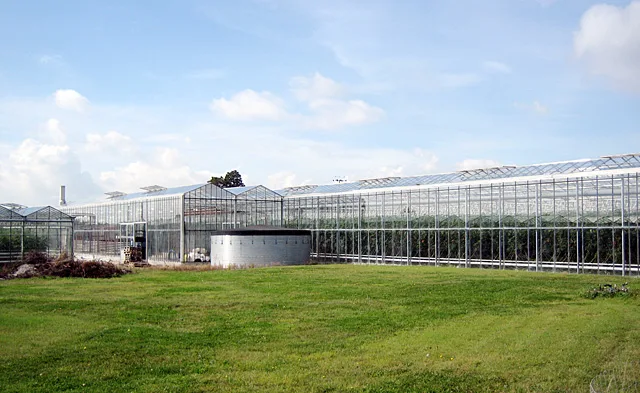
Glazed double-sided greenhouse: pros and cons
A glazed greenhouse is a classic solution that has both undeniable advantages and significant drawbacks.
Advantages:
- No matter how you look at it, glass is perhaps one of the most eternal materials. Quartz is the king of rocks; it will outlive even concrete and granite, let alone any plastic. This is perhaps the only advantage of a glass greenhouse monument. It will last longer than all others — both for us and our grandchildren. But this is exclusively if the frame does not fail.
- Well, of course, among the obvious advantages, one can also mention its somewhat better light transmission compared to plastic coverings: if the glass is freshly washed, it transmits a few percent more sunlight than polycarbonate or film. But this advantage is practically nullified: in direct sunlight, for our plants, these percentages do not play a noticeable role.
- Among the advantages of a glazed greenhouse, it is worth mentioning the representative appearance of some of them. Some fancy "English" model can look very solid. Surely, no other greenhouse will be as stylish and prestigious on a luxurious estate.
- One must only remember that for the broad layer of summer residents, the price of pompous greenhouses is too high for their small size, which is sometimes toy-like. And no matter how "foreign-style" they are equipped, their yield per square meter still has the same limit as all other greenhouses.
Disadvantages:
Disadvantages of glass structures and their operation
- First of all, such a greenhouse was always very expensive.
- Glass is a fragile material; it requires a sturdy frame, which increases its cost: massive load-bearing supports and thick frames are necessary.
- Glass requires fastening only with angle sections, which adds difficulty in choosing a frame. Iron or wooden angle sections — that is, in fact, the entire choice. Aluminum angle sections are prone to corrosion in the open air.
- Wooden frames are becoming increasingly rare; they are the least durable. Even when treated with a modern antiseptic, they do not maintain uniform strength. The environment of a greenhouse is so humid that the wood will still rot and soften at the joints sooner or later. The wood cracks, fades, the paint peels off, the fasteners hold poorly in some places, and the doors warp. With any type of coating, the appearance of a complex wooden frame gradually turns untidy.
- Iron angle sections always started to rust quickly: oil paint is designed for only 4 years, which means they must be repainted with the glass removed. Even with modern paint, dust accumulates on the angle sections, and they need to be washed by removing the glass each time, otherwise, dirty streaks will appear on the lower glass panes.
- And who would want to remove and re-cover the glass so often!
- Rapid heat loss at night is a very significant disadvantage, as greenhouses are built primarily for protection against the night cold. During the day in the sun, the air under the glass heats up quickly, but at night it cools down just as fast, as glass has high thermal conductivity. Plants experience excessive temperature fluctuations. It should be noted that it is precisely these sharp and contrasting temperature fluctuations that can contribute to outbreaks of disease.
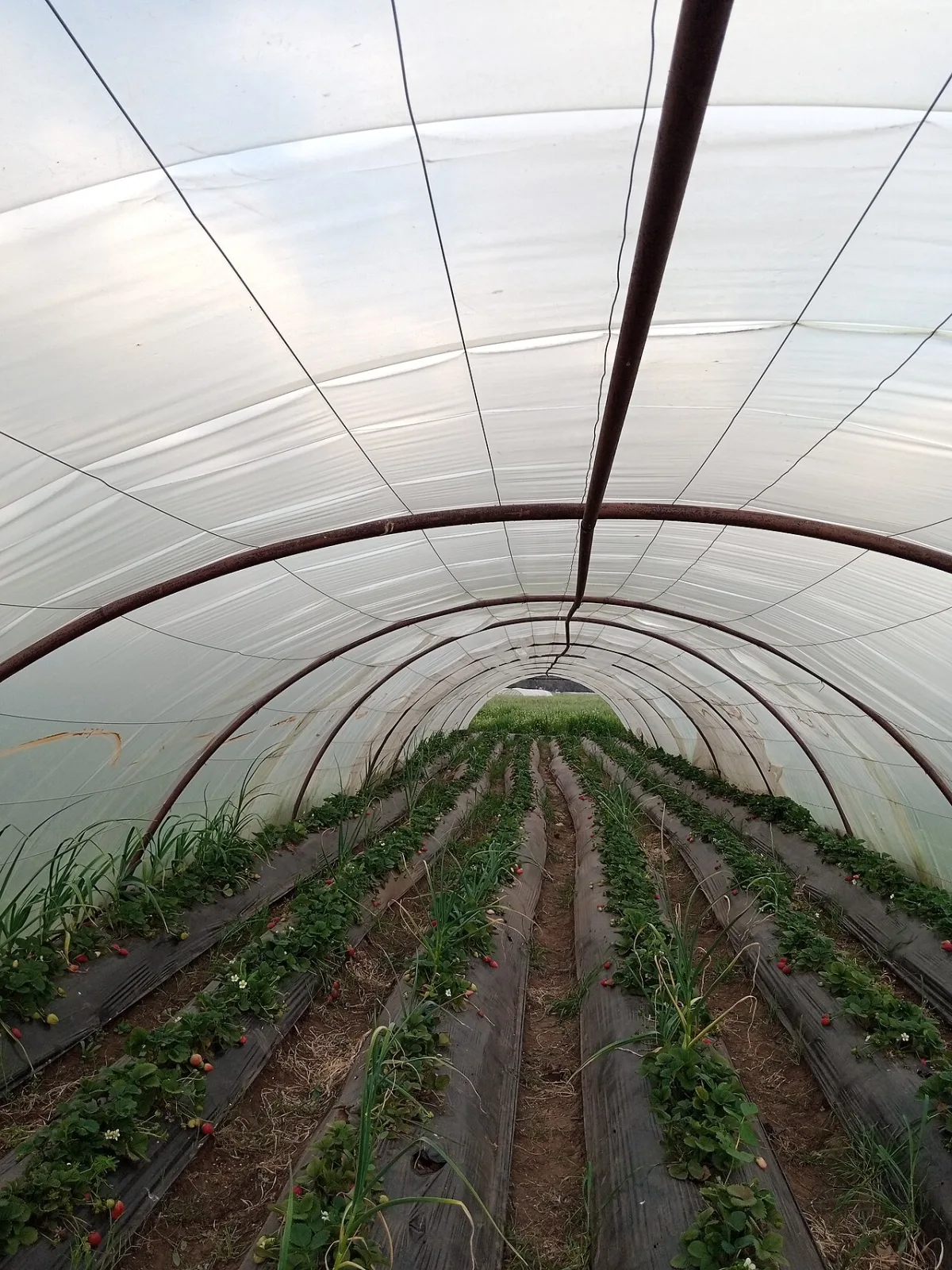
Polyethylene film greenhouse and its features
Advantages
Comparative analysis of film covers
- The only winning position of polyethylene film "tents" over glass and polycarbonate is its low cost (although when recalculated over 10 years, this factor can also be called into question).
This is interesting. In the Soviet era, specialized films for growing crops in closed soil were sometimes sold in hardware stores. They differed from regular film in their yellowish color, felt more dense and elastic to the touch, and cost about twice as much.
Honestly, it was difficult to determine the difference in yield between them and regular film, since the key condition for the well-being of the plants and the final harvest is the owner's ability to "steer" — to open and close the greenhouse in a timely manner. Unlike industrial greenhouses, this was the deciding factor, not the quality of the film. Quality is more important for a professional agronomist who has the "steering" under control at the level of electronics and automation.
Furthermore, what was always on sale and can still be found today is the so-called reinforced film of increased strength, with a characteristic grid: it is effectively a double polyethylene film with a mesh of fishing line welded between the layers. It can be called a prototype of polycarbonate, its precursor, as greenhouses made of reinforced film proved to be the most efficient and durable.
Provided that the mesh was produced according to all GOST standards and with careful use (removing it for the winter), it maintained its strength for a long time, about ten years. It also cost about twice as much as regular film, but at that time, it was worth the expense, although the problem of annual removal and re-covering remained. And in the 1990s, fakes appeared that fell apart after a single season and effectively compromised reinforced film for gardeners, perhaps forever.
Disadvantages of film structures in the private sector
The disadvantages of a polyethylene greenhouse are so great that they make it uncompetitive for the private sector.
- The most fundamental disadvantage is its short service life; polyethylene degrades under the influence of both ultraviolet rays and frost. Even with careful use, it becomes increasingly brittle and tears under the weight of snow or even from touch. Essentially, this cover is disposable; fresh film must be applied annually. While this suits industrial producers (the profit covers all expenses many times over — for the film itself, its installation, and disposal), a gardener has no need for such high expenses and efforts.
- The disadvantage of any film greenhouse is the imperfect fastening. It is almost impossible to remove the film after use in one piece without holes. For this reason, all films and similar non-woven materials are better suited for low tunnels, where they are simply thrown over hoops and then removed without damage for winter storage.
Historical experience and choice of material
This is interesting. Everything is understood through comparison, so it is worth touching briefly on our Soviet era: in the amateur gardening of that time, there were two main problems: cultivars and greenhouses, and of these, the second was the most difficult to resolve. Everyone built a greenhouse from available materials, obtaining them wherever they could. The most realistic option back then was to construct a greenhouse not from glass, but precisely from polyethylene film, if one was lucky enough to find material for a frame.
Of the frames I saw, the most successful was a high frame made of thick plastic pipe-arches, which were used for irrigation systems or somewhere in a manufacturing plant. The film was easily thrown over such arches and then buried at the edges. It did not need to be nailed down, so it did not tear and was easy to remove. But not everyone had such polyethylene and nylon pipes the diameter of a mug.
Assembling a sensible creation according to one's own blueprint, even from transparent film, was indeed a problem. After all, everyone made things out of leftovers and used materials, whereas a proper structure requires good boards, sheets of galvanized tin, and high-quality paint. Sometimes one had to cover the frame with leftover floor paint, also for "a season and a half."
Let's continue. Another obvious disadvantage of polyethylene is its tiny capacity for heat retention. This drawback overrides all the "magic effects" of specialized films, since the daytime state of the greenhouse, I repeat, is not as important as the nighttime state.
Gaining a few percentages during the day — leave that to the agronomists in industrial farms; for a gardener, nighttime temperatures are more important. In such greenhouses, the temperature overnight, in the absence of a heat source, becomes equal to the outdoor temperature. No matter how much the soil warms up during the day, it will quickly release all its heat through the meager thickness of the film.
Today, manufacturers claim that there are modern films that are even better than polycarbonate, but I proceed from the position of an ordinary, busy gardener. Suppose you have a frame at your dacha that you cover with new film every year: try to recognize it in the spring, try to find that specific one among the mountains of all sorts of goods that clutter the market!
In the spring, there are rolls of some kind of film at almost every turn, everyone who wants to makes them... My answer to film manufacturers: I would rather make an effort once and choose polycarbonate than have problems every year with this improved film of yours.
Tent greenhouse made of non-woven material
For a complete picture, it must be said that there are so-called tent greenhouses on the market that very much resemble a tourist camping tent. Such a greenhouse is covered with a light-diffusing material close to spunbond or lutrasil, which creates the same matte white light inside.
In its essence, this variety resembles an ordinary film greenhouse, although modern materials—both the frame and the cover—are, of course, more durable. And yet, this greenhouse gives the impression of being lightweight compared to polycarbonate, and at about the same price, it is difficult to make a choice in its favor.
The manufacturers themselves do not note anything particularly outstanding among the list of advantages of a tent greenhouse:
- speed of assembly;
- the tent can be easily removed for the winter (there is no question of leaving it under snow cover).
Among the disadvantages of tent greenhouses, they cite its lack of resistance to hail.
Features of using tent structures
This strange little greenhouse has managed to find its own narrow niche in the gardening market: it is perfect for those energetic city dwellers who have decided to rent a dacha for just one season and bring along, among other belongings, a collapsible greenhouse for growing their own cucumbers.
For me, another such advantage is obvious: a tent greenhouse does not heat up inside in the sun as much as a PC greenhouse.
However, I still want to draw the following conclusion: a tent greenhouse, like a camping tent for a serene fishing trip on the shore of a lake, is a purely summer option. It is not that year-round "bright shed" that a PC greenhouse can serve as, where it is so convenient to leave tools, bags of cement, paint, and other household supplies.
Furthermore, in terms of durability, the tent type also loses: no matter what the seams of the fabric material are impregnated with, they will still start to fall apart after a few years due to humidity and ultraviolet light.
Selecting the optimal type of greenhouse complex
Since we are talking in this book about a greenhouse complex of 3 greenhouses, i.e., a rather expensive project, our choice of greenhouse type is determined by price and service life. The greenhouse we have chosen, considering that its price is multiplied by three, must be inexpensive and at the same time very sturdy and durable. Only then can we be sure that the project will pay for itself many times over and will not cause psychological strain.
Of the types of greenhouses we have listed, only the PC greenhouse meets all these requirements. And by a significant margin compared to the others. It can be argued that only with it do we even have the opportunity to aim for a greenhouse complex. It is unlikely that most gardeners will succeed in creating a greenhouse facility out of 3 glass, film, or tent hangars.
History of development and design of the first greenhouses
This is interesting. Based on European and Russian museum exhibits, we have the opportunity today to trace the time of emergence and spread of glass greenhouses. Although initially quite murky, glass had been used for orangeries in Europe for a thousand years or more. At first, they were intended for:
- rare medicinal plants;
- tropical curiosities from distant colonies;
- vegetables (from centuries).
To save money, expensive glass was often used to make only one side transparent — the one facing south. And indeed, in every model, plants can develop perfectly well if the back wall, the ceiling, and both end walls are made of any opaque material available, even wooden boards covered with roofing felt.
Peculiarities of operating greenhouses in Russian estates
In Russia, following the example of wealthy European homes, it was customary in manor estates to have a year-round greenhouse for growing all sorts of greens for the master's table. It had log walls, and only the south side was glazed. Later, greenhouses began to be built with a gable roof.
Read next
Greenhouses and covers For gardeners
Choosing a reliable metal frame and hoops for a greenhouse

Greenhouses and covers For gardeners
Choosing materials and greenhouse design for efficient crop production
Greenhouses and covers For gardeners