
Choosing and installing a reliable base for a polycarbonate greenhouse
4 min read
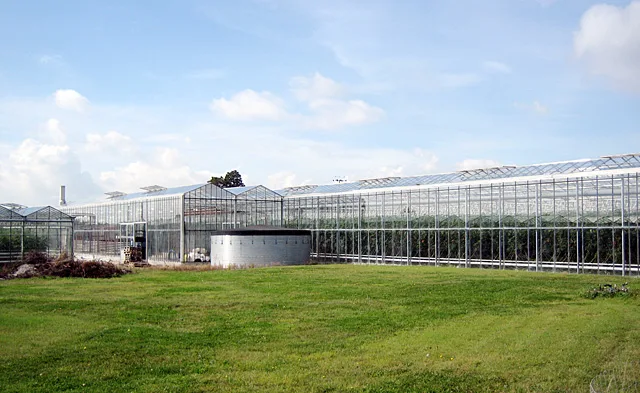
The service life of a polycarbonate greenhouse depends not only on the strength of the frame but also on the stability of the foundation. A misaligned foundation leads to structural deformation and rapid wear of the covering material. To avoid transplants overgrowing during a prolonged installation, the type of foundation must be selected and prepared in advance.
Foundationless installation on T-shaped ground anchors
Using galvanized T-shaped anchor legs eliminates the need for a capital foundation and reduces expenses for lumber or concrete. The structure consists of support posts to which crossbars are attached with screws at the bottom. When installed in clay soil, such a support firmly anchors the greenhouse and protects it from wind loads and subsidence.
Installing the frame on ground anchors is performed in a specific sequence:
- Dig holes for the T-shaped legs along the entire perimeter of the greenhouse.
- Install the frame and secure it in a leveled position using supports made of bricks or board scraps.
- Check the horizontal alignment of the structure using a spirit level.
- Fill the holes with the excavated soil, water it, and tamp it down thoroughly.
- Leave the foundation for two hours to allow the soil to settle, then remove the temporary supports and mount the polycarbonate sheets.
Most types of foundations leave a gap between the soil and the bottom edge of the polycarbonate, which causes the dome to vibrate in the wind and wear out quickly at the mounting points. The advantage of T-shaped legs is the ability to bury the edge of the sheet into the ground. The optimal burial depth is 5–10 cm. A depth of 20 cm will increase strength but will block the roots of the plants from spreading into the aisles.
Choosing an alternative foundation: wood, concrete, and tile
If the site requires a rigid perimeter or if it is necessary to increase the height of the dome, traditional construction materials are used. Each type of foundation has its own operational characteristics and affects the development of the plants' root system in the perimeter zone. The choice of material determines the durability of the entire structure.
A wooden beam 5–10 cm thick or thick boards are the simplest, but least durable option. Without treatment, the wood will rot within a few seasons, so it must be impregnated with antiseptics. Another version of a wooden foundation is a box filled with sand, onto which the frame is installed. A sand cushion eliminates drafts and prevents the appearance of gaps.
A concrete or brick strip foundation is durable but requires reinforcement and fixation with steel pins against frost heaving. Such a foundation adds extra height to the dome, improving the microclimate in the greenhouse. However, a monolithic strip completely isolates the internal volume of soil and restricts the root system.
Paving tiles are a compromise between wood and concrete. The frame is mounted on the inner edge of the tiles, securing it with long rebar hooks driven into the ground between the joints. This method combines the strength of fixation with the possibility for free root growth.
Wooden and tile foundations allow the roots of vegetable crops to extend beyond the greenhouse. This significantly increases yield if the external strip around the greenhouse, 20–50 cm wide, is regularly cleared of weeds and supplied with fertilizer.
- Service life of a beam without impregnation — 5 seasons
- Service life of a beam with an antiseptic — from 10 years
- Width of the external nutrient strip — 20–50 cm
- Optimal burial of polycarbonate — 5–10 cm
- Maximum burial of the sheet — 20 cm
| Foundation element | Tile size, cm |
|---|---|
| Paving tile | 30 × 30; 50 × 50, etc. |
Read next
Greenhouses and covers For gardeners
DIY construction of greenhouses from window frames and metal profiles
Greenhouses and covers For gardeners
Construction of a wooden greenhouse: selection of materials and foundation types
Greenhouses and covers For gardeners