
Application of hydrogel for growing vegetables in a greenhouse in the North-West
21 min read
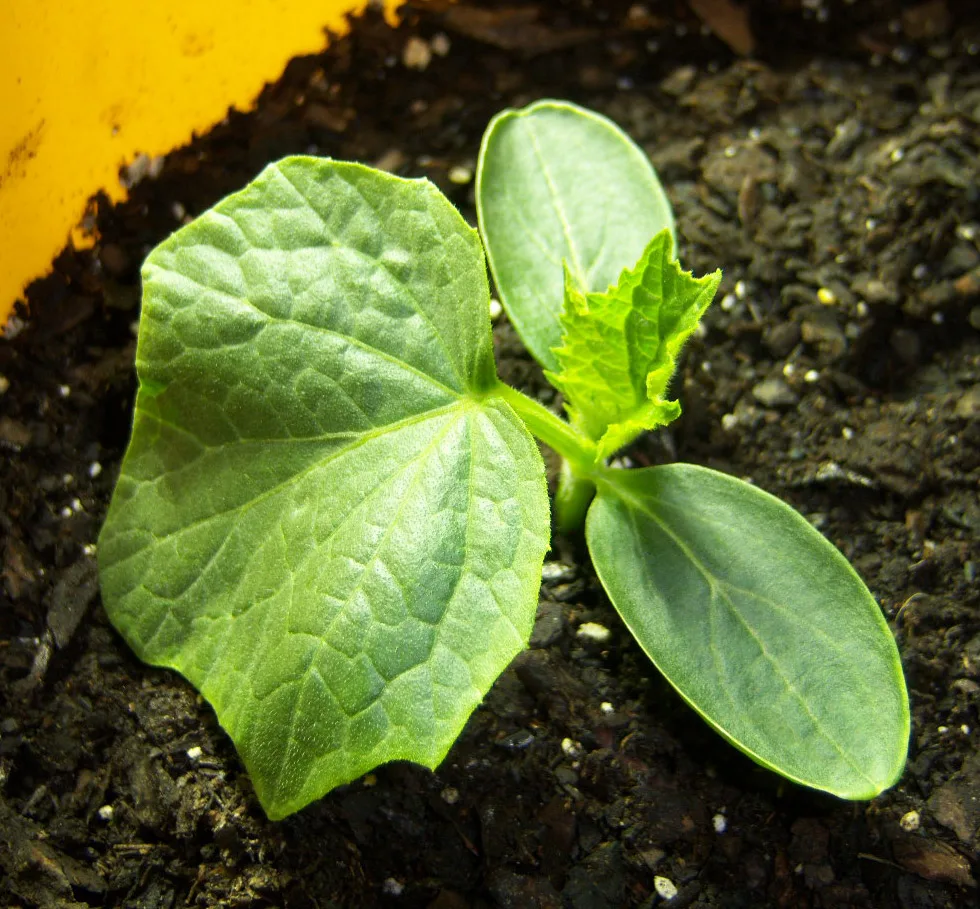
I use my greenhouse, as they say, to its full potential. Specifically, I plant it densely with a wide variety of plants. In one greenhouse, I grow cucumbers, peppers, eggplants, tomatoes, parsley, dill, onions, radishes, lettuce, basil, and marjoram. In addition, I use it to grow transplants of cabbage, beet, annual flowers, and I also interplant early carrots and beet. That's how it is! Of course, I do not sow or plant everything at the same time; there is a kind of conveyor belt, which I will describe specifically in a separate chapter.
The first question that will immediately arise for many readers is: what is the area of such a greenhouse?
The greenhouse is arched, 3 m wide and almost 6 m long, meaning its area is not that large, only 18 sq. m. Yet, a lot of things grow in it.
The second question: how do I grow cucumbers and tomatoes in the same greenhouse? After all, all the books keep repeating that cucumbers need humid air and moist soil, while tomatoes need dry air and moderately moist soil.
Firstly, I live in the Northwest, and here the air humidity is practically always 70–80%, so tomatoes have to put up with it, but gardeners have to take certain measures to help the poor tomatoes.
Furthermore, the books claim that cucumbers are afraid of drafts, as they supposedly cause stem rot disease. However, as not only I, but many gardeners in the Northwest have discovered, it is not drafts that are so terrible for cucumbers, but stagnant air. It is precisely this that causes rot disease. So, drafts turned out to have nothing to do with it. Therefore, organize cross-ventilation in greenhouses from both sides, as is required for tomatoes, and do not worry about the cucumbers; they feel quite fine in a draft, and you can see for yourself.
Now regarding cucumber irrigation. If you water them daily, you will have too much soil moisture, and consequently, it will evaporate intensively, increasing the already high air humidity in the greenhouse. But this can be avoided.
First of all, you need to reduce irrigation to once every 2–4 weeks. "How so?" the reader will be indignant. It is very simple. Currently, there is hydrogel, which I have been using every year for almost 10 years now.
What kind of "beast" is that?
It is a polymer crumble that, when soaked in water, swells 300 times its size! Once swollen, it retains moisture, preventing it from evaporating from the soil surface and moving deep into the soil, so the moisture reaches exclusively the roots, which absorb it as needed. It is well known that plants manage to capture only 25% of the water poured under them during irrigation, while the rest goes down and, most importantly, evaporates from the soil surface, never reaching the plants. That is, during irrigation, we waste our time and effort by three-quarters.
So, irrigation can quite reasonably be considered physical exercise in the fresh air, rather than useful and necessary work. Being a true polymer material, hydrogel decomposes upon oxidation into carbon dioxide and water, so it not only does not harm the soil but, on the contrary, is very beneficial.
In the evening, soak the crumble in water, approximately 300 times the mass of the crumble itself. Thus, for 3 liters of water, you will need only 10 g (usually one sachet) of hydrogel. When planting, each plant will require about half a glass of ready-made gel (i.e., 100 ml), so this sachet will be enough for you to plant 30 plants.
When planting out cucumber transplants, if for some reason you do this, add half a glass of hydrogel directly into the hole and plant the cucumber transplants (or any other transplants) on top of it. If you do not grow cucumber transplants—which is reasonable—then after adding the hydrogel to the hole, cover it with 4–5 cm of soil and then sow the seed. The thing is, if you put seeds directly into the hydrogel, it would be equivalent to dropping them into water for 5–7 days, and during that time they would simply rot in the water or suffocate from a lack of air.
Hydrogel can be dissolved not in water, but in a weak solution of mineral or organic fertilizer. In this case, you will simultaneously get rid of one more chore – top dressing of cucumbers. As an organic fertilizer (and for simultaneous soil improvement), I use a combined solution of "Fitosporin" and "Gumi", and as a mineral one – either organo-mineral fertilizer (OMF) from the Buysky Chemical Plant mineral fertilizers, or the powder fraction of the unique AVA fertilizer. However, you can also use an azophoska solution, as described in the first chapter.
What is the advantage of OMF?
It is an organic capsule that contains all the macro- and micronutrients necessary for plants. Since the fertilizer gradually provides nutrients to the plants, it can be applied into the planting hole immediately during spring planting, and you do not need to worry about mineral nutrition for the rest of the summer.
AVA fertilizer is obtained by high-temperature melting of mineral elements (similar to how glass is manufactured). It is a special phosphate glass. Therefore, the minerals that make up the fertilizer form a structure that is insoluble in water. A couple of questions immediately arise.
What is the use of such a fertilizer if it will just lie in the soil like glass?
And the second: can it be replaced by bottle glass as a fertilizer?
Organizing local irrigation and prolonged nutrition for cucumbers
For continuous supply of greenhouse crops with nutrients throughout the season, it is effective to use slow-release fertilizers, such as AVA. Unlike ordinary silicate glass, this product contains silicon and more than ten macro- and micronutrients in a form available to plants. The fertilizer does not dissolve in water, which prevents it from being leached into the lower soil layers and eliminates pollution of water bodies. The dissolution of nutrients occurs under the influence of organic acids secreted by the root system of plants, which ensures their targeted and gradual absorption.
AVA fertilizer dissolves directly under the influence of root exudates. This allows it to be applied once per season at planting, ensuring constant mineral nutrition without the risk of leaching.
In the absence of specialized slow-release fertilizers or hydrogel, the water balance of cucumbers is maintained with the help of local bottle feeders/waterers. This method allows for dosing the supply of moisture and nutrient solutions directly to the roots. Plants receive everything necessary in the zone of the main root system and do not waste energy on root growth in search of water.
Mineral substances make up only 7–8% of the total plant mass, including roots and harvest. With standard surface application, more than half of the fertilizer is leached by irrigation water, which forces an increase in application rates.
- The bottoms are cut off from whole plastic bottles.
- The bottles are placed with the open neck down, fully buried in the soil up to the "shoulders" next to the plants.
- A weak nutrient solution is poured into the containers, alternating organic and mineral top dressing once every two weeks.
- If the liquid drains too quickly, the bottle is turned and pressed deeper to form a dense soil plug in the neck.
Mulching cucumbers and optimizing silicon nutrition for tomatoes
An alternative to bottle irrigation is soil mulching under cucumbers immediately after emergence. Mown grass or pulled weeds are used as mulch. As it dries, the organic layer settles, so it is regularly renewed to maintain the initial thickness. Decomposing in the lower part, the mulch releases heat necessary for the roots of cucurbits and provides them with additional nutrition.
- Share of mineral substances in plant mass — 7–8%
- Organic mulch layer thickness — 8–10 cm
- Water content in plant residues — 70–80%
- Superphosphate consumption per tomato hole — 1 tbsp
Thanks to mulching, irrigation of cucumbers is carried out no more than once every two weeks, and only during severe drought do they switch to a weekly regimen. Plant residues consist of 70–80% water, which is released into the soil during decomposition and evaporates locally under the leaves, creating a humid microclimate. Local evaporation under the cucumbers does not increase the overall air humidity in the greenhouse, which protects neighboring tomato plantings from the development of late blight and brown leaf spot.
To stimulate the development of cucumbers, the mulch is watered twice during the summer with liquid organic fertilizers or "Fitosporin" and "Gumi" preparations. When preparing working solutions based on manure, poultry manure, or herbal raw materials, it is important to strictly maintain the proportions.
| Type of organic raw material | Ratio of raw material to water when preparing infusion |
|---|---|
| Dandelion flower infusion | 1:5 |
| Manure | 1:10 |
| Poultry or rabbit manure | 1:20 |
Growing technology for tomatoes in companion planting requires creating different nutritional conditions. When planting transplants, one tablespoon of superphosphate is added to each hole, which, due to its low solubility, provides the plants with phosphorus throughout the entire growing season. Also, a handful of feather and down material is added to the hole. Down and feathers contain silicon in a bioavailable form. Unlike silicon from sand, which is practically not absorbed due to the slow activity of soil "stone-eater" microorganisms, feathers are quickly decomposed by bacteria and provide tomatoes with silicon from the moment of planting.
And why do we need it? The same reason as we do. Lack of silicon – we go bald, nails break, teeth fall out, a slight fall leads to broken arms and legs; beloved cats and dogs develop bald spots and bad teeth, and birds have a very ragged-looking plumage. Is that not enough for you?
Silicon strengthens the walls of plant vascular bundles. This makes them resistant to all kinds of damage, including those caused by disease pathogens, and makes the trunks and stems themselves sturdy. Interestingly, by the end of the season, not a trace of these feathers remains, so eagerly are they processed by microorganisms, and the silicon released by them is absorbed by the plants. Gardeners who cultivate peonies have such a technique. When planting a new division, they first put it into an old pure wool sock (or a mitten) or wrap it in a piece of a scarf, and only then plant it in the soil. I can confirm from my own experience that such a division establishes much better.
It is not necessary to add hydrogel for tomatoes because they can generally go without irrigation for the entire season, regardless of the weather. Don't believe it? Try it. But when planting, you must first pour water into each hole:
| Tall cultivars or hybrids | at least 5 l of warm water |
| Determinate low-growing cultivars | at least 3 l of warm water |
Immediately plant the transplants and then mulch the soil under the tomatoes with newspapers folded in several layers.
What does this provide?
Water, along with a portion of the mineral fertilizer, will begin to move downward. And in pursuit of them, the roots of the tomatoes will begin to grow downward. One only needs to ensure that during pricking out – their first transplanting – the tip of the taproot is not broken off, as is usually recommended by various authors.
Why do they give this harmful advice?
To force the root to branch faster.
But does the plant need this?
Absolutely not. Because a branching root grows in all directions in search of food and water, that is, it spreads close to the surface. Anyone who practices this has repeatedly seen during harvesting of tomatoes that the tomato root system has spread throughout the greenhouse. Such a root system makes the plant dependent – a freeloader; it has to be irrigated often. But the tomato root system, unlike that of a cucumber, is capable of penetrating deep into the soil (at least 1.5 m), and moisture is almost always present there (with the exception of sandy soils, but that is a special case).
So the tomato is capable of taking care of itself. And to do this, there is no need to break off the tip of its taproot. We do not need the root to branch; we need it to grow downward. Since root tips possess a special property, say, a "sense" for food and water, the taproot will grow downward, where the water and food have gone, and it will also gradually branch there, in the depths, rather than just below the surface.
What does mulching with newspapers provide?
- It blocks the possibility of moisture evaporation from the surface: this preserves soil moisture.
- The air around each plant remains drier than when you mulch the soil with green organic matter.
I conducted this experiment. When I mulched the soil with green organic matter during a wet summer, the tomatoes developed late blight, while those right next to them, mulched with newspapers, did not.
There is another nuance here. The fact is that the pathogen of the tomato fungal disease, late blight, lives in the soil, like most plant disease pathogens. Organic mulch, if the layer is less than 7–8 cm, is not an obstacle to the germination of fungal spores to the surface, from where they spread, landing on the leaves (you, of course, have noticed that late blight primarily affects the lower leaves). But several layers of paper placed on the soil block the fungal spores from flying out.
I have been growing tomatoes this way for many years, and even in the coldest and rainiest summer, my tomatoes do not suffer from late blight, although I do not apply any special preventive measures against it, except for thoroughly drenching the soil before planting with a solution of "Fitosporin" and "Gumi". I do this not only in the greenhouse but also in all garden beds and under all plantings twice a year. In spring, as soon as the soil allows for sowing and planting, and in autumn – immediately after harvesting.
Usually, tomatoes set the first two clusters well, but then, during the noon hours in the greenhouse, even with the doors fully open on both sides, the temperature is too high for the third and fourth clusters to set due to pollen sterilization (above 32 degrees). Only after the temperature drops does the tomato set the fifth and sixth clusters, which still have time to ripen, but only during a long and warm autumn. Of course, this leads to a significant loss of yield.
How can this be avoided?
Either by making removable roofs on greenhouses or by buying ones with an opening top. However, you can do otherwise:
- You need to place a fan (or a fan heater with the heating turned off) at the greenhouse entrance and switch it on for a couple of hours in the morning and at noon.
- Spray the buds and open flowers at least once a week with the gibberellin hormone (preparations like "Buton", "Zavyaz", "Gippersib"), which promotes fruit set without fertilization (a kind of immaculate conception). During this, of course, the doors at both ends of the greenhouse must be open.
Now regarding the noon time. As is known, at one time Comrade Stalin ordered the clock hands to be moved forward by one hour. And now, Mr. Medvedev has done us a favor by keeping the time shifted forward by another hour. So now we live two hours ahead of astronomical time. That is why, when the clock shows noon, i.e., 12 o'clock, it is actually only 10 o'clock in the morning.
Specifics of growing eggplants and peppers in protected ground
Eggplants and tomatoes are primarily fertilized in the morning hours. To stimulate this process, plants are sprayed with gibberellin, after which the ventilation in the greenhouse is turned on for a couple of hours between 11 a.m. and 12 p.m. Eggplants, like tomatoes, prefer dry air and moderate soil moisture, and are also susceptible to late blight.
Unlike phosphorus-loving tomatoes, the eggplant is demanding of nitrogen. When planting transplants, it is useful to apply a complex fertilizer into the planting hole; the addition of feathers is also practiced. On fertile greenhouse soil, the crop does not require frequent top dressing, so organic matter and ash are applied with irrigation only at the beginning of the growth of the first fruit.
An excess of nitrogen before the setting of the first fruit in all nightshade crops causes the shedding of flowers and young fruit sets. When planting eggplants, it is forbidden to use pure nitrogen mineral fertilizers, such as urea.
Pepper differs significantly from other nightshade crops. When growing seedlings under conditions of light deficiency, it suffers, but does not stretch. It is resistant to late blight, but sensitive to potassium and moisture deficiency, and is also highly susceptible to aphid and slug attacks.
The root system of the pepper is compact, located in the surface layer of the soil, and does not grow wide or deep. At the slightest drying out of the soil, the absorbing root hairs die, so the crop requires a stable water balance. To preserve moisture, the beds are mulched with green organic matter.
To avoid rotting of the root collar, pepper is not planted deeper during transplanting, and before applying mulch, the stem at the base is sprinkled with dry sand. Using hydrogel during planting together with green mulch allows for reducing irrigation to a minimum. Pepper tolerates humid air well and is responsive to soil moisture, so it is convenient to place it next to cucumbers.
- Azophoska dose for eggplant — 1 tbsp per hole
- Chlorine-free potassium fertilizer dose for pepper — 1 tbsp per hole
- Ash dose for pepper (alternative) — 1 heaping tbsp
- AVA powder fertilizer dose for pepper — 1 tsp
- Irrigation frequency for pepper on hydrogel with mulch — once every 3–4 weeks
Protecting peppers in the greenhouse from aphids and slugs
When intercropping peppers with cucumbers at the end of summer, the risk of aphid infestation increases. If peppers are grown near tomatoes, aphids practically do not attack them. In greenhouses, chemical insecticides are prohibited, and folk remedies such as soapy water or potassium permanganate provide only a short-term effect.
For reliable protection against aphids, biological control methods are used. Spraying with the "Zdorovyy Sad" preparation allows for clearing the plantings for a period of up to five weeks. The biopreparations "Fitoverm" or "Iskra-bio" systematically protect plants for three weeks against most sucking and chewing pests.
- Dissolve 6–8 granules of the "Zdorovyy Sad" preparation in 100 ml of water until completely dissolved.
- Add another 900 ml of water to bring the volume of the solution to 1 liter.
- Spray the plants in the evening at the first signs of aphids.
After applying the biopreparations "Fitoverm" or "Iskra-bio", vegetables and greens can be consumed within 48 hours.
Slugs actively damage only young cucumber seedlings and eat large holes in pepper leaves, while leaving tomatoes and eggplants untouched. Using chemical metaldehyde ("Meta", "Groza" preparations) in greenhouses is impractical due to its high toxicity and cost. The problem is solved using simple mechanical traps made of slate.
Along the edges of bordered beds, pieces of corrugated slate are laid out in a single wave. At noon, the pests crawl under them in search of shade and coolness. At this time, the covers are turned over and the slugs are collected by hand.
Methods for controlling slugs and principles of dense planting
Slugs can cause serious damage to greenhouse crops, however, the peculiarities of their biology allow for effectively clearing garden beds without the use of chemical preparations. The pests are nocturnal, react to fermentation odors, and are prone to cannibalism. A simple method for their localization and destruction using temporary tunnel covers is based on these factors.
- Install small tunnel covers on the bed, which will serve as a daytime shelter from the sun for the pests.
- At noon, turn the tunnel over, crush the discovered slugs with a stone right on the spot, and return the cover to its original position.
- Leave the destroyed individuals under the tunnel: at night, the smell of their kin will attract new slugs, distracting them from eating the leaves of the cultivated plants.
- The next day at noon, turn the cover over again and destroy the pests that have accumulated under it. Repeat the procedure for a week to completely clear the bed.
To prevent snails and slugs from entering the beds from the outside, fences made of flat slate are used. The slate sheets are mounted with the rough side facing outward. The sensitive foot of the mollusks does not tolerate contact with a coarse surface, which creates a reliable mechanical barrier against pests.
The asbestos contained in flat slate leaches into the soil extremely slowly — over the course of several decades. In such volumes, it does not pose a practical risk to human health or the quality of the produce being grown.
As an alternative, it is often suggested to use beer traps — containers with beer buried along the perimeter of the bed, in which the pests drown, attracted by the smell of malt. Slugs indeed actively follow the smell of beer, while ignoring kvass or soured compote (which attract codling moths more). Nevertheless, the method of collecting them under noon tunnels is considered more economical and effective, as it does not require constant renewal of the liquid bait.
An additional element of phytosanitary control in a greenhouse is the dense planting of crops. Filling the area of protected soil as densely as possible leaves no free space or resources for the development of weeds. This allows for reducing weeding costs and optimizing the use of greenhouse space.
When organizing intensive or companion planting, it is important to correctly calculate the growing season. Auxiliary early-maturing crops must be completely harvested and utilized by the time the main plants (tomatoes, peppers, eggplants, or cucumbers) have grown and require maximum nutritional area and light. The compatibility of different crop species when grown together requires detailed planning of the planting scheme.
Read next
Greenhouses and covers For gardeners
Technologies for growing cucumbers via transplants and direct sowing
Soil and tillage For students
Influence of soil structure and composition on capillary moisture transfer
Soil and tillage For students