
The role of carbon nutrition in increasing crop productivity
32 min read
Carbon hunger: how to provide crops with carbon dioxide
Carbon is the building block for any plant, making up almost half of its dry mass. It is used to build carbohydrates (cell energy), proteins (enzymes and substance carriers), nucleic acids, and cell membrane lipids. However, under field conditions, plants often experience carbon hunger because the natural concentration of carbon dioxide in the atmosphere is much lower than optimal.
| Carbon nutrition indicator | Value |
|---|---|
| Share of carbon in plant dry matter | 45 % |
| Share of CO₂ absorbed by leaves from the air | 75–80 % |
| Share of CO₂ absorbed by roots from the soil (as the HCO₃⁻ anion) | 20–25 % |
| Natural CO₂ content in atmospheric air | no more than 0.03 % |
| Optimal CO₂ concentration for most crops | 0.3–0.6 % |
| CO₂ sequestration intensity by grain crops | about 15 kg/ha·h |
The higher the planned yield of a crop, the more carbon dioxide the seedlings require. Plants are capable of actively absorbing it both via the above-ground part and through the root system. To compensate for the difference between the actual and optimal levels of carbon dioxide, it is necessary to use all available methods of enriching the environment with carbon.
In fields where organic fertilizers are not applied, a carbon deficit often develops in the plant canopy during intensive crop growth. During the period of active photosynthesis, the crops lack carbon dioxide from the air.
To saturate the near-ground air with carbon dioxide in open ground, organic fertilizers are used, which sharply activate gas emission by soil microflora. Additional sources of carbonic acid include the liming of acidic soils, the application of carbamide (urea), and other carbonate-containing fertilizers. In greenhouse conditions, the deficit problem is solved by direct CO₂ supply for aerial top dressing.
mineral fertilizers">The application of mineral fertilizers increases CO₂ emission by the soil by 20–120 %. The final result depends directly on the initial humus content and the total amount of organic matter in a specific field.
Root exchange and the role of oxygen in plant nutrition
The root system absorbs carbon in the form of the bicarbonate ion (HCO₃⁻). This process is inextricably linked to the plant's nutrition with other elements. Roots perform a constant equivalent exchange with the soil adsorption complex: they release HCO₃⁻ anions into the soil and, in return, take up the necessary anions of mineral nutrition. The carbon dioxide obtained in this way is also processed by the plant during photosynthesis.
The second most important biogenic element for crop life is oxygen. It accounts for 42 % of plant dry matter. Oxygen is part of all key organic cell compounds, but its main role is to provide for energy metabolism. During respiration, the plant oxidizes carbohydrates, fats, and proteins with the participation of free oxygen, releasing energy for growth and development.
The emission of carbon dioxide by a plant organism occurs constantly. Under aerobic conditions, this process occurs during respiration, and in the event of oxygen deficiency (under anaerobic conditions) — during fermentation. The bicarbonate ion formed by the dissolution of CO₂ in cell sap forms the basis of the plant organism's buffer system, which maintains a stable level of acidity inside the cells.
Oxygen nutrition: why roots starve first
Oxygen enters plants mainly in molecular form, as well as being a component of water and carbon dioxide. Terrestrial crops obtain it from the atmosphere and soil air through diffusion — the natural equalization of concentrations. Since tissues constantly consume oxygen for respiration, their internal level is always lower than the external one, which ensures a continuous inflow of gas from the outside. At the same time, the plants themselves are relatively resistant to drops in the partial pressure of oxygen, and their respiration does not significantly slow down when it decreases.
In the event of oxygen deficiency in the soil, the uptake of nutrients by roots is inhibited significantly faster than the process of their respiration. Under conditions of waterlogging or severe soil compaction, the efficiency of mineral nutrition drops sharply.
The form of nitrogen fertilizer directly affects the redox balance of the plant. Ammonium nitrogen stimulates reduction processes and the accumulation of reduced products, whereas nitrate nitrogen acts in the opposite direction, increasing oxidation. The intensity of root respiration determines the rate of transformation of nitrogenous substances, carbohydrates, and organic acids. The mineralization of soil organic matter, which converts nutrients into a form accessible to roots, also occurs with the participation of oxygen.
Based on their resistance to waterlogging and oxygen deficiency in the root zone, all crops are divided into three groups:
- Truly tolerant — tolerate the complete absence of oxygen (anoxia) due to protective mechanisms at the molecular level.
- Apparent tolerant — sensitive to oxygen deficiency but survive by transporting it from above-ground organs to the root system.
- Intolerant (mesophytes) — lack adaptive mechanisms and perish rapidly during root oxygen starvation.
Photorespiration and hydrogen balance in tissues
The complete absence of oxygen halts photosynthesis because respiration is blocked and under-oxidized organic acids accumulate in the cells. However, excess oxygen is also harmful: when its concentration in the air rises to 25%, the "Warburg effect" is triggered, inhibiting photosynthesis. This inhibition manifests especially sharply under high sunlight intensity. Under such conditions, photorespiration is activated — a light-induced uptake of oxygen and release of carbon dioxide.
During photorespiration, a plant can lose up to 50% of the total carbon dioxide assimilated during photosynthesis. In this short-circuited cycle, energy is spent on oxygen reduction rather than carbohydrate synthesis. Nevertheless, this process performs a protective function: shedding excess energy prevents the destruction of leaf photosystems under high light and carbon dioxide deficiency.
Photorespiration works as a safety valve that ensures the balance of light and dark phases of photosynthesis under stress conditions.
Hydrogen is a vital organogenic element involved in hydrolysis, synthesis, oxidation, and reduction reactions. The degree of polarity of the hydrogen bond with other elements determines the key properties of biomolecules. The non-polar C–H bond makes parts of molecules hydrophobic (water-repellent), while the polar O–H, N–H, and S–H bonds determine the acidity of alcohol, amino, and sulfhydryl groups.
| Organic substance / tissue | Bound hydrogen content, % |
|---|---|
| Fats (lipids) | 12.13 |
| Water | 11.11 |
| Proteins | 7.00 |
| Carbohydrates | 6.48 |
- Hydrogen share in dry mass — 6.5%
- Water consumption for transpiration out of 1000 g — 990 g
- Total retention out of 1000 g of water — 10 g
- Chemical binding out of 1000 g of water — 1–2 g
- Osmotic and colloidal fixation — 8–9 g
Hydrogen: the driver of root nutrition and catalyst of metabolism
The concentration of protons [H+] directly determines the acidity of the medium and controls oxidation-reduction reactions in plant tissues. Hydrogen participates in all key life-support processes: from cellular respiration to nitrogen fixation by bacteria. Hydrogen cations work as a powerful catalyst in the breakdown of proteins, lipids, and carbohydrates, while hydrogen bonds maintain the structure of cell membranes and protein macromolecules.
For an agronomist, hydrogen is important as the primary tool of root nutrition. During respiration, roots continuously release H+ and HCO3– ions, which serve as the plant's exchange currency. It is for these ions that roots exchange cations and anions from the soil solution. Due to their high mobility, hydrogen ions penetrate membranes faster than other elements, ensuring the active transport of nutrients into cells.
Plants assimilate hydrogen from ammonium, phosphoric acid, and water. Soil water remains its main source. Without a constant influx of moisture, not only transpiration stops, but also the very mechanism of ion exchange between the root and the soil.
All biochemical processes on Earth are based on solar energy. Its original source is the thermonuclear reaction of helium synthesis from hydrogen protons. Hydrogen itself, in the form of plasma, constitutes about half the mass of the Sun:
H → 42He + 2e–
Oxidation-reduction reactions involving hydrogen proceed according to the following schemes:
- Oxygen reduction during respiration: O2 + 4H+ + 4e– → 2H2O
- Nitrogen assimilation by bacteria: N2 + 8H+ + 6e– → 2NH4+
Nitrogen: building material and forms of its uptake by roots
Nitrogen ranks second in biophilicity (the index of concentration in living matter) after carbon. It is a component of all amino acids, proteins, nucleic acids, and chlorophyll. Sufficient nitrogen nutrition increases the size of chloroplasts, the number of grana, and the activity of transport proteins, which directly increases the intensity of photosynthesis.
- Nitrogen biophilicity — 160
- Carbon biophilicity — 7800
- Nitrogen content in soil — 0.1%
- Content in plant dry matter — 1–3%
Despite the huge reserves of nitrogen in the atmosphere, higher plants cannot assimilate it directly from the air. Strong chemical bonds in the N2 molecule do not allow them to do this without the help of symbiotic bacteria. Therefore, plants are forced to absorb nitrogen from the soil in the form of ions or dissolved organic matter.
| Nitrogen accumulation medium | Concentration / Mass of element |
|---|---|
| Earth's interior (crust) | 0.04% by mass |
| Soil horizon (average) | 0.1% by mass |
| Plant dry matter | 1–3% by mass |
| Earth's atmosphere | 78% (about 8 t above every 1 m²; total 4·1015 t) |
The main mineral forms of nitrogen available to roots are ammonium and nitrates. The ammonium cation (NH4+) enters cells via a uniport or electrogenic antiport mechanism along with a companion anion. Nitrate (NO3–) uptake occurs independently of its subsequent reduction in tissues and is based on a NO3–/OH– exchange mechanism.
Active uptake of nitrates by roots leads to rapid alkalization of the root zone. This is associated with the release of hydroxyl ions (OH–) to the exterior during nitrate reduction according to the scheme: NO3– + 6H → NH3 + H2O + OH–.
In addition to mineral compounds, root system is capable of assimilating organic nitrogen. This includes amino acids, amides, and water-soluble polypeptides. Nitrites can also serve as a nutrient source, but their content in the soil is usually too low to have a noticeable effect.
Effect of temperature and acidity on nitrogen form assimilation
The efficiency of nitrogen uptake by plants depends directly on soil temperature and environmental acidity. When planning nitrogen top dressing, it is important to consider that nitrate and ammonium forms are assimilated by roots differently depending on external conditions. The dynamics of ion uptake depending on environmental parameters are as follows:
| Environmental reaction (pH) | Predominantly assimilated nitrogen form | Effect of temperature on assimilation |
|---|---|---|
| Slightly acidic (pH=5) | Nitrate anions (NO3–) | Uptake accelerates with increasing temperature, outpaces the ammonium form at 23 °C, and peaks at 35 °C. |
| Neutral (pH=7) | Ammonium cations (NH4+) | At low positive temperatures of about 10 °C, it is assimilated more actively than nitrates. Maximum uptake is observed at 25 °C. |
Ammonium, taken up from the soil, is metabolized directly in plant roots. Under the action of enzymes, ammonia attaches to keto acids to form amino acids — a process called direct amination. Subsequently, with the participation of the enzyme aminotransferase, transamination occurs, where amino groups from alanine, aspartic acid, and glutamic acid are transferred to other keto acids for the synthesis of new amino acids and proteins.
Free ammonia is toxic to plants. Its excessive accumulation, especially under conditions of a deficiency of keto acids (oxaloacetic, ketoglutaric, or fumaric), which are formed during the oxidation of carbohydrates, leads to ammonia poisoning of tissues.
To prevent toxic effects, plants use mechanisms to bind free ammonia. The main pathway is the synthesis of amides (asparagine and glutamine) from the corresponding amino acids, which creates a safe nitrogen reserve. In plants with acidic cell sap (sorrel, sedges, horsetails, begonia), ammonia is bound in the form of ammonium salts of organic acids. Neutralization also occurs through the ornithine-citrulline cycle with the formation of non-toxic urea, which is broken down by the enzyme urease as needed, or by oxidizing excess ammonium back into nitrates.
Nitrogen metabolism and energy costs of reduction
Nitrate nitrogen, unlike ammonia, can be accumulated in large volumes in cells without harm, being stored in the cytoplasm or vacuoles. However, plants can only build organic compounds from the reduced form of nitrogen. Therefore, all absorbed nitrates undergo a two-stage reduction process to ammonia. At the first stage, the enzyme nitrate reductase in the cytosol converts nitrates into nitrites, and at the second, nitrite reductase reduces nitrites to ammonium.
Nitrate reduction can occur both in the roots and in the leaves. The localization of this process directly determines the amount of energy that the plant spends on nitrogen assimilation. In leaves, this process takes place in the chloroplasts in the light, using reduced ferredoxin obtained during photosynthesis. In roots, reduction occurs in proplastids at the expense of NADPH produced during glucose breakdown in the process of respiration.
- Glucose consumption for the reduction of 14 g of nitrate nitrogen in leaves — 15 g
- Glucose consumption for the reduction of 14 g of nitrate nitrogen in roots — 60 g
- Energy costs of roots for nitrate reduction — 4 times higher
The advantage of leaves in energy expenditure is realized only during daylight hours. Shifting nitrate reduction to above-ground organs allows the plant to save a significant portion of carbohydrates, which can be directed toward harvest filling.
Nitrogen assimilation and consequences of its imbalance
In the process of converting nitrates into ammonia, the slowest stage is the reduction of nitrates to nitrites. Nitrites are toxic to cells, so they do not accumulate in tissues. The enzyme nitrite reductase works 5–20 times more actively than nitrate reductase, rapidly reducing toxic compounds to safe ammonia.
Ammonia, which has entered the plant from the outside, formed during nitrate reduction, or during molecular nitrogen fixation, is assimilated as a result of the reductive amination of keto acids supplied by respiration. This process requires the participation of a whole range of specific protein catalysts. The following enzymes are involved in the primary assimilation of ammonia:
- glutamate dehydrogenase;
- aspartate dehydrogenase;
- glutamine synthetase;
- alanine dehydrogenase;
- glycine dehydrogenase;
- carbamoyl phosphate synthetase.
After being incorporated into amino acids and amides, nitrogen can be converted into other carbon-containing substances. Glutamic and aspartic acids, their amides, and carbamoyl phosphate are the most actively involved in ammonia metabolism. These compounds form a reserve pool from which nitrogen is consumed for the needs of the plant organism.
Nitrogen is a limiting element and is constantly renewed within structural and storage substances. The demand for it is high from the moment of seed germination and the formation of the first rootlets. It regulates cell wall thickness, cell division, and the pattern of their differentiation.
During ontogenesis, the volume of nitrogen in the vegetative mass increases until the flowering phase, and then it is redistributed to the generative organs. The highest concentration of the element is recorded in the marketable part of the harvest. It is contained in slightly lower amounts in leaves, and at a minimum in stems.
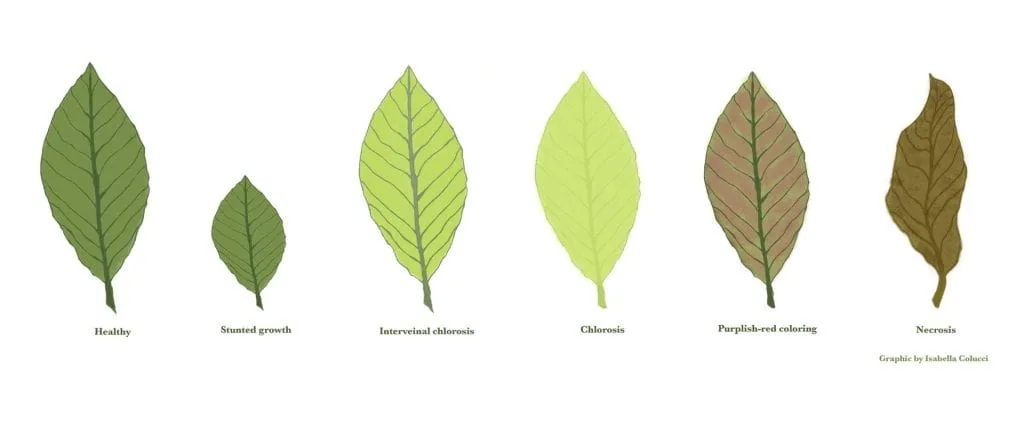
When nitrogen is deficient, shoot growth is inhibited, leaf area decreases, and cereal tillering is weakened. Developmental phases change more rapidly, and plants flower prematurely to the detriment of harvest volume and quality. As a result, the growing season is shortened, the photosynthetic potential of crops falls, and the net productivity of photosynthesis decreases. Root mass decreases under nitrogen deficiency, although their proportion relative to the above-ground part may increase slightly.
The first sign of nitrogen deficiency is a pale color of the lower leaves due to a decrease in chlorophyll synthesis. The plant transfers nitrogen from old tissues to young growth points (reutilization), which is why symptoms appear later in the upper canopy.
In cases of acute nitrogen deficiency, free carbohydrates are used for the synthesis of anthocyanins, turning the leaves red. Prolonged starvation destroys chlorophyll, disrupts energy metabolism (ATP production drops as respiration intensity increases), and sharply increases transpiration due to the loss of water-binding proteins.
Excessive amounts of nitrogen in the soil also harm crops. It leads to overgrowth of vegetative mass and prolongs the growing season. This reduces the resistance of plants to diseases and pests, which leads to a decrease in harvest and a deterioration in its quality.
Phosphorus nutrition: available forms and uptake
Phosphorus is just as much a limiting nutrient element as nitrogen. It is part of the main agrochemical triad (NPK), and plant life is impossible without it. The content of this element in the dry matter of plants ranges from 0.2–1.3%.
The root system absorbs phosphorus only in the form of oxidized compounds of orthophosphoric acid. Primarily H2PO4– and HPO42– ions are involved in nutrition. The trivalent PO43– ion has no practical significance, as it is almost absent at a pH of the soil solution favorable for roots.
Salts of both orthophosphoric and pyrophosphoric acid serve as a source of phosphorus nutrition for crops. Among orthophosphates, calcium phosphates rank first in terms of availability. Potassium phosphates and magnesium phosphates follow them in terms of uptake efficiency.
- Activity of nitrite reductase exceeding nitrate reductase — 5–20 times
- Phosphorus content in plant dry matter — 0.2–1.3%
- Biophilicity index of phosphorus — 0.75
- Biophilicity index of sulfur — 1.00
phosphates. For rice and other plants belonging to the group of hygrophytes, iron phosphates serve as the most significant source of phosphorus nutrition. Furthermore, plants can also use organic phosphates – sugar phosphates, phytin. However, the availability of these compounds to plants is low and depends on the rate of their hydrolysis in the soil before entering the plant. The latter depends to a significant extent on the intensity of the secretion of the enzyme phosphatase by plant roots, which carries out the direct cleavage of phosphoric acid from organic compounds.
Phosphate ions located in the soil solution enter the free space of the root due to diffusion and exchange adsorption and penetrate through the cell walls to the plasmalemma. Near the plasmalemma, they combine with carriers specific to them and penetrate through the membrane into the cytoplasm. The radial movement of the phosphate ion in the root absorption zone to the xylem occurs along the symplast, and its concentration in root cells exceeds the concentration in the soil solution by tens or hundreds of times. Transport via the xylem is carried out mainly or entirely in the form of inorganic phosphate; in the same form, it reaches the leaves and growth zones. Phosphorus is easily redistributed between organs; it enters the sieve tubes from leaf cells and is transported via the phloem to other parts of the plant, especially to the growing cones and developing fruits. During all transformations in the plant organism, phosphorus retains its oxidation state. Phosphorus metabolism itself is reduced only to the addition or transfer of a phosphoric acid residue, i.e., to phosphorylation* or transphosphorylation**.
In plants, phosphorus is found in organic and mineral compounds. A small amount of this element is present in the cell sap in ionic form. Mineral phosphorus compounds are mainly represented by salts of potassium, calcium and magnesium. They serve as reserve phosphorus-containing substances and are used by the plant organism as needed for the synthesis of organic compounds. The most important organic phosphorus compounds in plants include nucleic acids, nucleotides, sugar phosphates, phosphatides, phosphoproteins, phospholipids, and phytin.
The role of phosphorus in plant metabolism is diverse and extremely significant. Nucleoproteins participate in the formation of cell nuclei. Phosphatides control cell permeability and metabolism. Adenosine triphosphate is involved in the transfer, accumulation, and transformation of chemical energy necessary for metabolic processes. ATP consists of a purine base (adenine), a carbohydrate (ribose), and three phosphoric acid "residues". In energy metabolism, the conversion of ADP to ATP and back occurs constantly according to the scheme:
ADP + P ⇄ ATP + H2O
By attaching a phosphate and turning into ATP, adenosine diphosphate becomes enriched with energy. The transition of ATP to ADP, on the other hand, is accompanied by the release of stored energy. In various energy transfer reactions, an important
Phosphorylation is the addition of a phosphoric acid residue to an organic compound with the formation of an ester bond.
Transphosphorylation is a process in which a phosphoric acid residue included in one organic substance is transferred to another organic substance.
An important role also belongs to another group of phosphorus-containing compounds – acyl phosphates. These include acetyl phosphate and 1,3-diphosphoglyceric acid. ATP is synthesized from acetyl phosphate in the plant, and 1,3-diphosphoglyceric acid can transfer its energy-rich phosphate group to ADP, converting the latter into ATP.
The biological role of nucleic acids consists of storing, expressing, and transmitting genetic information. By being part of vitamins, hormones, and coenzymes (NAD, NADP, FAD, CoA), phosphorus compounds act as regulators of the intensity of biochemical processes in plants.
Phosphorus-containing coenzymes participate in various metabolic reactions:
- Nicotinamide adenine dinucleotide phosphate (NADP), being a component of various dehydrogenases, activates the hydrogen (electron) of the respiratory substrate and transfers it to an acceptor.
- The transfer of electrons along a chain during the oxidation of a respiratory substrate is carried out by enzymes of a flavoprotein nature. Their coenzymes are flavin nucleotides (FAD), which contain a phosphate group.
The far from complete list of processes in which phosphorus is involved testifies to its exceptional role in plant metabolism.
Most of the phosphorus is found in reproductive organs and young, intensively growing parts of plants. Phosphorus accelerates the formation of the plant's root system, causing it to branch more and penetrate deeper into the soil. Plants consume the bulk of phosphorus during the first phases of growth and development, creating certain reserves of it. Subsequently, it is easily reutilized.
Good supply of phosphorus to plants contributes to more economical water consumption and increased drought resistance. Phosphorus, by improving carbohydrate metabolism, promotes an increase in sugar content in the tillering nodes of cereals and the tissues of perennial grasses, resulting in increased frost resistance. This element also increases plant resistance to diseases and pests.
Optimal phosphorus nutrition of plants stimulates the processes of flower fertilization, fruit set, and fruit ripening, as well as accelerates plant development, increases yield, and improves its quality. However, an excess of this element leads to excessively rapid plant development and early fruit ripening, which results in a lower yield.
Phosphorus deficiency: why nutrition is blocked and how to see it in the field
Phosphorus deficiency hits a plant harder than the deficiency of any other nutrient. Primarily, photosynthesis and respiration are impaired, causing the growth of above-ground biomass to slow down and fruit formation to be delayed. An agronomist can recognize phosphorus starvation by characteristic signs on leaves: young leaves become smaller and acquire a blue-green tint, while older ones start to turn yellow from the edges to the center. Over time, small necrotic spots appear on them, after which the leaf dries out completely. The root system reacts to phosphorus deficiency in the same way as to nitrogen deficiency: at first, the roots stretch rapidly in length, but then their growth stops, and they turn brown.
A failure in phosphorus nutrition triggers a chain reaction in metabolism. In root cells, glycolysis and the Krebs cycle are inhibited, causing less adenosine triphosphate (ATP) and keto acids, which serve as ammonia acceptors, to be formed. As a result, the plant sharply reduces its uptake of nitrogen from the soil, the synthesis of amino acids and proteins drops, and growth is blocked. The lack of keto acids also stops the dark assimilation of carbon dioxide by the roots.
When phosphorus is deficient, an abnormal sugar cycle begins. Carbohydrates formed during photosynthesis move to the root but cannot be assimilated there due to the blockage of glycolysis. As a result, they return to the leaves, disrupting the normal balance of plastic substance distribution.
Phosphorus deficiency in plants manifests most acutely in cold, rainy weather, when the uptake of the element from the soil practically ceases.
Potassium: water balance regulator and engine of carbohydrate metabolism
Potassium is required by plants in huge quantities — more than any other cation. It is absorbed by roots in the form of the K+ ion and remains in cells in a free charged state, without forming stable bonds with the protoplasm. To overcome the membrane barrier and accumulate potassium against a concentration gradient (when it accumulates in the plant more than is contained in the soil solution), cells use special cyclic peptides — depsipeptides. They bind to potassium and easily transport it across membranes.
- Content in dry mass — 0.5–3.5%
- Proportion of ions in cell sap — 79%
- Proportion of ions in cytoplasm — 20%
- In non-exchangeable absorbed state — 1%
Potassium is extremely mobile in the plant organism. It concentrates where active metabolism and cell division take place: in meristems, cambium, young leaves, buds, and shoots. When old leaves finish growing, potassium is transferred from them to young organs. This process is actively facilitated by sodium, which replaces potassium in aging tissues.
The biological significance of elements can be assessed in different ways. According to a classification based on biophilicity (the ratio of an element's content in living matter to its concentration in the lithosphere), potassium is in the second group of elements with average accumulation. However, if one evaluates the actual concentration of elements directly in dry plant tissue, potassium takes first place.
| Accumulation assessment principle | Element series (in descending order of concentration or accumulation index) |
|---|---|
| By coefficient of biophilicity (ratio of content in living matter to lithosphere) | N (106) → S (1) → B (0.83) → P (0.75) → Ca (0.17) → K (0.12) → Mo (0.09) → Mg (0.02) → Co (0.01) → Zn (0.006) → Cu (0.004) → Fe (0.002) |
| By actual concentration in plant tissue | K → N → Ca → Mg → P |
Potassium directly controls the water regime. The osmotic potential of xylem sap and the magnitude of root pressure depend on its concentration: to pump water from the soil, a plant must absorb a sufficient volume of potassium. Furthermore, potassium pumps are the key mechanism for stomata operation. The opening and closing of stomatal slits occur through changes in turgor when potassium ions actively move between the stomatal guard cells and the epidermal cells. When stomata are open, the concentration of potassium in the guard cells is at its maximum.
Potassium maintains the hydration of cytoplasm colloids and regulates the water-holding capacity of cells. It alters the spatial structure (conformation) of membrane proteins and enzymes, acting as the primary neutralizer of negative charges of organic and inorganic anions.
Although potassium is not a direct component of enzymes, it acts as a powerful activator of their activity. It stimulates photosynthesis and accelerates the outflow of carbohydrates from leaves to growth points and storage organs, promoting the conversion of monosaccharides into di- and polysaccharides.
Main enzymatic functions of potassium:
- required for the incorporation of phosphorus into organic compounds;
- ensures phosphorus group transfer reactions;
- participates in the synthesis of proteins and polysaccharides;
- promotes the synthesis of riboflavin;
- stimulates the work of Krebs cycle enzymes.
Critical potassium: symptoms of deficiency and risks of excess
Potassium acts as the main yield stabilizer in regions with unstable climates, reducing the dependence of crops on the whims of weather. Although its reserves in the soil can be significant, additional potassium top dressing is mandatory for obtaining high yields. The most critical period for the element's need occurs at early growth stages. The peak of potassium consumption falls on the phase of intensive vegetative mass accumulation.
Potassium deficiency immediately affects the internal processes of the plant. The level of high-energy compounds in cells drops sharply, and the synthesis of sucrose and its transport via the phloem are blocked. Slowed protein synthesis leads to the cessation of shoot growth. At the same time, free ammonia nitrogen begins to accumulate in the leaves, which causes severe poisoning of plant tissues.
Visually, potassium deficiency is easy to identify by the state of the leaf apparatus. First, the leaf edges turn yellow, then the tips and edges turn brown, become covered with red "rusty" spots, and die — a classic marginal burn occurs. At the cellular level, potassium deficiency halts the development of vascular tissues, suppresses the cambium, thins the epidermal cell walls, and stops the formation of thylakoids in chloroplasts, without which the plant dies.
Excess potassium in the soil is dangerous because it acts as an antagonist to other nutrients. An overdose of potassium fertilizers blocks the root uptake of calcium and magnesium ions.
Silicon: stem strength and root system development
Silicon directly affects the mechanical strength of crops and their resistance to lodging. Plants absorb it selectively in the form of silicate ions and monosilicic acid. This process is driven by active respiration and glycolysis in the roots, rather than passively with the water flow during transpiration. Inside the tissues, silicon polymerizes in the epidermis, forming a double cuticular layer, or transforms into phytoliths and biogenic opal.
- Average silicon content — 0.5% of dry mass
- Content range in crops — from 0.2 to 20%
- Proportion of the insoluble form — 90% of total silicon
- Content of the ionic form — from 0.5 to 8%
- Proportion of the colloidal form — up to 2% of dry matter
In metabolism, silicon works in close coordination with phosphorus, participating in the biosynthesis of energy-rich silicatophosphates. It strengthens the structure of nucleic acids by integrating into their backbone as sugar-silicate fragments. The presence of the specific enzyme silicatase allows the plant to incorporate inorganic silicon into organic matter, while regulating the activity of nitrate reductase, peroxidase, invertase, and phosphatase.
Optimizing silicon nutrition helps develop a powerful root system. Plants increase their root volume, mass, and active absorptive surface due to the formation of numerous secondary roots. Silicon is also a component of root cap cells and ensures its key functions:
- protection of the apical meristem from mechanical damage during contact with the soil;
- facilitating the downward movement of the root tip into the soil;
- geotropic orientation of roots in space.
The above-ground part also functions more efficiently when well-supplied with silicon. Leaf area increases, pigments are actively synthesized in chloroplast thylakoids, increasing the intensity of photosynthesis. Thanks to strong mechanical tissues, the leaves maintain a vertical position. They do not shade each other, reducing competition for light within the crop stand and increasing the overall field productivity.
How silicon protects crops from stress and nutrient deficiency
Silicon acts as a natural plant protector, helping them withstand adverse environmental conditions. This element does not just strengthen tissues, but also directly influences the assimilation of nutrients and resistance to toxins. With optimal silicon nutrition, crops withstand climatic and soil stresses much more easily.
Under field conditions, silicon performs several critically important functions:
- partially neutralizes the toxic effect of heavy metals in the soil;
- increases the availability of phosphates from soil reserves and applied fertilizers;
- increases plant resistance to lodging and salinization;
- increases resistance to disease infection and damage by insect pests.
A protective barrier is formed directly within the tissues. Silicon localizes under the cuticle, forming a thin silicon-cellulose membrane. This layer works as an insulating screen: it protects the plant from excessive moisture loss and reduces the intensity of transpiration. In addition, the assimilation of silicon is linked to the uptake of sodium and potassium. Due to this connection, plants accumulate increased amounts of silicon under soil salinization conditions, which helps them successfully resist excess salts.
Plants are particularly sensitive to the presence of silicon during the reproductive stage of development. Excluding the element from nutrition during this period leads to a decrease in harvest and deterioration in the quality of the final product.
Silicon deficiency during the growing season inhibits plant growth and makes them vulnerable to pathogens. Without this element, defense mechanisms weaken, causing crops to suffer more from pests and infections.
Complete absence of silicon in the nutrient medium leads to plant death. Without it, the ultrastructure and functions of cell organelles are irreversibly impaired.
Read next
Agrochemistry For students
The effect of plastid pigments and respiration intensity on crop yield
Agrochemistry For students
Photosynthesis as the main factor of crop productivity and yield
Agrochemistry For students