
Soil amendments and organic fertilizers to increase soil fertility
8 min read
Soil amendments and drainage materials for improving soil structure
To obtain stable harvests, it is necessary to maintain an optimal soil structure and acidity. Most crops poorly tolerate acidification, heavy particle size distribution, and stagnant moisture in the root zone. Specialized amendments and loosening agents are used to solve these problems in fields, greenhouses, and during landscaping work.
Dolomite and limestone flour of the "Fasko" brand are used for liming acidic soils. Besides neutralizing excessive acidity, they enrich the root-inhabiting layer with calcium and magnesium, which are necessary for proper cell division and photosynthesis. These soil amendments contain nutrients in a form easily accessible to plants.
Expanded clay drainage, sand, and marble chips improve aeration and prevent soil compaction. They are used when growing ornamental crops in containers, hydroponics, and when creating landscape compositions. They ensure free circulation of nutrient solutions and stimulate the harmonious development of the root system, protecting it from decay.
- Proportion of calcium and magnesium in limestone soil amendments — 88 %
- Disinfection temperature of bio-fertilizers — 53–57 °С
- Nitrogen content in Pix compost — 3.5–5.6 %
- Phosphorus content in Pix compost — 2.1–4.1 %
- Potassium content in Pix compost — 2.0–3.2 %
Organic nutrition and technologies of metered application
Effective plant nutrition requires a combination of macronutrient availability and the safety of the organic matter itself. Traditional organic fertilizers often contain weed seeds and pathogenic microflora, while mineral fertilizers are prone to rapid leaching. Modern products allow for metered nutrient delivery and ensure soil cleanliness.
Fertilizers of the "Apion" series ("Apion-3", "Apion-6", "Apion-30", "Apion-50") work on the principle of controlled release. They are applied in the immediate vicinity of the roots in open soil or in pot culture. The capsule releases a balanced complex of macro- and microelements strictly at a rate corresponding to the nutrient consumption rate of the plant itself.
Organic fertilizers BIUD (based on cow manure) and Pix compost (based on peat and litter) undergo a cycle of biothermal disinfection without the use of chemicals. This completely eliminates the survival of bacterial infections and viable weed seeds. The products are quickly assimilated by plants, stimulate the reproduction of beneficial soil microflora, and increase the resistance of crops to stress factors.
The fast-acting organic fertilizer BIUD begins to work immediately after application. Due to the content of natural growth stimulants, it significantly accelerates plant survival during transplanting.
When applying Pix compost on peat soils, be sure to add an equal amount of heavy loamy soil or 10–20 % of the recommended application rate of mineral fertilizers to balance water-physical properties.
For the correct application of dry organic fertilizers, it is important to follow the sequence of technological operations.
- Thoroughly loosen the soil in the tree trunk zone or garden bed.
- Evenly distribute the dry compost over the surface according to the application rates.
- Incorporate the fertilizer to the depth of the active root system.
- Water the treated area abundantly with clean water to dissolve and activate the components.
| Fertilizer and crop | Application method | Application rate | Regime and application specifics |
|---|---|---|---|
| BIUD Indoor flowers |
Liquid root top dressing | 20 g per 0.5 l of water | Consumption 150–200 ml per plant. No more than once a month. |
| BIUD Indoor flowers |
Dry top dressing | 20 g per 1 kg of soil | Application into loosened soil followed by irrigation. No more than once a month. |
| Pix Vegetables, pome and stone fruits, berries, flowers |
Basal application | 5–10 kg per 100 m² | Even surface distribution with incorporation to the depth of the root system. |
| Pix Vegetable crops |
At-sowing application | 10–15 g into the hole or 25–50 g per linear meter of row | Mandatory mixing with soil during incorporation. |
| Pix Fruit crops |
Application during planting of nursery plants | 0.5–0.7 kg into the planting hole | Mixing with soil when filling the hole. |
| Pix Vegetable crops |
Liquid root top dressing | 400–500 g per 8–10 l of water | Consumption 0.5–0.75 l of working solution per plant. 3–5 times per growing season. |
| Pix Fruit trees |
Liquid root top dressing | 400–500 g per 8–10 l of water | Consumption 10–20 l of working solution per tree. 3–4 times per season. |
| Pix Indoor flowers, seedlings |
Liquid top dressing | 20 g per 0.5 l of water | Consumption 150–200 ml of solution per plant. |
| Pix Indoor flowers, seedlings |
Dry top dressing | 5–10 g per 1 kg of soil | Surface application with mandatory subsequent incorporation and irrigation. |
Risovoye is an organic-mineral fertilizer based on low-lying peat. It contains 7.8 % nitrogen, 10.9 % phosphorus, 8.4 % potassium, 1.4 % magnesium, 0.8 % zinc, 0.05 % molybdenum. Manufacturer – Buysky Chemical Plant (Russia, Kostroma Region). The estimated application rate for rice is 200–250 kg/ha.
Kornevaya Smes is a fertilizer containing disinfected poultry manure, a full complex of organic and structuring substances, macro- and micronutrients: 4.9% nitrogen, 2.9% phosphorus, 2.7% sulfur, 5.1% potassium, 1.0% magnesium, 3.0% calcium, 0.4% iron, 0.05% boron, 0.004% copper, 0.01% manganese, 0.08% zinc, 0.01% molybdenum, up to 5.0% humates, and up to 35.0% organic substances.
"Kornevaya Smes" increases soil fertility and improves soil structure, facilitates the formation of a humus layer, and ensures favorable water-air conditions. Application of Kornevaya Smes to the soil promotes the development of soil microorganisms. "Kornevaya Smes" has a mild deoxidizing effect and does not cause soil salinization. Unlike mineral fertilizers, the utilization rate of nutrients from "Kornevaya Smes" is 93–95%. The fertilizer has a long-lasting effect and allows for flexible application timing.
If a long-lasting effect (6–8 months) is required, the fertilizer is applied in dry form at a rate of 5 g/plant. In this case, Kornevaya Smes is evenly distributed over the soil surface. Mixing with the soil is not required. For a quick effect (the result will be noticeable in 3–5 days), 7 g of fertilizer is dissolved in 1 l of water, left to infuse for 3–5 days, after which irrigation is carried out at a rate of 0.1–0.2 l of solution per plant.
Kornepitatel KP-5 and Kornepitatel KP-100 ensure a continuous, controlled supply of substances necessary for plant nutrition, which is one of the important conditions for their normal growth and development. KP-5 is a device in the form of a membrane bag with an area of 20 cm2, filled with a nutrient mixture containing: nitrogen, phosphorus, potassium, magnesium, zinc, boron, manganese, molybdenum, iron, copper, humates, and organic substances.
Kornepitatel KP-5 doses nutrients into the root zone through the housing shell, i.e., a semi-permeable membrane, gradually and gently acting on the root system, preventing an increase in the concentration of the soil solution, which is characteristic of traditional methods of top dressing. The membrane regulates the delivery rate and the quantity of nutrients released by the Kornepitatel in accordance with the needs of the plants and environmental conditions.
The membrane bag with the nutrient mixture KP-5 eliminates overdosage and leaching of nutrients, which ensures the effectiveness of the Kornepitatel for 1.5–2 years without additional top dressing. By providing a local, continuous supply of nutrients, KP-5 promotes the formation of a strong root system in plants, improves the survival rate of transplants, and increases plant immunity to diseases and resistance to adverse temperature fluctuations. The technology for using KP-5 is simple: it is sufficient to place it, in accordance with the instructions, in the root zone of the plant.
Kornepitatel KP-100 is an analog of KP-5 but differs from it in its larger volume.
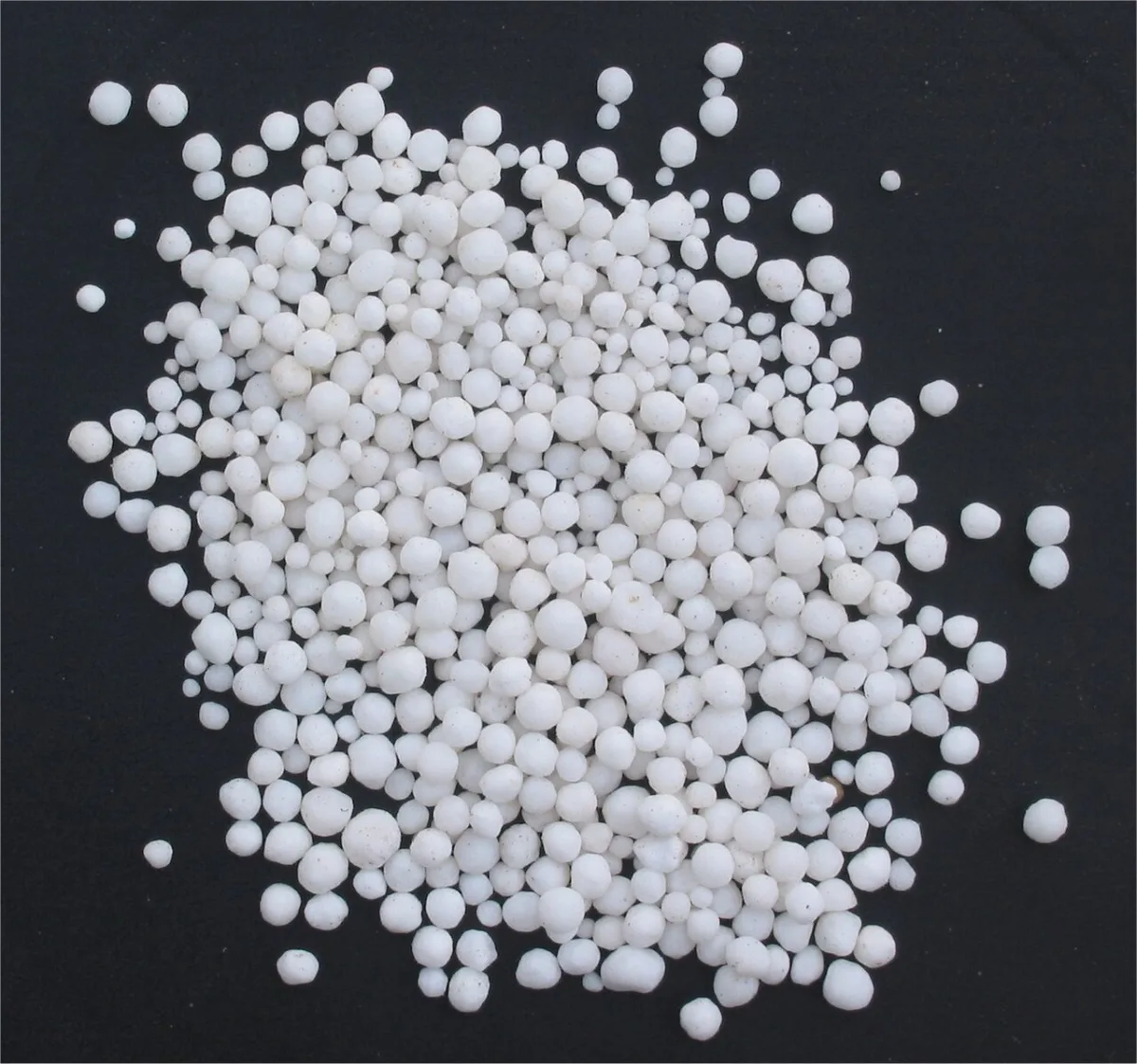
Universal is a granular organo-mineral fertilizer based on neutralized ammonium lowland peat (40%). Manufacturer: Buysky Chemical Plant (Russia, Kostroma Region). It contains 7% nitrogen, 7% phosphorus, 8% potassium, 1.5% magnesium, and micronutrients. It is intended for the full-value nutrition of ornamental flowering plants, vegetable and fruit crops in open and protected ground, as well as for growing transplants. "Universal" contains no chlorine or free nitrate ions. The application of this fertilizer does not cause soil acidification, helps improve its physical properties, and increases the content of humic acids. It is used as a base fertilizer and at sowing (planting), as well as for top dressing during the growing season.
For base application before tillage, the rate is 100 g/m2 on cultivated soils and 150 g/m2 on uncultivated soils; for fruit trees – 90 g/m2 of the tree trunk circle followed by loosening; for berry bushes, apply 60 g/m2 during soil loosening; when planting potatoes and transplanting seedlings – 20 g per hole; for perennial flowering plants – 80–100 g per planting hole. For top dressing: under potatoes and vegetables – 30 g/m2 followed by loosening and irrigation; under ornamental flowering plants – 50 g/m2 followed by loosening; strawberries are top-dressed in early spring and after harvesting – 30 g per linear meter of the row. When preparing a substrate (soil) for growing transplants of ornamental flowering plants and vegetable crops, the fertilizer is mixed with sand, peat, soil, and other components. The application rate is 10 g per 1 kg of substrate. In hotbeds and greenhouses: in early spring (or winter) during soil preparation (digging and loosening), apply 15 g/m2.
Read next
Agrochemistry For students
Application of magnesium sulfate fertilizers in modern crop production
Agrochemistry For students
Effective biofertilizers for increasing yield and soil fertility
Agrochemistry For students