
Efficient use and storage of liquid manure in agriculture
4 min read
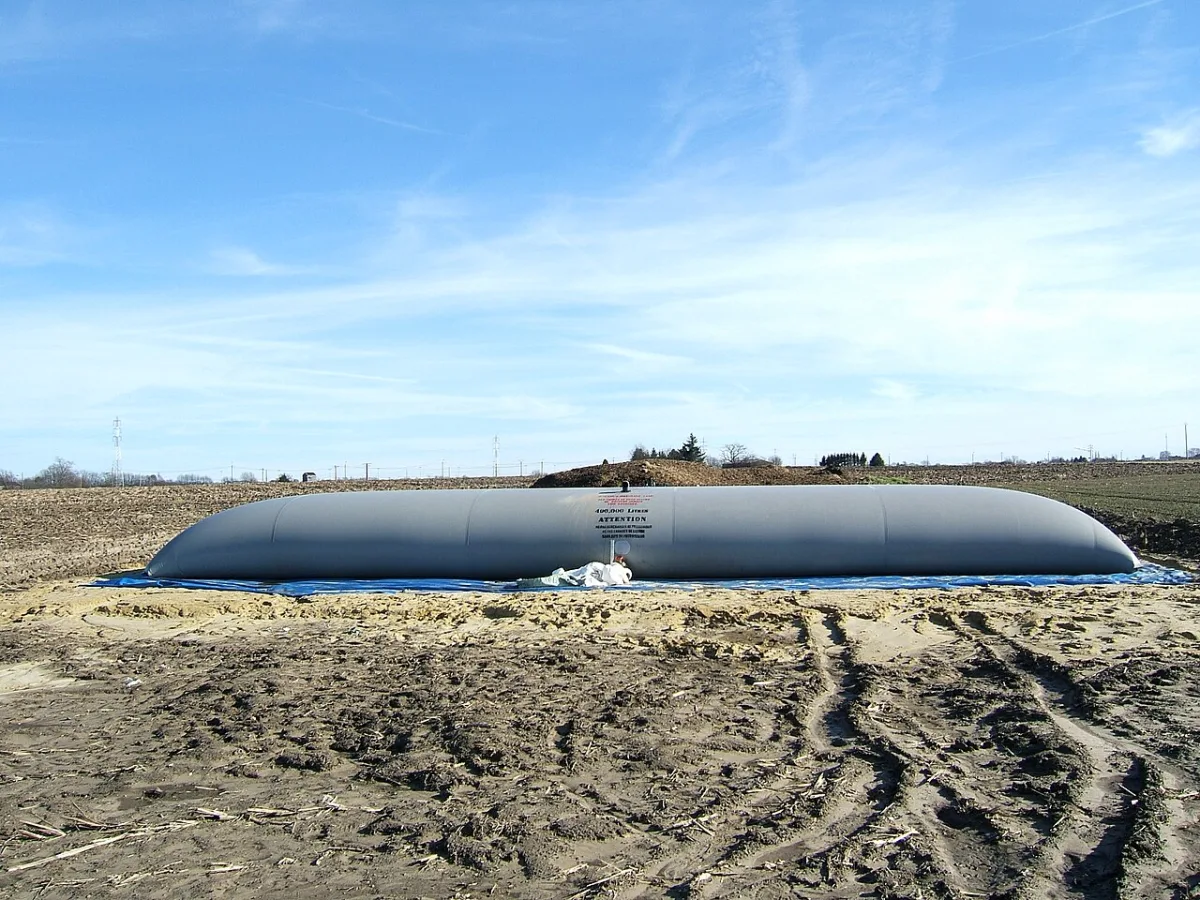
Liquid manure is a valuable, fast-acting organic fertilizer. It is the liquid fraction of livestock animal excrement not retained by bedding, as well as the moisture generated during the decomposition of manure in storage facilities. Nitrogen and potassium are present here in a water-soluble and easily accessible form for crops, which allows for instant assimilation.
During the housing period, the accumulation of liquid manure from cattle amounts to 15% of the total manure output. On average, 2–2.5 m³ of liquid manure is collected per head of cattle during the housing period (220–240 days). The same amount is obtained from three head of young stock under two years of age or from 10–12 calves.
- Volume of liquid manure per 1 cow during the housing period — 2–2.5 m³
- Nitrogen content in this volume — 5 kg
- Potassium content in this volume — 10 kg
- Average chemical composition of liquid manure — 0.22% N, 0.01% Р2О5, 0.46% К2О
How to prevent nitrogen losses during collection and storage
Nitrogen in fresh liquid manure is contained primarily in the form of urea [CO(NH2)2]. Under the influence of ureobacteria, it quickly converts into ammonium carbonate [(NH4)2CO3], which easily decomposes to form СО2, Н2О, and NH3. If liquid manure comes into contact with air for a long time while flowing, active volatilization of ammonia occurs, and the fertilizer becomes depleted of nitrogen. The less contact with fresh air, the more valuable the raw material.
On farms, special gutters leading to airtight liquid manure storage tanks 1–1.5 m deep are installed to collect the liquid. In industrial livestock complexes, the liquid fraction of manure flows through grates and channels into a settling pond, then into a storage pond, and before application to fields — into a mixing pond connected to an irrigation system, where it is diluted with water and enriched with mineral fertilizers.
To minimize nitrogen losses during accumulation and storage, use the following techniques:
- Use peat in cattle yards. As it becomes saturated with liquid manure, it is removed and placed in a manure storage facility or compost piles.
- Add superphosphate to the liquid manure storage tank to bind ammonia via the reaction: Ca(H2PO4)2+NH3 → NH4H2PO4 + CaHPO4.
- Cover the surface of the liquid manure in the storage tank with a layer of petroleum or used tractor oil at a rate of 3 liters per 1 m² of liquid surface area.
- Additionally, use floating tarred wooden covers — this will reduce evaporation and lower oil consumption.
Rules for field application of liquid manure
Liquid manure is used as a base fertilizer, for top dressing, and for preparing peat composts. It is most effective on meadows and when top dressing winter cereals, row crops, and vegetable crops. Since liquid manure contains almost no phosphorus, its application must be combined with the use of mineral phosphorus fertilizers.
For surface application of liquid manure, spreader tankers of the RZhT-4 and RZhT-8 types are used. When working with machinery, it is important to follow a precise sequence of operations:
- For surface application, dilute the liquid manure with water to a nitrogen content of about 0.2%. This is necessary for uniform distribution across the field, reduction of nitrogen losses, and prevention of plant burns.
- When top dressing row crops, use tankers with the PRZh-1.7 top dressing attachment. It applies the fertilizer directly into the soil to the required depth without nitrogen losses; therefore, diluting concentrated liquid manure with water in this case is not required.
- Immediately after surface distribution of liquid manure (before sowing or during top dressing), incorporate it into the soil.
Do not delay the incorporation of liquid manure. A delay of just 2–4 days in this operation reduces the effectiveness of the agricultural practice by 30–50% due to nitrogen evaporation.
The application rate for liquid manure is calculated based on nitrogen. Average nutrient planning indicators are presented in the table:
| Indicator | Value |
|---|---|
| Application rate of liquid manure | 10–20 m³/ha |
| Nitrogen content | 25–50 kg/ha |
| Potassium content | 50–100 kg/ha |
Read next
Agrochemistry For students
The effect of organic fertilizers on the soil environment and ecological risks
Crop production For students
Fundamentals of effective nitrogen fertilizer application and soil amelioration
Agrochemistry For students