
Agricultural chemistry as a science: subject, objectives, and research methods.
17 min read
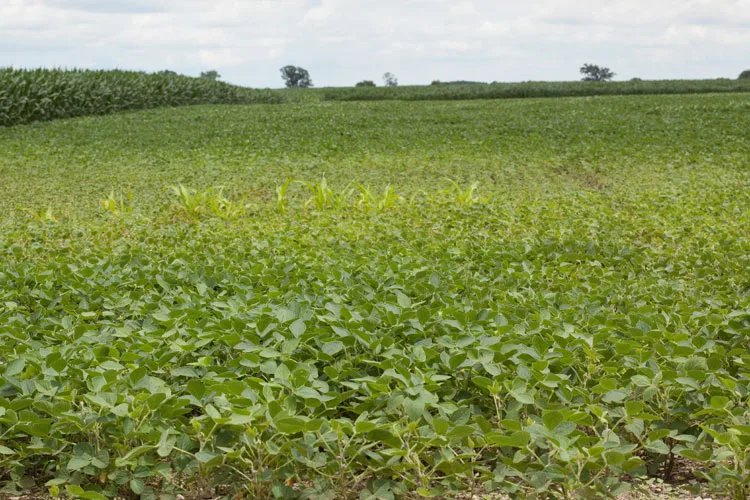
specific agricultural techniques for increasing crop yield and the quality of plant products.
To obtain a high harvest of good quality, it is necessary to combine all factors of plant growth and development. This direction in agricultural chemistry, developed by D.N. Pryanishnikov, is called physiological-biochemical. He wrote: "To obtain a high harvest of proper quality, it is necessary that all factors of plant growth are represented in specific harmonic combinations that best meet the needs of plants during the corresponding periods of their growth and development."
The main task of agricultural chemistry, as defined by D.N. Pryanishnikov, is the study of the nutrient cycle in agriculture and the identification of methods for influencing chemical processes occurring in the soil and the plant that can increase the harvest or change its composition. The main means of human influence on the nutrient cycle are fertilizers. Being the main element of agricultural chemistry, the study of the nutrient cycle in agriculture, therefore, constitutes its chemical basis.
The study of the nutrient cycle in agriculture forms the basis of an ecological approach to fertilizer application. Such an approach "...must ensure an effective solution to the main task of agricultural chemistry – the regulation of the biological cycle in agrocenoses," notes the "Concept for the Development of Agricultural Chemistry and Agrochemical Services for Agriculture in the Russian Federation for the period up to 2010." In this regard, knowledge of agricultural chemistry is necessary not only for fertilizer application, as sometimes believed, but also in agriculture in general.
Agricultural chemistry is an experimental science. The main method of obtaining data on which problems in this field of knowledge are solved is the experiment (trial). Agricultural chemistry uses laboratory, lysimetric, field, and production experiments. To observe plants and soil, and to determine their chemical composition and physicochemical properties, chemical, physicochemical, microbiological, and physiological-biochemical methods are used. Computational-economic and mathematical methods are widely employed – mathematical modeling, statistical processing of research results.
Read the table of contents of this book. You will see that it is based on four parts: plant nutrition, soil properties, fertilizer properties, and fertilizer system for crops. The first three sections contain material to justify the system of fertilizer application. On this basis, highly effective, economical technologies for using fertilizers for specific conditions can be developed, taking environmental protection into account.
For a student who has mastered related disciplines, studying agricultural chemistry will be much easier. Some may need to review certain issues. Difficult-to-understand questions of agricultural chemistry in this book contain the necessary explanations regarding related sciences.
To master the science of agricultural chemistry, it is necessary not only to absorb the theoretical and practical material but also to learn how to apply this knowledge to solve professional tasks that arise when using fertilizers.
Special attention should be paid to the main provisions that allow one to understand agricultural chemistry as a whole. You need to keep good lecture notes, which should be finalized on the day the lectures are heard. The notes will show what material and in what volume needs to be studied according to the textbook. It is also required to keep complete records of laboratory work and practical classes.
Fig. 3. Objects of study in agricultural chemistry
The study guide is recommended for full-time and correspondence students. When working with it, you should first familiarize yourself with the requirements for professional training and the content of the discipline according to your specialty. These materials, taken from the "State Educational Standards of Higher Professional Education" regarding agricultural chemistry, are provided in Appendix 1. Questions for self-control for specialties of a graduated specialist are also provided there. The detailed content of the disciplines can be found in the model programs developed by the Ministry of Education of the Russian Federation.
It is recommended to study individual chapters of the book in two stages. The first reading creates a general idea of the content and identifies difficult areas. Upon re-studying the topic, it is easier to understand the essence of the issue, theoretical concepts, and their application. Parallel to reading, it is advisable to keep notes. This helps with understanding and memorizing what has been read. Definitions and the most important concepts should be written out verbatim, and terms, definitions, names, formulas, reaction equations, and calculations should also be entered into the notes. Unclear points should be written down for clarification during laboratory-practical classes and consultations.
To check for comprehension, it is useful to reconstruct from memory the main points of what has been read. Repeatedly writing down part of the material, reading aloud, retelling, and discussion can also be useful. One should not proceed to further study of the material without having mastered the previous part. When mastering and reviewing a large amount of theoretical and factual material, use tables and diagrams, and visual aids. For self-control, questions are provided in the appendix. To be sure of the quality of your knowledge, try to answer all the questions. This part is provided in detail by the department.
We hope that using these recommendations will make it possible to use the time allocated for studying agrochemistry as efficiently as possible.
One cannot properly understand what one possesses until one learns what was possessed before us; it is impossible to truly rejoice in the advantages of one's own era without knowing how to appreciate the advantages of past times.
The need to outline the difficult paths of the development of agrochemistry is due to the fact that this branch of science plays a special role in solving the most important practical task of domestic agriculture – providing the population with high-quality, environmentally safe food products, and, ultimately, achieving the food independence of our country.
How ancient farmers fought against soil exhaustion
The understanding that soil requires restoration came to farmers back in ancient times. As soon as the yield on a plot fell, people had to abandon it and develop new virgin lands. As early as the Neolithic and Bronze Ages (11–10 thousand years BC), man learned to distinguish between soil types, separating sand from loam and marshy places from dry ones. Gradually, from simply developing new plots, farmers moved on to the conscious preservation of soil fertility.
To restore exhausted fields, the Greeks and Romans began to apply manure, mixing animal excrement with bedding. To enrich the soil with nitrogen, ancient agronomists sowed green manure crops — lupine and forage beans. Other civilizations used local resource potential: for example, the Incas as early as the 13th century BC fertilized fields with fish, shells, and guano (seabird excrement), compensating for the deficit of nitrogen, phosphorus, and calcium.
Ignoring the laws of plant nutrition leads to catastrophe. The Maya Indians did not know how to fertilize fields, exhausted the nutrient reserves in the soil, and at the beginning of the 2nd millennium BC faced a severe food shortage, which became one of the reasons for the decline of their civilization.
The practical value of organic matter was understood two thousand years ago. During the excavations of Pompeii, buried in 79 AD during the eruption of Vesuvius, remains of animals on bedding were found in the stables, and nearby — a prepared manure heap.
Early theories of plant nutrition and written instructions
The first documented agricultural advice appeared on clay tablets in Ancient Sumer around the 4th millennium BC. The local library contained more than 30 tablets, known as the "Farmer's Calendar," which spoke about methods of maintaining soil fertility. The Egyptian papyri "Palermo Stone" and "Brooklyn Papyrus," containing descriptions of the properties of land, date back to approximately 3500–3000 BC. Later, in Babylon, the "Code of Hammurabi" (1792–50 BC) was issued — the first code of laws to touch upon the rules of land use.
Thinkers of Antiquity attempted to systematize these scattered pieces of knowledge in the period from the 8th century BC to the 3rd century AD. In their treatises, they looked for the interconnection of phenomena in the plant world and, through experience, found ways to obtain high yields. The accumulated practical experience formed the basis of the first theoretical models of crop nutrition.
Thus, one of the greatest philosophers of antiquity (384–322 BC) developed a theory according to which plants need four elements: air, water, earth, and fire. He divided flora into annual crops, perennial crops, shrubs, and trees, and also assumed that roots absorb fully prepared food from the earth. This assertion dominated science for almost 20 centuries, until modern agrochemistry was formed in the first half of the 19th century.
- The beginning of the accumulation of knowledge about soils — 11–10 thousand years BC.
- Descriptions of land quality in Egypt — 3500–3000 BC.
- Land legislation of the Babylonian king — 1792–50 BC.
- Fertilizing fields with guano by the Incas — 13th century BC.
- Period of ancient treatises on agriculture — 8th century BC – 3rd century AD.
- Formation of agrochemistry as a science — 1st half of the 19th century.
Marcus Porcius Cato (234–149 BC) was a Roman writer, author of the treatise "De Agricultura" and the book "De Re Rustica," which contain practical advice on various branches of the economy: tillage, cultivation of vineyards, olive orchards, meadow management, and livestock. He made an attempt to classify soils by their suitability for growing various agricultural crops. In his teachings, Cato wrote that cultivating a field meant "to plough well and to manure." Moreover, he not only pointed to the necessity of manure application but also proposed a specific technology for its use: "Carefully preserve goat, sheep, cow, and any other manure. Strive to have a large manure heap, and when you are ready for application, clean and break it up; haul it out in autumn... Of what you make the manure: of straw, lupine stalks, crushed straw, chaff, oak leaves, and holly leaves... Divide the manure as follows: haul half to the field where you will sow forage crops, ...place a quarter under the trenched olive trees... save the other quarter for the meadow...". Cato divided all plants into those that exhaust and those that enrich the soil, although he did not yet guess the ameliorative role of leguminous crops. Farmers widely used Cato's works; they were repeatedly recopied over many centuries and are important sources on the organization of slave-owning estates in Ancient Rome.
Theophrastus (370–285 BC), a close friend and student of Aristotle, who like his teacher was distinguished by a versatility of scientific interests, studied plants extensively. His botanical works, "Enquiry into Plants" in 9 books and "De Causis Plantarum" (On the Causes of Plants) in 6 books, had such immense significance and exerted such a profound influence on the views of botanists up until the 17th century that Theophrastus is still justly called the "father of botany" to this day. He also devoted considerable attention to the study of soil, which nourishes and promotes the nutrition of plants. In his work "De Causis Plantarum," he wrote that "the earth should be considered as a female entity." According to Theophrastus, plants are nourished by the "earth fat" deposited in the soil. These fatty deposits rise to the upper parts of the soil and, upon entering the roots, supply the plants with nourishing juices. Theophrastus developed a detailed classification of soils based on color, depth, particle size distribution, structure, humidity, thermal properties, relief conditions, cultivation status, and soil fertility. Based on soil fertility, he distinguished between soils that were: excellent, good, fertile, productive, acceptable, exhausted, pale, weak, and barren.
Marcus Terentius Varro (116–27 BC) wrote the treatise "Res Rusticae" (On Agriculture), consisting of three books: the first is devoted to farm management, field crop cultivation, and horticulture; the second to livestock animal husbandry; and the third to poultry farming, beekeeping, and fish farming. He pointed out the benefits of crop rotation, essentially a rotation system, and suggested using green manure crops, particularly lupine, if there is a shortage of manure. He considered poultry manure, especially from poultry houses, to be the best fertilizer. Varro was the first to declare agriculture an independent science. He wrote that agriculture is a necessary and great science. It teaches us what should be sown in each field so that the earth constantly produces high yields. At the center of agriculture, Varro saw two main pillars: soil and harvest. To obtain stable yields, he recommended differentiating agricultural techniques depending on soil and climatic conditions.
Virgil (Publius Vergilius Maro, 70–19 BC) entered history as a poet of Ancient Rome. However, he was also an outstanding farmer. Virgil dedicated his poem "Georgics" to agriculture. The poem is permeated with sincere love for agricultural labor; it is a kind of hymn in its honor. It not only summarizes all the previous experience of farmers but also takes the next step in the development of agronomic thought. The scholar advises the farmer, before starting work, to study the natural conditions of the area, the soil, and "ancestral methods":
But before we start to plow an unknown field,
One must know the winds and the varying changes of the weather,
Also to grasp the custom and method of the ancestral lands:
What this land will bring forth and what it will deny the farmer:
Here grain grows more happily, and there grapes flourish.
Here fruits thrive, and there the greenery grows unsown.
To distinguish "what land is suitable for what, what power is in which, what color it has, and what nature it is suitable for," Virgil provides a number of methods. Here is one of them:
Dig a pit and fill it all the way to the top again
With the same earth, and pack it down firmly with your feet.
If there is not enough earth, it is light, and more suitable
For livestock and vines; but if it refuses to fit in,
If it rises above the edges of the full pit—
The soil is dense..." And further:
There is salty soil, which we call "bitter,"
Grain does not grow on it, for ploughing does not soften it.
To determine the salinity of the soil, the poet recommends filtering soil placed in a basket with clean fresh water. The taste of the seeped water "...will give an obvious indication with its bitter taste...".
Virgil promoted the necessity of having clean fallow, crop rotation, and fertilizing the soil not only with manure but also with ash and plowing in lupine:
Do not be in a hurry; let the field rest for a year as fallow,
So that it may strengthen, enjoying rest at leisure.
Or, as the year changes, sow golden grain
Where you harvested the crop from the field, noisy with pods,
Or where small-seeded vetch grew with bitter lupine,
Whose brittle stalks rise up, rustling like a whole forest.
A crop of flax exhausts the field, a crop of oats exhausts it,
Also, poppy, saturated with Lethean drowsiness, burns it out.
But with intervals of a year, sowing them is justified.
As long as you generously fertilize the soil with moist manure
Or sprinkle the exhausted field with unclean ash.
Thus, by alternating sowing, you will provide rest for the fields.
Virgil’s practical advice was aimed at the peasant farmer cultivating his own plot; therefore, he has not a single line devoted to the organization and exploitation of slave labor.
Gaius Plinius Secundus (Pliny the Elder) (23–79 AD) was a Roman writer and scholar. He was the author of the treatise "Natural History", consisting of 37 books – a unique encyclopedia of natural science knowledge of antiquity. While writing it, the author analyzed 146 works by Roman writers and 327 by foreign ones. This work long served as a source of information and knowledge for compiling manuals on a wide variety of scientific disciplines: geography, botany, zoology, medicine, and agriculture. Books 17 and 18 are devoted directly to agriculture. Pliny the Elder's work is of a generalizing nature. He presents various views on agronomic issues held by writers who lived before him. In conclusion, the scholar arrives at the conclusion that a small, well-tilled field is better than a large, poorly tilled one. In support of this, Pliny cites the following example: the farmer Gaius Furius Cresinus began to obtain from a small plot such yields as his neighbors harvested from large ones. Cresinus was accused of witchcraft, with the help of which he allegedly lured the harvest from his neighbors' fields to his own. He appeared in court with his improved agricultural implements and well-nourished slaves. Pointing to them, Cresinus stated that this was all his witchcraft, expressing regret that he could not bring his sleepless nights, long working days, and the sweat he shed at work to the court. It became clear to the judges that Cresinus's yield was the result of his great, painstaking labor, fertilizer application, and better tools of labor, so the charges against him were dropped. A lot of space in Pliny’s work is devoted to communicating various new agronomic data that had not previously appeared in the works of his predecessors. These include detailed information from various sections of agriculture and, especially, on issues of fertilizer application. Pliny died tragically during the eruption of Mount Vesuvius, wishing to observe this natural phenomenon more closely.
Lucius Junius Moderatus Columella (1st century AD) wrote: "Agriculture can be managed without subtleties, but it does not tolerate stupidity either. The opinion of the majority that it is an easy occupation, requiring no intelligence, is very far from the truth." In the treatise "On Agriculture", one can find the most diverse information about soil fertilization. Columella provides agronomic advice, including on soil fertilization. He divided all fertilizers into five main types: manure, compost, green manure, mineral, and soil fertilizer. Columella writes in detail about preparing good manure: "There should be two manure pits: one is filled with fresh manure, which remains there for a whole year; from the other, old manure is hauled away. Both are made in the manner of pools, with a slightly sloping bottom, which is sealed with grout so that it does not leak liquid. It is extremely important that it does not dry out and that the manure does not lose its strength. It is diligently watered so that the seeds of weeds and thorny plants, stuck between the straw and chaff, perish and, when hauled to the fields, do not stifle the crop with grass. Experienced owners, therefore, cover all the manure cleaned out of sheepfolds and other barns with branches, thereby preventing the sun's rays from parching and burning it." Columella's recommendations on manure storage are perfectly correct. This is worth noting, especially because in his time they had no concept of nitrogen in general, nor of it as a plant nutrient, and consequently, of its loss during manure storage. Nevertheless, all his tips on manure storage serve precisely to preserve nitrogen. Regarding the application of manure, he wrote: "It is much more profitable for the owner to fertilize the land more often than to do so without measure... After spreading the fertilizer, one should immediately plough it in, covering it with soil, so that it does not lose its strength from the sun's heat and so that the soil, having mixed with it, becomes rich from this food. And therefore, when manure piles are laid out in the field, one should not spread more manure than the ploughmen can plough in on the same day." There is also detailed information in this treatise about the ability of alfalfa to "fertilize the soil". In an argument with his friend Tremellius, who argued that over time the land would become exhausted, like a person, age, and become barren, Columella exclaimed that "the land is not an elderly woman. No, it is a maiden, always young, beautiful, always fresh, youthful, always capable of being fertile, if only one knows how to cherish her youth, preserve and support her tender, playful life." Columella's books are, as it were, an encyclopedia of agriculture, a generalization of all the agronomic experience accumulated in Rome during its heyday. 18 centuries later, the great agrochemist Liebig would say: "When you read the twelve books of Columella and compare them with our manuals on practical agriculture, you feel the same as when moving from a barren desert into a beautiful garden, in which everything is fresh and wonderful."
Modern technologies of liming, green manuring, and plant nutrition management largely mirror the practices of the Roman Empire era. Ancient farmers were practically aware of the varying soil requirements of different crops, took this into account during crop rotation, and selected fertilizers for specific conditions. To increase soil fertility, they utilized available resources:
- manuring and the application of household waste;
- green manure, especially noting the benefits of lupine and other grain legumes;
- application of ash, lime, and marl.
Key laws of nutrition: from "decay" to minerals
Although the mechanisms behind these practices remained unknown for a long time, it was in antiquity that the first postulates of our science were formulated. One of them has come down to us in the saying "Decay is the mother of vegetation." In this statement, ancient authors identified the main difference in the nutrition of plants and livestock animals.
Livestock animals consume ready-made organic substances, while plants consume mineral ones, which are released precisely during the process of decomposition (decay) of organic matter in the soil.
Another basic assertion of ancient philosophers states that water, air, earth, and fire are necessary for plant life. For a practicing agronomist, this is a fundamental guide when working in the field or greenhouse. The effectiveness of any applied fertilizer directly depends on soil structure, its humidity, aeration, and temperature regime.
Read next
Agrochemistry For students
Methodology and levels of scientific research in agrochemistry

Agrochemistry For students
K. K. Gedroits' contribution to the development of the theory of agricultural chemistry and soil science
Agrochemistry For students