
Tillage systems for vegetable crops in crop rotation
4 min read
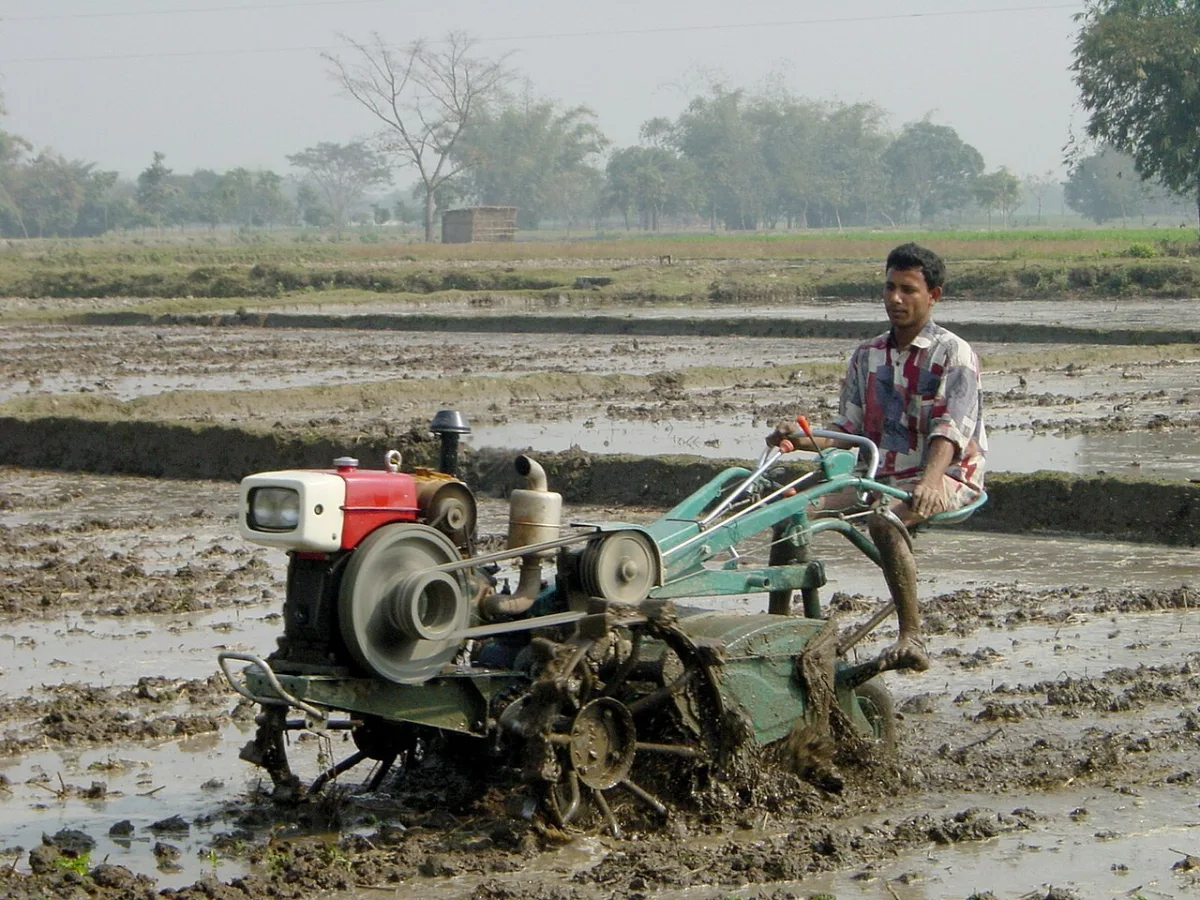
Specifics of soil tillage after late-harvesting predecessors
Tillage system">A tillage system is the foundation for regulating the water, air, and nutrient regimes in a field. A single technological operation cannot solve all tasks: for instance, during cultivation or milling, the soil is only loosened, crumbled, and partially mixed, while weeds are undercut. To increase soil fertility, protect the field from erosion, and obtain a maximum harvest, all practices are combined into a single system. It is always adapted to specific landscape conditions, soil type, predecessors, and field weediness.
Vegetable crops such as beet, tomato, summer-planted potato, late cabbage, grain maize, pepper, and eggplant are harvested late. After their harvesting, very little time remains before the onset of the autumn muddy season, which is why winter ploughing is urgent. On cultivated fields free of abundant weeds and crop residues, work begins immediately.
| Technological operation | Deadline for work completion |
|---|---|
| Winter ploughing after harvesting late predecessors before the onset of the muddy season | 1–4 weeks |
In weed-infested areas or fields with a large amount of crop residues, the plough will get clogged with vegetative mass. The tractor operator will have to constantly lift it, which will result in the ploughed field becoming bumpy and furrowed, and the organic matter will not have time to humify during the winter. This guarantees problems during spring harrowing, cultivation, and sowing with seed drills equipped with anchor coulters.
To avoid problems during spring tillage and sowing, weed-infested areas are prepared in stages. Preliminary shredding of residues and undercutting of weeds will facilitate the work of the plough. For this, the following sequence of technological operations is used:
- Deploy flat-cutting cultivators (KPSH-5 or OPT-3.5) to a depth of 8–12 cm to undercut weed roots and separate crop residues from the root system.
- Treat the area with disc implements to shred the vegetative mass into smaller pieces.
- Carry out high-quality winter ploughing of the prepared soil.
Breaking of perennial grass sod and ploughing depth
In southern Russia, alfalfa and clover serve as excellent predecessors for tomato, cabbage, cucumber, pepper, eggplant, and onion. Perennial grass sod is usually ploughed under for vegetable crops after the II cut in July. The main task of the agronomist is to prevent perennial grasses from growing again in the stands of the subsequent crop.
Since grasses have a root crown with dormant buds, it is necessary to undercut them in time. Immediately after the cut, flat-cutting cultivators or share-type harrows without mouldboards are used to separate the root crown from the roots. 6–7 days after this operation, the dormant buds die, and one can proceed to the primary tillage using a semi-fallow, layer-by-layer, or modified scheme.
If the farm has two-tier ploughs (PD-4-40, PYa-3-35), the preliminary treatment of the grass sod can be skipped. These implements bury the root crowns deep enough, completely preventing their regrowth.
In vegetable crop rotation, variable-depth primary soil tillage is mandatory to avoid the formation of a plough pan, for weed control, and for increasing soil fertility. Deep ploughing is carried out for root crops, tuber crops, late-sown or late-planted vegetables, as well as for perennial grasses. The frequency of deep tillage directly depends on the texture and type of soil.
- Time for death of grass buds after undercutting — 6–7 days
- Deep ploughing — more than 27 cm
- On heavy and self-sealing soils — every 2–3 years
- On ordinary chernozems — every 4 years
Read next
Vegetable growing For students
Technological features of soil preparation and tillage for vegetable crops
Agrochemistry For students
Systems of mineral and organic fertilizer application in vegetable crop rotations
Soil and tillage For agronomists