
Agricultural practices for potato cultivation and pest protection
7 min read
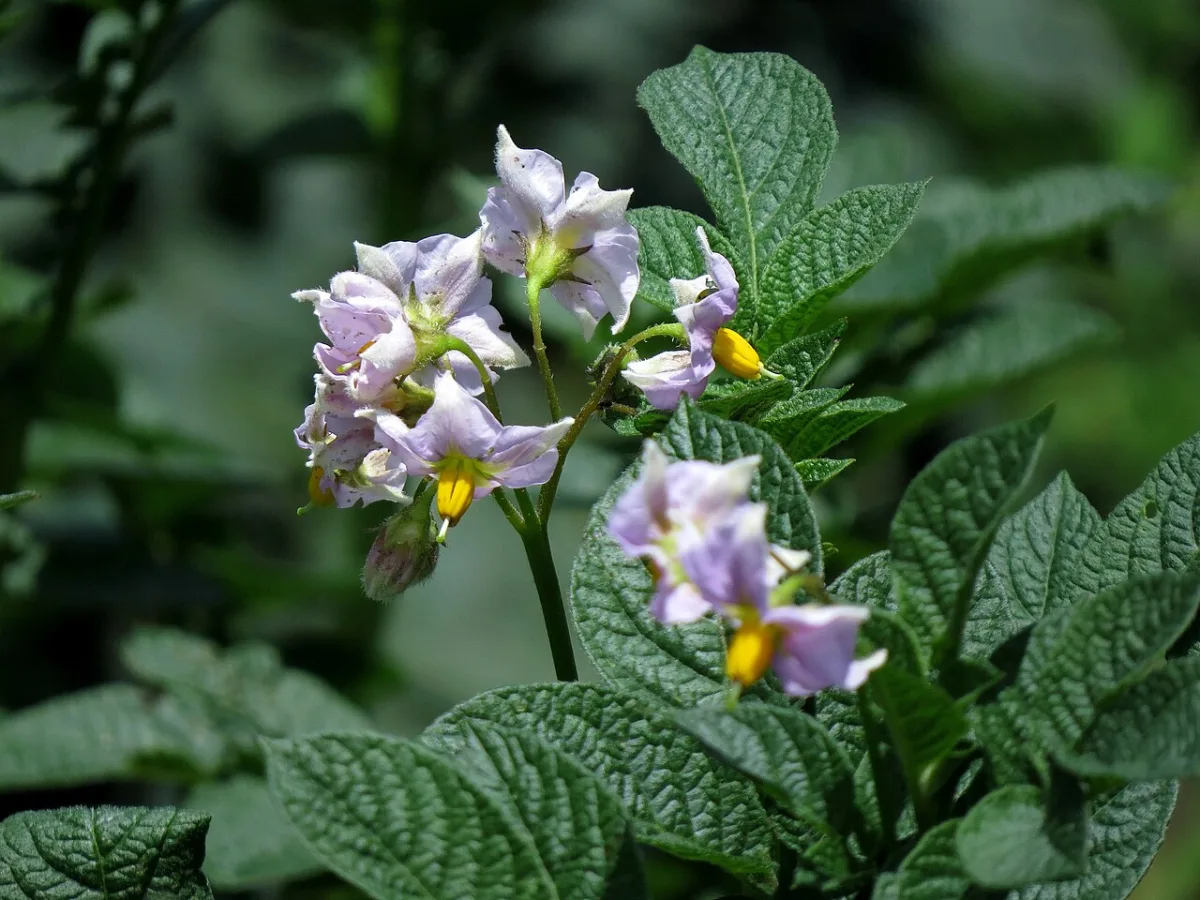
or baskets. I moisten the bedding and insulating material with a solution of superphosphate (60 g per 10 l of water) and potassium sulfate (30 g) with the addition of copper sulfate (15 g), and three days later the top dressing should be repeated with the same solution, but without the copper sulfate. One must ensure that the roots of adjacent tubers do not intertwine, otherwise, when selecting tubers for planting, they will break off and all the preparation will be in vain. If planting is delayed, the tubers should be rearranged more sparsely. Planting of sprouted tubers can be started earlier than usual, when the soil at a depth of 10 cm warms up to 3° C, on a level surface at a depth of 5 cm (layer of soil over the tuber) at a distance of 60x25 cm. The direction of the potato rows is best from north to south. Before planting, it is sufficient to add a handful of ash mixed with soil into each hole under the tuber on well-fertilized soil. As soon as emergence occurs, they must be covered with a 5 cm layer of moist soil and the covering should be repeated again when seedlings appear. Such double hilling of seedlings contributes to the additional formation of a tuber tier and protects the seedlings from a possible early frost. Regardless of this, standard hilling of plants is carried out when they reach a height of 12–14 cm, also using moist soil. Early potatoes need moisture especially during the tuberization period, when the most vigorous tuber growth occurs, therefore in dry weather irrigation is necessary with mandatory loosening of the soil after each watering or rain. One must not allow the formation of a soil crust even before emergence. PLANT PROTECTION AGAINST POLYPHAGOUS PESTS Great damage to vegetable plants is caused by larvae of click beetles (wireworms)—they are long, thin, yellow, as well as the larvae of the May beetle—they are short, thick, brown. They live in the soil for three to four years. During soil digging, the larvae and beetles are removed. Deep digging contributes to the penetration of the natural enemies of these pests—ground beetles—into the soil. Click beetle larvae die when ammonium sulfate and potassium sulfate are applied to the soil during tillage (two tablespoons per 1 m2), and also when watering plants with a solution of potassium permanganate (2–3 g per bucket of water). Acidic soil is subjected to liming (a glass of lime or chalk per 1 m2). In addition, potato baits are used. To do this, slices of potatoes are laid out every 20–30 cm across the plot and buried at a depth of 5–10 cm with the cut side down, and after a day or two these baits are pulled out and the pests gathered on them are destroyed. A dangerous pest is the Colorado potato beetle. Its larvae and the beetle itself damage all plants of the nightshade family, starting with potatoes, then moving on to tomatoes and eggplants. The beetles overwinter in the soil at a depth of 20–30 cm. The emergence of the beetles begins when the soil warms up to 12–14°C. They lay bright orange eggs on the underside of the leaves. After a week or two, larvae emerge. They are destroyed by spraying the plants with a suspension of the Beauveria fungus (20 g per bucket of water mixed with 1–2 g of chlorophos). Another dangerous pest of vegetable crops is the mole cricket. Its nests are discovered by circular tracks on the loosened soil surface. In spring, mole crickets emerge from the nest, gnawing at the roots and underground parts of plant stems. The females lay oval eggs up to 2.5 mm long in bunches in the nest at a depth of 10–20 cm. On the 10–15th day, larvae hatch, resembling the adult insect. During spring deep tillage, both eggs and larvae are destroyed, and during autumn tillage, the mole cricket nests are also destroyed. If in autumn, before the mole crickets go into hibernation, no later than October 5–10, deep pits are dug and hot horse manure is placed in them, the insects will gather under the manure, and with the onset of frost, it remains to inspect these trap pits and destroy the mole crickets. An interesting method of fighting the mole cricket is used by E. A. Yakubson from the Riga district of the Latvian SSR. Early in spring, she lays out pieces of iron, plywood, and small boards on the plot. Under them, the mole crickets make burrows and hide there. In the middle of the day, she collects the insects into a bucket. Later, she lays these traps out on the paths and inspects them from 10 to 12 a.m. and from 4 to 5 p.m. Nests can be found on the north side of damaged plants. She puts her finger into the burrow, and if it meets a compacted wall, she then uses both hands to remove a lump of well-packed soil, breaks it apart, finds a hundred or two eggs, and leaves them on the path for starlings or tits. In this way, E. A. Yakubson destroyed more than 500 nests on her plot without using poisoned baits. Polyphagous pests are naked slugs. They overwinter in the egg phase on weeds. To control slugs, it is first necessary to mow the grass and destroy them by spraying the plants with a solution of iron sulfate (1 kg per 10 l of water). Slugs also hide during the day under clods of earth. It is necessary to set up traps made of bunches of weeds, moistened straw, matting, or plywood, inspect them daily, and destroy the slugs. Effective agents: dry powdered superphosphate, or slaked lime, or a mixture of sifted ash with chlorinated lime (1:2). These mixtures are scattered in the evening around the beds in a 15 cm strip, and at the same distance, another strip of the same width is poured. Slugs, crawling over the first strip, shed their protective mucus, and on the second strip, the chemicals corrode the bodies of the slugs, and they die. In addition to pests, strong competitors in the consumption of water, light, and nutrients by crops are perennial weeds. WEED CONTROL A new plot is often infested with perennial weeds, among which field bindweed (creeping jenny) and thistle (pink and yellow sow thistle) are particularly vicious. They are distinguished by a powerful root system, which also lies deep, so that one deep ploughing or digging of the soil is insufficient. The fight against such weeds must be carried out to exhaust the stored nutrients in their roots and rhizomes by systematic cutting of seedlings and roots at a depth of 6–10 cm. The fact is that if you do not destroy the rosette of leaves that has appeared, it will grow, and with it, the roots will grow thanks to the outflow of nutrients from the leaves into the roots. Weed seedlings have to be destroyed up to five times per season, but the fight must not be stopped in the following year, as the deeply lying roots and rhizomes will produce seedlings, albeit in smaller quantities.
On an already established plot, annual weeds such as common lambsquarters (goosefoot) and common chickweed are particularly troublesome, as they infest the soil year after year if allowed to go to seed. A single lambsquarters plant produces up to 600,000 seed, with the larger, matured seed germinating in the same year, the smaller ones in the second year, and the third, very small ones in the third year. Common chickweed produces up to 25,000 small seed; they easily shed from the seed pods and germinate immediately, while the ungerminated seed remain viable for up to two years. The plant is fragile, so during weeding, it must be carefully pulled out along with its thin fibrous root or cut off at a depth of 5–6 cm. No part of the weed should be left on the ground, as even small particles easily take root upon contact with moist soil. It is easier to eradicate these weeds at the stage of emergence. It should be noted that chickweed is a very useful plant: it is rich in vitamins and mineral salts. Green borscht made from chickweed with sorrel, spinach, and young nettles is delicious, and it is also used as a refreshing seasoning for various dishes.
Read next
Plant protection For agronomists
Efficiency of insecticidal treatment of potato seed tubers against pests
Greenhouses and covers For gardeners
Klin technology for cucumber cultivation in greenhouses and plant protection
Soil and tillage For students