
Seed morphology of common chickweed and toxicity of plants of the Caryophyllaceae family
2 min read
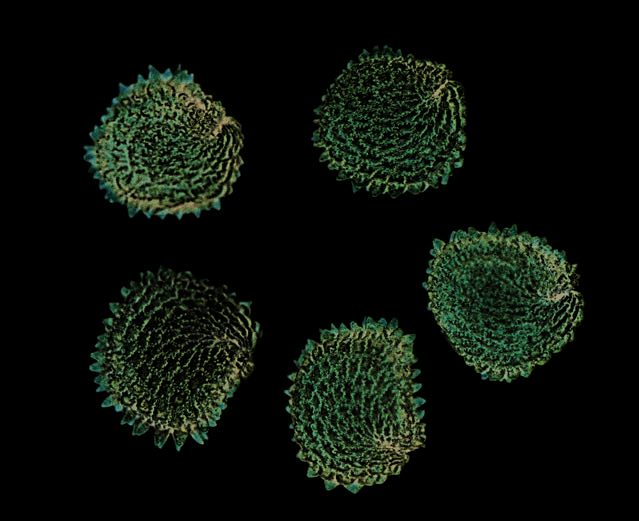
CARYOPHYLLACEAE FAMILY Caryophyllaceous weeds contaminate crop produce with seed, less frequently with fruit. The fruits are dehiscent many-seeded capsules, rarely nutlets. Poisonous properties: All parts of plants are poisonous in representatives of the genera, etc. They contain saponins, which are characteristic of the entire Caryophyllaceae family, however, their qualitative composition and quantitative content are not the same everywhere, which causes varying degrees of toxicity. Due to the wide distribution in nature of many species of these Caryophyllaceae, they are undesirable and even dangerous components of grass stands, hayfields, and pastures. Saponins have a local irritant effect with high hemolytic activity. Upon ingestion, a characteristic sweetish taste is felt, followed by a sensation of severe burning in the mouth and throat. Nausea, vomiting, and abdominal pain develop. In livestock animals, excitation of the central nervous system, convulsions, and death from respiratory failure are noted. The seeds of corn cockle and vaccaria are especially toxic. When processing millet, particular attention must be paid to seed cleaning, as vaccaria seeds are difficult to separate from millet. An admixture of corn cockle seeds in flour is considered dangerous at a level as low as 0.5%. The seeds contain up to 6.5% of the poisonous glycoside githagin or agrostemmin. Under high pressure, the glycoside decomposes and its toxicity disappears. The capsules are elongated, six-valved, longer than the calyx. The seeds are compressed, slightly kidney-shaped, slightly elongated at the base, with a slit-like depression. The radicle protrudes slightly. The seed hilum is in the depression, barely visible. The surface is covered with small tubercles arranged in regular five or six rows along the outer edge;
correctly depicted HERE: Seeds of common chickweed: tubercles are low, blunt, larger on the back, longer near the seed hilum, matte. Color is dark brown with a reddish tint, grayish-brown. Length 0.75–1.25 mm, width 0.75–1.25 mm, thickness 0.5 mm. Infests grain crops, more often gardens and meadows; grows along roads. Distribution: Throughout the Russian Federation. Poisonous properties: indicated above. The most frequently encountered weed in crop produce.
Read next
Seeds and varieties For agronomists
Morphological characteristics and distribution range of Saponaria officinalis
Seeds and varieties For agronomists
Morphological description and distribution of baby's breath seeds
Seeds and varieties For agronomists