
Morphological description and distribution of baby's breath seeds
1 min read
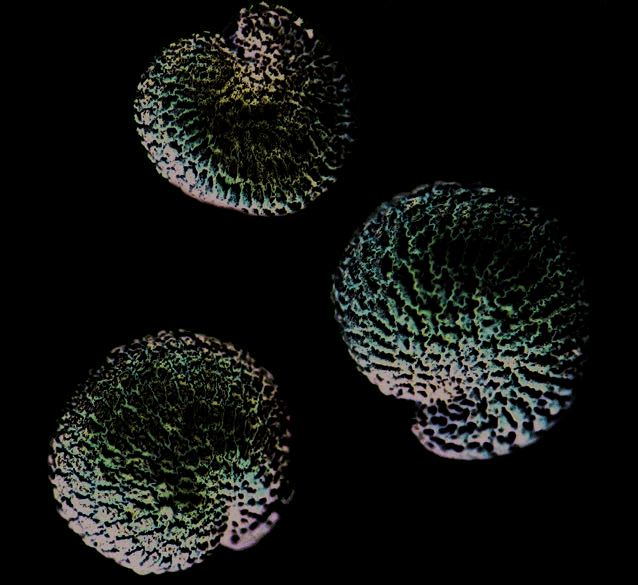
Baby's breath (Caryophyllaceae Juss. family) infests grain crops and hay meadows, and also often grows along roadsides. For an agronomist, this weed poses a serious threat due to its toxicity. Timely cleaning of seed material and field monitoring help to avoid sward infestation and harvest losses.
The plant has poisonous properties. Do not allow its presence in forage grass mixtures and food grain.
The weed demonstrates high adaptability to climatic factors. Its geographical distribution covers several large regions at once. When analyzing the purity of seed batches, it is important to consider the origin of the seed material from the following risk zones:
- European part of the Russian Federation (predominantly southern regions);
- Crimea;
- Caucasus;
- Western Siberia;
- Central Asia.
Morphological characteristics and seed size
The weed can be identified in seed material or in the field by the characteristic features of the fruits. The capsules of this species are spherical, single-celled, and contain only one or two seeds. The seeds have a kidney-oval, slightly compressed shape with a rounded back and a deep notch in the hilum area. Their dark brown, black, or grayish-ash surface (sometimes with a reddish tint) is covered with 67 rows of tubercles. These tubercles are elongated ridges that are superimposed on each other and run parallel to the edge of the seed.
- Seed length — 11,25 mm
- Seed width — 1,5 mm
- Seed thickness — 0,75 mm
Read next
Seeds and varieties For agronomists
Seed characteristics and distribution range of bladder campion
Seeds and varieties For agronomists
Morphological features and characteristics of cowherb (Vaccaria hispanica) seeds
Seeds and varieties For agronomists