
Morphology and distribution of the poisonous weed fool's parsley
1 min read
Caution, poisonous plant! All parts of fool's parsley contain alkaloids similar to those of poison hemlock. The presence of this weed in hayfields, pastures, or harvested crops poses a direct threat to the health of livestock animals.
Fool's parsley (Apiaceae family — APIACEAE Lindl.) belongs to the category of undesirable weed infestations in fields and pastures. The weed is widespread throughout the European part, Crimea, and the Caucasus. Maintaining the purity of seed material requires increased attention from the agronomist when identifying seeds.
The weed infests the following types of land:
- grain crop sowings;
- vegetable gardens;
- meadows (encountered less frequently).
Morphological features of fool's parsley mericarps
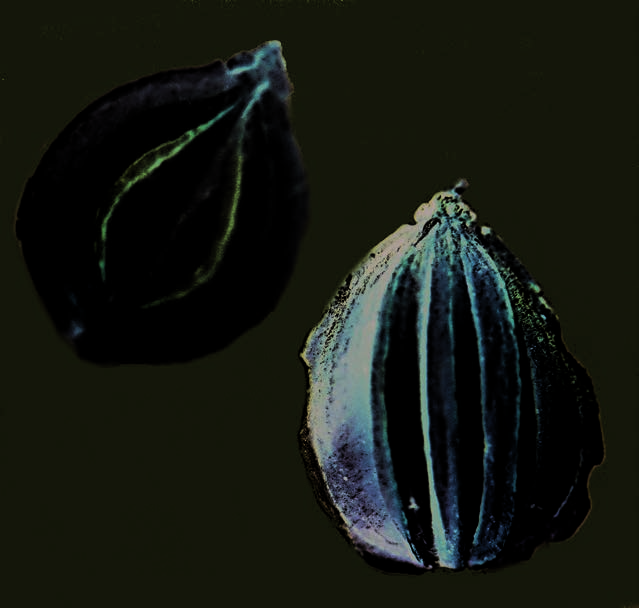
The mericarps of fool's parsley are ovoid and flattened on one side. Their dorsal side is highly convex, almost hemispherical, with five trihedral ribs. The two outer ribs extend into leathery, wing-like outgrowths with sharp edges, separated by deep dark grooves. The yellowish-brown surface of the ribs is smooth and slightly glossy.
The ventral side of the mericarp is noticeably lighter than the dorsal side; it is almost flat or slightly concave. It features a well-defined commissure, flanked by two reddish- or carmine-brown oil ducts. At the top of the fruit, there is a pyramidal remnant of the epigynous disk, and at the bottom, there is a small rounded notch.
| Linear parameter | Value |
|---|---|
| Length | 23 mm |
| Width | 22.5 mm |
| Thickness | 1.25 mm |
Read next
Seeds and varieties For agronomists
Cicuta virosa morphological features of seed and plant toxicity
Seeds and varieties For agronomists
Botanical description and geographical distribution of the barnyard grass weed
Seeds and varieties For agronomists