
Morphological description and distribution area of black bindweed seed
1 min read
Family: POLYGONACEAE
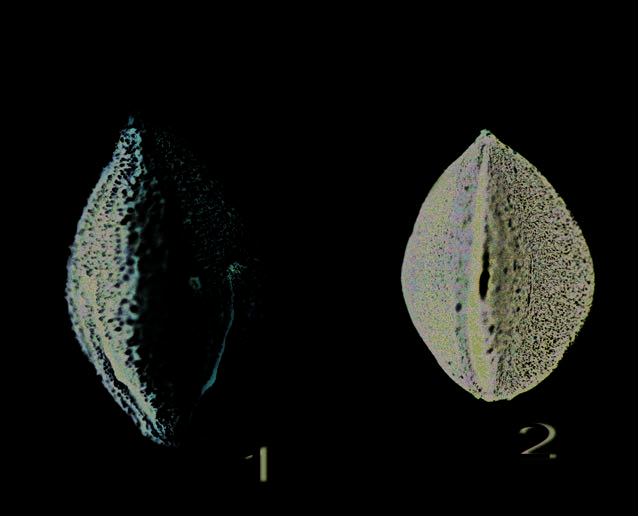
The nutlets in the perianths are three-sided. The perianth is warty, rough, tightly enveloping the nutlet, and easily abraded. The color is grayish-brown, gray-green, or brown with a pinkish tint. The nutlets are three-sided, the faces are equal to each other; in cross-section, the nutlets are more or less regularly triangular. In the middle part of the nutlet, the faces are somewhat depressed. In the upper part, the nutlets are elongated and pointed, at the base they are less elongated. The fruit hilum is in the form of a flat annular roller, yellow in color. The edges of the nutlets are relatively smooth and shiny. The surface of the faces is punctate-rough, finely longitudinally grooved, and matte. The color of the nutlets is black. The length of the nutlets is 2.5–3.5 mm, the width and thickness are 1.75–2.75 mm. It infests winter and spring crops, vegetable gardens. Distribution: European part (almost everywhere), Crimea, Caucasus, Western and Eastern Siberia, Far East, Central Asia. The most common weed in plant products.
Read next
Seeds and varieties For agronomists
Morphological features and distribution area of Tatar buckwheat
Seeds and varieties For agronomists
Morphological characteristics of the fruits and seeds of common lambsquarters
Seeds and varieties For agronomists