
Morphological characteristics of seeds and toxicity of common houndstongue
1 min read
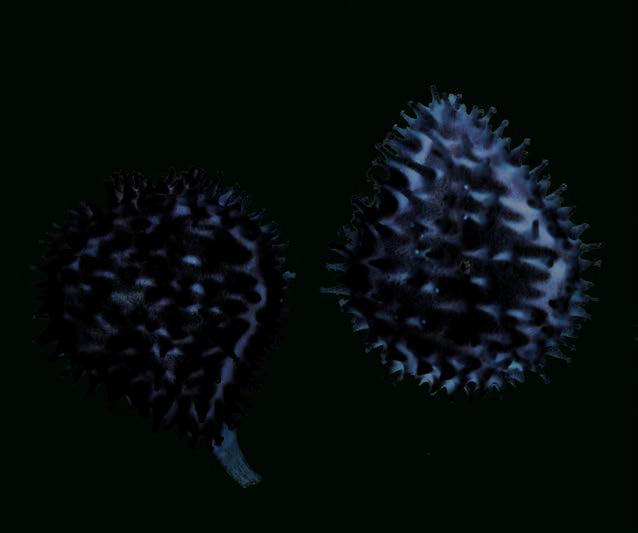
Common houndstongue from the borage family (Boraginaceae Juss.) poses a serious threat to clean crops. This weed infests grain crops, vegetable gardens, orchards, and vineyards, and also spreads actively along roadsides. Controlling the purity of seed material is a primary task, as the presence of weed fruits in the harvest or feed can have severe consequences.
Houndstongue nutlets contain 0.002% of the toxic alkaloid cynoglossine, which has a curare-like effect and is extremely dangerous for livestock animals.
How to identify houndstongue seeds by morphological features
For accurate identification of the weed in a seed mass, it is necessary to evaluate the external characteristics of the fruitlets. They have an obovate, compressed shape with a slightly elongated base, and they lack a surface on the dorsal side. The fruit scar is small, depressed, oval, and pointedly elongated at the base. The grayish-brown surface of the fruit is densely covered with rounded prickles with star-shaped silvery-gray heads, while the space between them appears finely warty.
| Fruitlet parameter | Linear dimension |
|---|---|
| Length | 4.56 mm |
| Width | 45 mm |
| Thickness | 3 mm |
The weed has a distinct geographical distribution. Farms in the following regions should pay special attention to the purity of their sowing material:
- Crimea
- Caucasus
- Central Asia
Read next
Seeds and varieties For agronomists
Morphological description and properties of common comfrey seed
Seeds and varieties For agronomists
Characteristics of fruitlets and harmfulness of the weed Heliotropium europaeum
Seeds and varieties For agronomists