
Morphological description and properties of common comfrey seed
1 min read
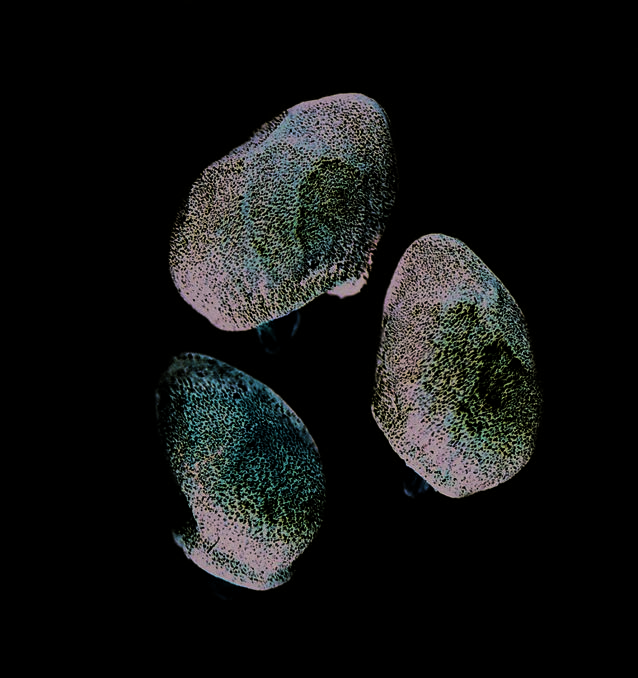
BORAGINACEAE FAMILY The fruitlets are ovate-asymmetrical, obliquely triangular-humped. The apex is shifted to the side. The base is straight-truncate. The fruit protrusion extends significantly beyond the rim. The hilum is deep, surrounded by a weakly ribbed annular rim, above which there is a slight constriction. The surface is rugose-warty, slightly glossy. The color is dark gray, the annular rim is almost black; the fruit protrusion is light yellow. Length 2.75–3.5 mm, width 3–4 mm, thickness 2.25–2.5 mm. It infests vegetable gardens, meadows, and less frequently fields; it grows along roadsides. Distribution: Caucasus; introduced into the Baltic, northern, and central regions of the European part. Toxic properties: The aerial part, including the seed, is poisonous. The plant contains the alkaloids cynoglossine and consolidine, which have a curare-like effect and cause paralysis of the central nervous system.
Read next
Seeds and varieties For agronomists
Botanical characteristics and harmfulness of the weed viper's bugloss
Seeds and varieties For agronomists
Morphological characteristics and toxicity of Trichodesma incanum seeds
Seeds and varieties For agronomists