
Botanical characteristics and harmfulness of the weed viper's bugloss
1 min read
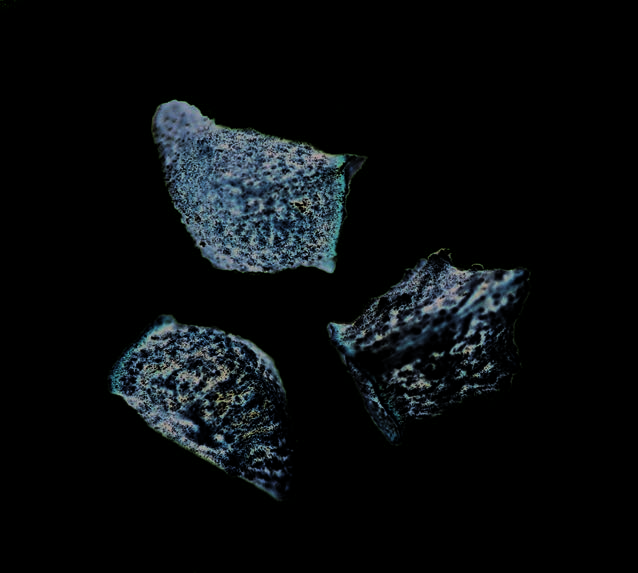
BORAGINACEAE FAMILY Nutlets are trihedral, rounded-trihedral in cross-section. The apex is pointed and obliquely curved; there is a sharp keel-like ridge on the ventral side that extends into a tooth at the apex. On the dorsal side, the ridge is weakly expressed and reaches only halfway up the nutlet. The base is straight-truncate, representing a flat triangle. The fruit scar is wide, slightly concave, with a deep depression and two small warts, surrounded by a small annular rim with sharpened edges. The surface is rugose-wrinkled, warty, and matte. The color is grayish-brown to dark brown; the warts, fruit scar, and annular rim are lighter. Length 2.5–3.5 mm, width 1.5–2.25 mm, thickness 1.25–1.75 mm. It infests crops of cereal crops, clover, and alfalfa; it grows along roadsides. Distribution: European part (almost everywhere except the Arctic, especially in the chernozem belt regions), Crimea, Caucasus, Western and Eastern Siberia, Central Asia. Toxic properties: The fruits contain the toxic alkaloid echiine, similar to cynoglosssine, which has a curare-like effect. The most frequently encountered weed in plant products.
Read next
Seeds and varieties For agronomists
Morphological characteristics of seeds and toxicity of common houndstongue
Seeds and varieties For agronomists
Botanical characteristics and distribution area of stickseed (Lappula squarrosa) in crops
Seeds and varieties For agronomists