
Morphological characteristics of seeds and geographical distribution of common ragweed (Ambrosia artemisiifolia)
2 min read
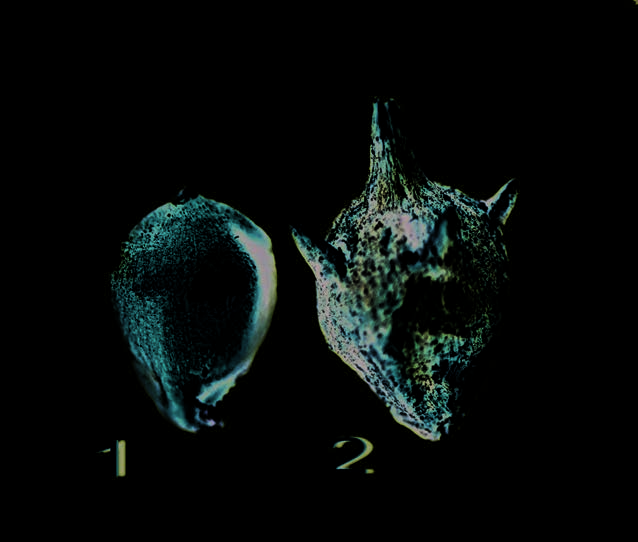
Achenes in an involucre are obovate, cuneately compressed at the base, with 5–7 small (up to 1 mm) spines around the upper convex part and one larger one in the center at the apex. The surface often has longitudinal and transverse stripes and reticulate wrinkling. The color varies from greenish-gray to brown. The length of achenes in an involucre is 2.5–3.25 mm, the width and thickness are 1.5–2 mm. The involucre separates quite easily from the achenes, so both achenes in an involucre and the achenes themselves may be present in produce. The achenes are obovate with a small protrusion at the apex — a remnant of the style. The surface is slightly shiny or matte, smooth. The color ranges from brown to almost black. The length of the achenes is 1.5–2.2 mm, the width and thickness are 1–1.5 mm. It infests all field crops, especially row crops and cereals, as well as kitchen gardens, orchards, vineyards, meadows, pastures, and shelterbelts. It grows abundantly on the verges of railways, highways, and dirt roads, along the banks of rivers and ponds, in wasteland and other uncultivated lands, on streets and in the homesteads of settlements, wherever the natural plant cover is disturbed. Distribution: European part (southern regions) and also Primorsky Krai. INCLUDED IN THE "LIST OF PESTS, PLANT DISEASES, AND WEEDS OF QUARANTINE SIGNIFICANCE FOR THE RUSSIAN FEDERATION."
Read next
Seeds and varieties For agronomists
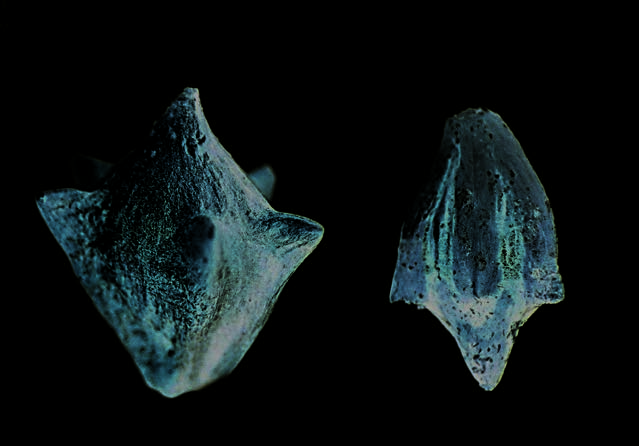
Morphological characteristics and pathways of Ambrosia trifida spread
Seeds and varieties For agronomists
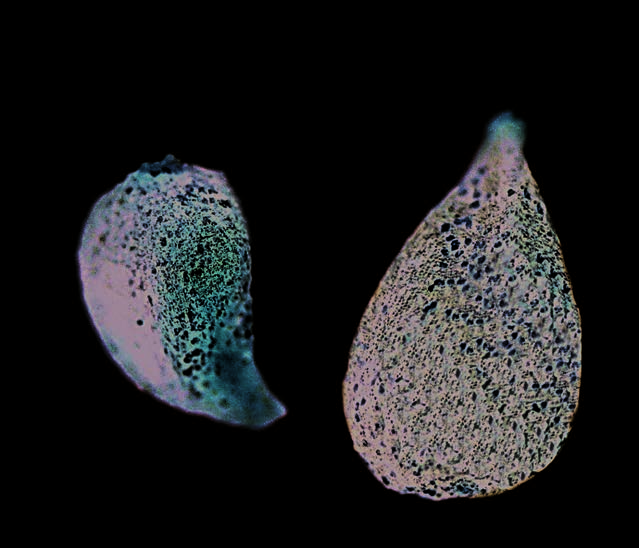
Characteristics of the quarantine weed Cyclachaena xanthiifolia and control methods
Seeds and varieties For agronomists