
Morphological characteristics and quarantine significance of perennial ragweed
1 min read
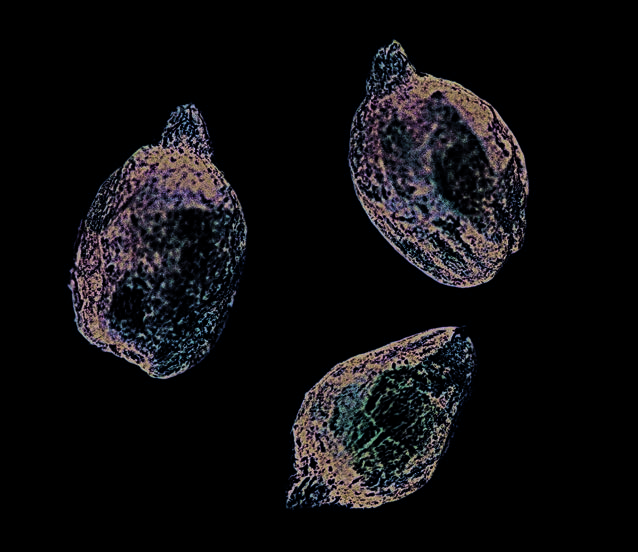
The achenes in the involucre are obovate with a thickened, blunt, pubescent spine at the apex. The surface of the involucre is finely tuberculate and pubescent (hairs are easily rubbed off). The color is greenish-brown, gray, or dark gray. The length of the achenes in the involucre is 2.5–3 mm, the width and thickness are 2–2.5 mm. The involucre easily separates from the achenes under mechanical impact. Therefore, the produce may contain both achenes in the involucre and the achenes themselves. The achenes are obovate with a small protrusion at the apex, smooth, shiny, and brown in color. The length of the achenes is 1.5–2 mm, the width and thickness are 1–1.5 mm. It infests crops of cereals and row crops, stands of perennial grasses, meadows, and pastures; it grows on roadsides, along railways, and in settlements. Distribution: European part (isolated foci in southern regions). INCLUDED IN THE "LIST OF PESTS, PLANT DISEASES, AND WEEDS OF QUARANTINE SIGNIFICANCE FOR THE RUSSIAN FEDERATION".
Read next
Seeds and varieties For agronomists
Morphological characteristics of seeds and geographical distribution of common ragweed (Ambrosia artemisiifolia)
Seeds and varieties For agronomists
Characteristics of the quarantine weed Cyclachaena xanthiifolia and control methods
Seeds and varieties For agronomists