
Morphological characteristics and pathways of Ambrosia trifida spread
1 min read
Giant ragweed is a dangerous early spring weed that infests a wide range of crops and rapidly occupies territory. Combating it is complicated by the high viability of its seeds and their ability to disperse easily. The weed actively colonizes both cultivated fields and adjacent areas, which serve as a constant source of infestation seed material.
Giant ragweed IS INCLUDED IN THE "LIST OF PESTS, PLANT DISEASES, AND WEEDS OF QUARANTINE SIGNIFICANCE FOR THE RUSSIAN FEDERATION." Upon discovery of infestations of this weed, it is mandatory to strictly follow quarantine phytosanitary measures.
How to identify seeds and where to expect the weed
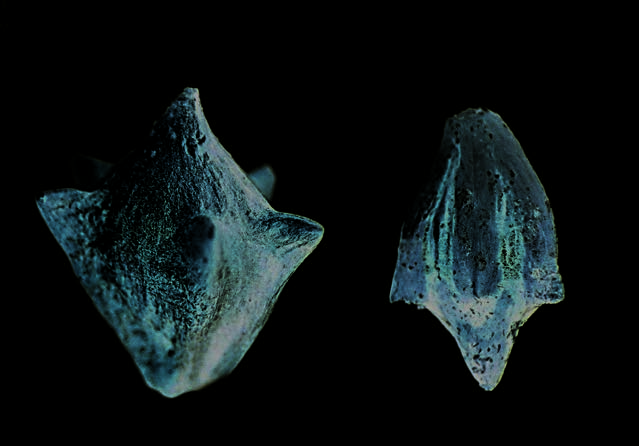
Giant ragweed seeds have a characteristic appearance that allows for the rapid identification of the contaminant in seed material. The achenes are tightly fused with the involucre and are practically inseparable from it; therefore, in bulk, they are encountered only as fruits within the involucre. The involucre is obovate in shape with a large spine at the apex and less developed spines along the edges. Convex ribs run from the lateral spines to the base of the fruit, and the surface itself has a coarsely furrowed, pitted structure. The color varies from pale yellow to brown and dark brown, sometimes with distinct spotting.
- Achene length — 48 mm
- Achene width and thickness — 34 mm
- Number of less developed spines along the edges — 48 pcs.
In field conditions, the weed prefers low-lying areas of the relief and spreads rapidly on uncultivated land. From there, it easily moves into the plantings of crop plants, causing significant damage to the harvest. The primary range of the pest covers the southern regions of the European part and the Caucasus.
- spring grain crops;
- row crops;
- forage grasses;
- orchards and vegetable gardens;
- low-lying areas: gullies, ravines, river banks, and other lands.
Read next
Seeds and varieties For agronomists
Morphological characteristics of seeds and geographical distribution of common ragweed (Ambrosia artemisiifolia)
Seeds and varieties For agronomists
Characteristics of the quarantine weed Cyclachaena xanthiifolia and control methods
Seeds and varieties For agronomists