
Morphological characteristics and seed dispersal features of the creeping thistle (Cirsium arvense)
1 min read
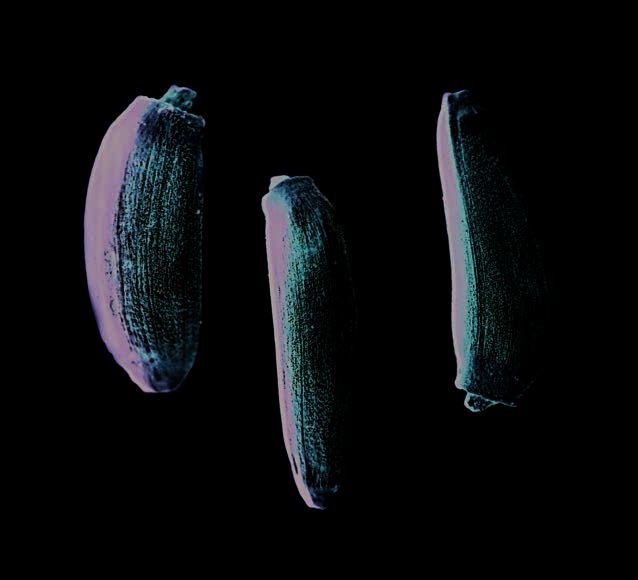
Cirsium arvense is one of the most common and harmful weeds in crop production. Its seed infest winter and spring cereal crops, as well as vegetable gardens and roadsides. When ending up in the grain pile during harvesting, weed impurities significantly reduce the quality of commercial grain and the purity of seed material. To take timely cleaning measures and prevent field infestation, an agronomist must accurately identify the weed's achenes.
Cirsium arvense is recognized as the most frequently encountered weed in plant products. Cleaning seed material from its achenes requires special control at the post-harvest processing stage.
Morphological characteristics and dimensions of achenes
The achenes of Cirsium arvense have an elongated ovoid shape; they are laterally compressed and sometimes slightly curved. The apex of the seed is truncate, with a small circular rim and a remnant of the pappus stalk. The pappus itself falls off easily, so it is usually absent on mature achenes found in the grain mass. The base of the achene is narrowed, and the hilum is small, oval, and light-colored.
The surface of the seed is relatively smooth, with weakly defined longitudinal grooves and a faint sheen. The coloration varies from yellow to light brown. In some cases, sparse, interrupted longitudinal stripes appear on the surface.
| Achene parameter | Size, mm |
|---|---|
| Length | 2,53,5 |
| Width | 0,751 |
| Thickness | 0,75 |
The weed infests spring and winter cereal crops, vegetable gardens, and also grows along roads. The geography of its distribution is extremely wide:
- European part (almost everywhere);
- Caucasus;
- Siberia;
- Central Asia.
Read next
Seeds and varieties For agronomists
Characteristics and phytosanitary risk of Texas blueweed (Helianthus ciliaris)
Seeds and varieties For agronomists
Characteristics of the quarantine weed Cyclachaena xanthiifolia and control methods
Seeds and varieties For agronomists