
Botanical characteristics and morphological features of cornflower achenes
1 min read
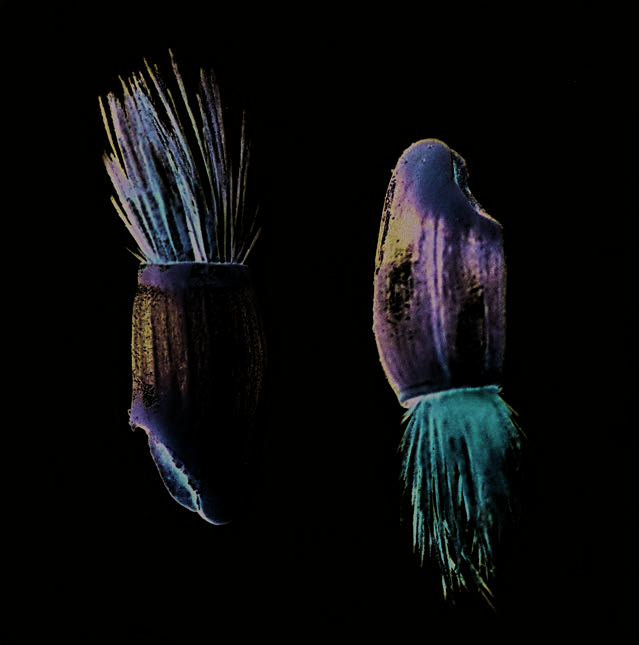
The cornflower is one of the most common weeds infesting spring and winter crops, as well as grasses. This weed is found in the northern and central regions of the European part, in the Caucasus, and in Siberia. The weed is regularly detected in finished plant products, which is why an agronomist must accurately identify its seed when analyzing the purity of seed material.
Cornflower achenes are recognized as the most frequently encountered weed in plant products. Infestation of batches reduces the commercial quality of grain and requires additional cleaning of the heap.
Morphological characteristics and dimensions of achenes
Cornflower achenes are elongated-oval, slightly obovate in shape and compressed laterally. Their expanded truncate apex is bordered by a ring-like rim and bears a multi-row, persistent pappus. The bristly, free hairs of the pappus have small barbs and are always shorter than the seed itself. In the lower narrowed part on the side, there is an elongated-elliptical hilum with smooth edges and a ridge in the center. The hilum is located in a depression that is 1/3 the length of the achene.
Freshly harvested seeds have a small tuft of hairs at the base. The surface of the achenes is shiny, smooth, with faint striations and slight pubescence. The coloration of the seed parts is non-uniform:
- pappus bristles — yellow-orange, less often reddish-violet;
- base, rim, and ridge — light yellow;
- middle part of the achene — light ash or grayish;
- hilum — white.
Dimensions of cornflower seeds based on measurement results:
| Achene parameter | Size, mm |
|---|---|
| Length with pappus | 4,57 |
| Length of achene proper | 2,754,5 |
| Width | 1,752,25 |
| Thickness | 11,75 |
Read next
Seeds and varieties For agronomists
Morphological characteristics and quarantine significance of Bidens pilosa
Seeds and varieties For agronomists
Characteristics and phytosanitary risk of Texas blueweed (Helianthus ciliaris)
Seeds and varieties For agronomists