
Characteristics and phytosanitary risk of Texas blueweed (Helianthus ciliaris)
1 min read
Texas blueweed (Helianthus ciliaris) is a dangerous quarantine weed that infests crops of absolutely all agricultural plants, as well as pastures and uncultivated lands. This species is currently absent from the territory of Russia; however, it poses a serious phytosanitary threat. The main danger of this weed lies not only in the reduction of the yield of crops, but also in its toxicity. Ingestion of the weed in pastures can cause severe poisoning of livestock animals.
The plant is poisonous! Texas blueweed is included in the "List of pests, plant diseases, and weeds of quarantine significance for the territory of the Russian Federation".
Currently, the weed is distributed in the following countries:
- Mexico
- USA
- Canada
- Sweden (isolated cases noted)
How to recognize weed seeds in planting material
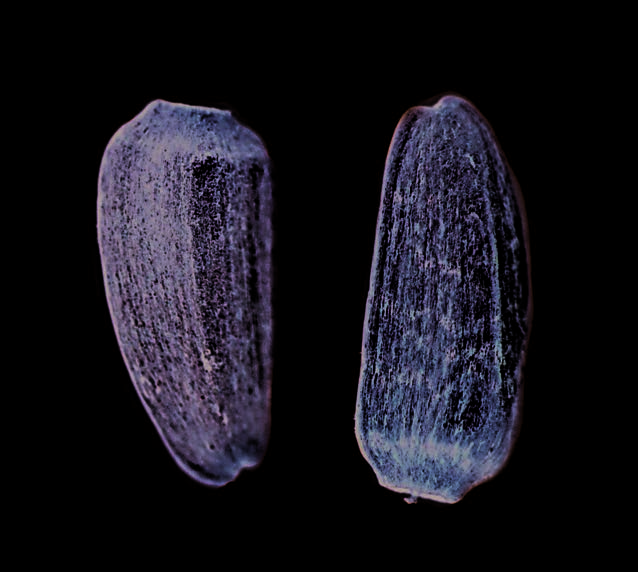
To prevent the introduction of the pest, it is necessary to strictly control the purity of the seed stock. The achenes of Texas blueweed are obovate, bluntly wedge-shaped, and noticeably laterally compressed. Their apex is truncate with a circular ridge, and the base is narrowed. A small oval hilum is shifted slightly to the side from the center of the base. The surface of the achenes is glabrous and finely longitudinally striate, with a characteristic silvery luster and variegated coloring in shades of gray-brown.
| Geometric parameter of the achene | Value |
|---|---|
| Length | 34 mm |
| Width | 1,52 mm |
| Thickness | 0,51 mm |
Read next
Seeds and varieties For agronomists
Morphological characteristics and seed dispersal features of the creeping thistle (Cirsium arvense)
Seeds and varieties For agronomists
Seed morphology and geographical distribution of Ranunculus sceleratus
Seeds and varieties For agronomists