
Seed morphology and geographical distribution of Ranunculus sceleratus
1 min read
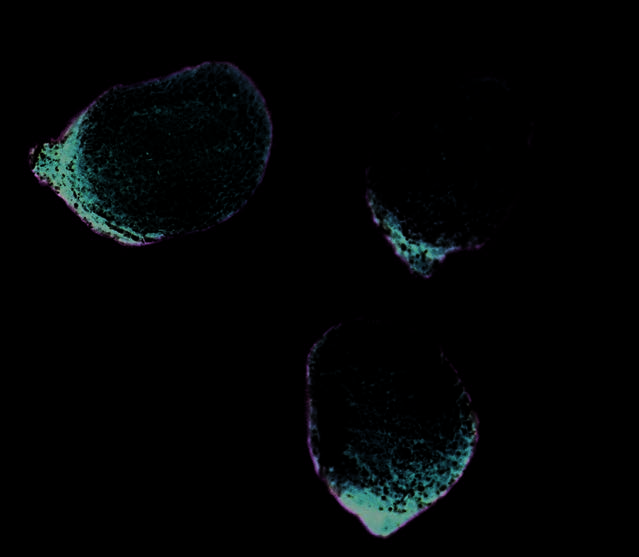
Celery-leaved buttercup (Ranunculus sceleratus L.) is an undesirable object in forage lands and arable fields located in lowlands. Due to the toxic properties of this weed, it is important for an agronomist to identify its emergence in time. The characteristic fruits of the plant serve as the main diagnostic feature for assessing the infestation of the soil and seed stock.
The plant has toxic properties. It infests meadows and fields in low-lying areas of the terrain.
Morphological features and seed dimensions
The fruits of the celery-leaved buttercup are aggregate fruits (etaerios). Individual nutlets have an oval-compressed shape with a swelling in the central part. There is a dark groove on the dorsal side of the fruit, the remainder of the style looks like a small blunt beak-shaped outgrowth, and the strongly compressed fruit hilum is located in a notch. The matte surface of the seeds is distinguished by a slightly wrinkled, punctate-pitted texture. The color varies from light yellowish to light greenish, with the central part of the fruit always being lighter than the edges.
| Nutlet parameter | Size |
|---|---|
| Length | 11,25 mm |
| Width | 0,751 mm |
| Thickness | 0,4 mm |
Due to its high ecological plasticity, this weed easily adapts to various conditions. Agronomists should take into account the risks of infestation in almost all key agricultural regions. The distribution geography of the celery-leaved buttercup covers vast territories:
- European part (everywhere);
- Crimea;
- Caucasus;
- Western and Eastern Siberia;
- Far East;
- Kamchatka;
- Central Asia.
Read next
Seeds and varieties For agronomists
Morphological features of seed and toxic properties of tall buttercup
Seeds and varieties For agronomists
Morphological characteristics of seeds and distribution area of Eruca sativa
Seeds and varieties For agronomists