
Morphological characteristics of seeds and distribution area of Eruca sativa
1 min read
Eruca sativa poses a serious threat to field cleanliness, infesting crops of grain crops and flax. It is important for an agronomist to timely detect this weed at the stage of analyzing seed material in order to prevent its spread. In botanical descriptions, the plant is associated with the poppy (Papaveraceae Juss.) and cruciferous (Brassicaceae Burnett) families.
Eruca sativa has poisonous properties. Its appearance in grain and flax crops critically reduces the quality of the resulting produce.
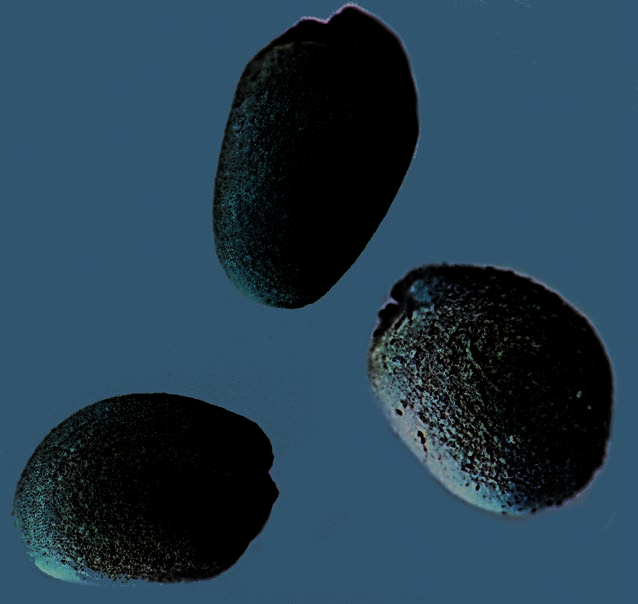
Morphological features and distribution area of the weed
For accurate identification of the weed, specialists rely on the external characteristics of seeds and fruits. The pods of the plant have a compressed-tetrahedral shape. The seeds themselves are spherical and oval-compressed, with a matte, dotted-cellular surface and heterogeneous greenish-gray or light brown coloration. The radicle of the seed is lighter, equal in length to the cotyledons, and forms a small protrusion with a light rim at the base, while the seed hilum is located in a notch.
| Plant part | Parameter | Size, mm |
|---|---|---|
| Pods | Length | 2025 |
| Seeds | Length | 23 |
| Width | 1,52 | |
| Thickness | 1,251,5 |
The weed is adapted to various climatic conditions and actively develops in vast territories. Agronomists should pay special attention to the purity of sowing material in regions where the weed is most common. Eruca sativa is traditionally found in the following territories:
- European part (southern and southwestern regions);
- Crimea;
- Caucasus;
- Central Asia.
Read next
Seeds and varieties For agronomists
Morphological description and characteristics of winter cress seeds
Seeds and varieties For agronomists
Morphological characteristics and geography of distribution of field mustard
Seeds and varieties For agronomists