
Morphological features and description of scentless mayweed achenes as a weed
1 min read
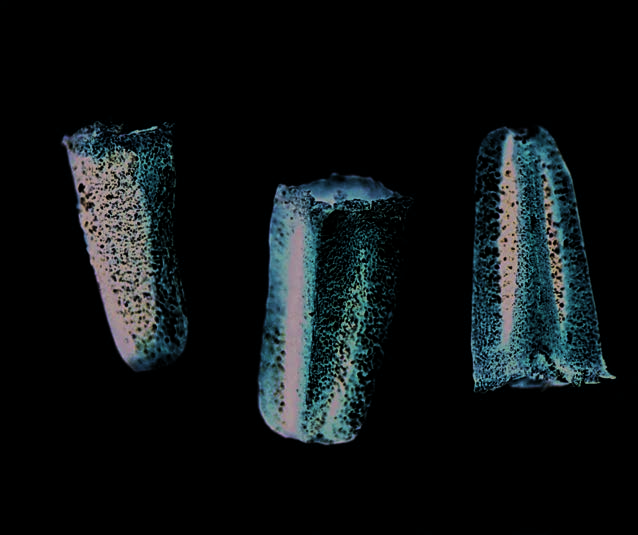
The achenes are straight, more or less truncate-pyramidal, and three-sided. The outer face of the achenes (the back) is broad and convex, with two oil glands at the top. The other two faces, located on the inner side, are narrow and slightly depressed. The ribs of the achenes are clearly defined. The apex is broad and appears truncate, with a wavy-bordered edge (crown), while the base is uniformly narrowed, also truncate, and blunt. The fruit scar is located in the center of the base, rounded, and surrounded by a raised ridge. The surface of the achenes is uneven and transversely wrinkled, with rough ribs. The coloration is non-uniform: the ribs and the border are yellowish-brown, while the intercostal spaces are almost black. The length of the achenes is 1.5–2.5 mm, width 0.75–1.25 mm, thickness 0.5–0.75 mm. It infests crops of grain legumes, grasses, and vegetable gardens. Distribution: throughout almost the entire territory of Russia. The most frequently encountered weed in crop production.
Read next
Seeds and varieties For agronomists
Morphological characteristics and poisonous properties of Consolida orientalis seed
Seeds and varieties For agronomists
Botanical characteristics and morphological features of cornflower achenes
Seeds and varieties For agronomists