
Morphological characteristics and poisonous properties of Consolida orientalis seed
1 min read
Consolida orientalis infests winter and spring crops, reducing the purity and value of the harvested crop. For an agronomist, this weed poses a serious threat due to the high toxicity of its seeds. To prevent the contamination of commercial grain lots with dangerous impurities, it is important to identify the plant in a timely manner.
Morphology and danger of Consolida orientalis seeds
Representatives of the genus Consolida contain poisonous alkaloids (condelphine, methyllycaconitine, delphinine, and others), the toxic effect of which is similar to aconites. The presence of weed seeds in feed or food grain poses a serious danger.
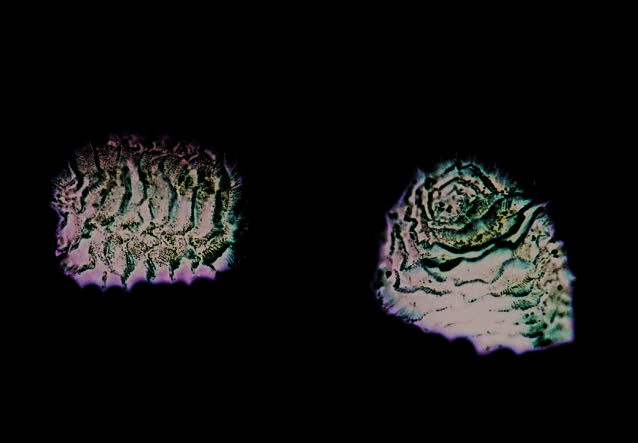
The follicles of Consolida are straight and pubescent. The seeds themselves have a trihedral, obtuse-wedge shape with a convex outer face and nearly flat inner sides. The obtuse, oval apex of the seed is lighter in color than the main part, and the seed hilum is located at the slightly truncated base. The surface is covered with transverse, slightly wavy wrinkles, which transition into clearly defined scales closer to the apex. The seed color is reddish-gray.
- Seed length — 22,5 mm
- Seed width — 1,251,5 mm
- Seed thickness — 1,251,5 mm
The weed infests fields in specific soil and climatic zones. The main distribution area of the weed covers several key regions. Farms in the south and southeast most often have to fight this weed.
- Crimea;
- Caucasus;
- Central Asia.
Read next
Seeds and varieties For agronomists
Botanical description and toxicity of Aquilegia vulgaris seed
Seeds and varieties For agronomists
Morphological features and description of scentless mayweed achenes as a weed
Seeds and varieties For agronomists