
Morphological characteristics and geographic distribution of redroot pigweed
1 min read
Redroot pigweed is one of the most frequently encountered weeds that contaminate crop products. Contamination of the harvest occurs both by isolated seeds and by single-seeded fruits of the weed. Amaranth seeds pose the greatest threat to vegetable gardens, cucurbit crops, and cotton, although they are less frequently found in other crop sowings. To prevent the spread of the weed, it is important to detect it in a timely manner during the cleaning of seed material and quality control of products.
Redroot pigweed is the most widespread contaminant of crop products among all members of the Amaranth family.
The weed has a wide distribution range and is adapted to various soil and climatic conditions. It can be found across the following geographical distribution:
- European part (almost everywhere, except for the northern regions);
- Caucasus;
- Western and Eastern Siberia;
- Far East;
- Central Asia.
Morphological characteristics of fruits and seeds
The fruits of redroot pigweed are ovoid-elongated, compressed, grayish-green, and have a lid. The seeds are lenticular, round-compressed, with a smooth, polished, and shiny surface, which appears weakly reticulate under high magnification. Mature seeds are black in color, while immature ones are ruby-red. A noticeable margin runs around the circumference of the seed, covering the annularly arranged embryo.
The embryo terminates at the hilum with a notch, where the hilum itself is located. In this zone, the margin slightly protrudes and forms two characteristic teeth. Such morphological features allow for the reliable identification of the weed seeds during laboratory analysis and seed control.
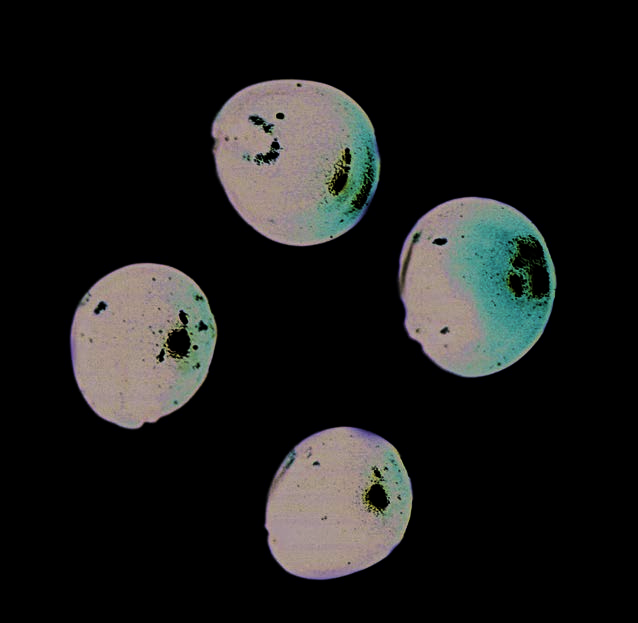
| Seed parameter | Size, mm |
|---|---|
| Diameter | 11,25 |
| Width | 1 |
| Thickness | 0,50,75 |
Read next
Seeds and varieties For agronomists
Botanical characteristics of seeds of the hoary alyssum (Berteroa incana)
Seeds and varieties For agronomists
Morphological characteristics of seeds and geographical distribution of white sweetclover
Seeds and varieties For agronomists