
Morphological characteristics of seeds and geographical distribution of white sweetclover
1 min read
Family: FABACEAE
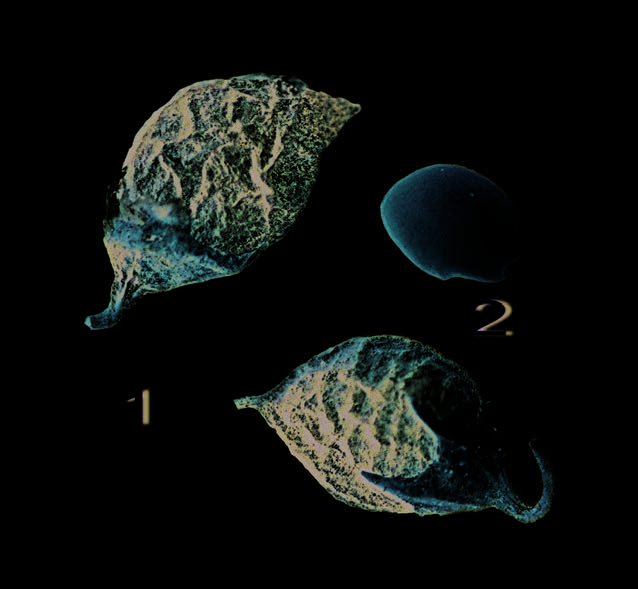
The pods are obovate, slightly compressed, single-seeded or rarely two-seeded. There is a pointed projection at the apex of the pod. The base is often enclosed in the perianth cup, formed by triangular-pointed, tooth-like perianth leaflets. The surface of the pods is reticulate-wrinkled, matte. The color is dark gray or light gray. The color of the cup is light gray or greenish. Length 2.75–3.5 mm, width 1.75–2.25 mm, thickness 1.25–1.5 mm. The seeds are kidney-elongated, laterally compressed. The radicle is thinner than the cotyledons, closely adheres to them, and protrudes above the seed hilum with a noticeable ledge; it is 3/4 the length of the cotyledons. The seed hilum is rounded, bordered along the circumference. The surface is smooth, matte. The color is yellow, yellowish-green, or yellowish-brown. Length 1.75–2.25 mm, width 1.25–1.5 mm, thickness 1–1.25 mm. It infests crops of spring and winter cereals, peas, sunflower, clover, and cotton; it grows in meadows and along roads. Distribution: European part (almost everywhere), Crimea, Caucasus, Western and Eastern Siberia, Far East, Central Asia. Poisonous properties: indicated above.
Read next
Seeds and varieties For agronomists
Botanical description of the fruits and seed of black medic
Seeds and varieties For agronomists
Botanical characteristics of seeds and harmfulness of water pepper (Persicaria hydropiper)
Seeds and varieties For agronomists