
Field cow-wheat as a dangerous weed of agricultural crops
1 min read
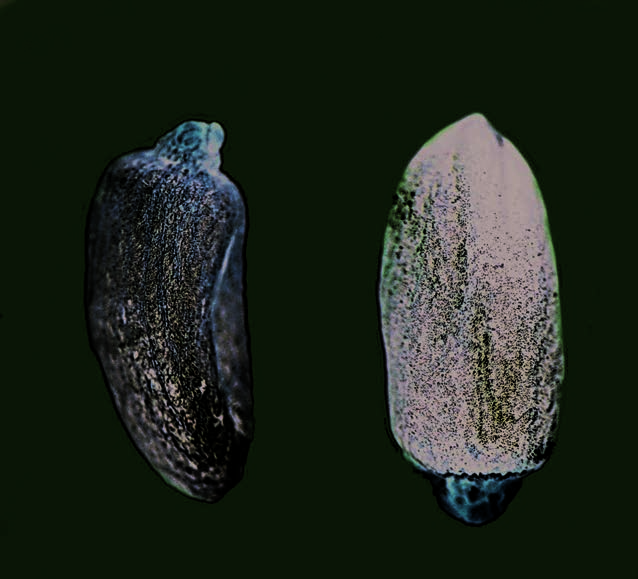
Field cow-wheat (Scrophulariaceae family) contaminates agricultural produce with its capsule fruits and seeds in winter and spring crop fields. The emergence of this weed poses a serious threat not only to yield, but also to the quality of the resulting grain and feed. In natural conditions, the plant is actively distributed in the central and southern regions of the European part, the Crimean region, the Caucasus, and Western Siberia.
Field cow-wheat seeds contain the toxic glucoside rhinanthin. When this substance gets into flour, it gives bread a bluish tint, has an irritating effect on the intestines, and causes a paralytic state of the brain. When grass with ripe seeds is consumed, it leads to poisoning in horses and sheep, while in cows, milk acquires a bluish color and an unpleasant taste.
Morphological characteristics of fruits and seeds
The weed's fruits are obovate bivalved capsules. Field cow-wheat seeds have a cylindrical, slightly curved shape with a clearly visible longitudinal groove and a bluntly rounded apex. The truncate base ends in a spongy-loose appendage, thinner than the seed, which usually covers the rounded seed hilum. The surface is smooth, slightly punctate, and oily-lustrous; the color varies from dark brown to greenish-black and almost black, while the appendage and hilum are colored dark gray.
| Parameter | Value |
|---|---|
| Seed length | 4.55 mm |
| Seed width and thickness | 1.52.25 mm |
| Appendage length | about 1.0 mm |
| Appendage thickness | 0.50.75 mm |
Other closely related weed species possess similar toxic properties and harmfulness to agricultural crops:
- Wood cow-wheat;
- Common cow-wheat;
- Representatives of the genus Figwort.
Read next
Seeds and varieties For agronomists
Characteristics of seeds and the distribution area of the parasitic weed witchweed (Striga lutea)
Seeds and varieties For agronomists
Biological characteristics and toxic properties of Digitalis ciliata seed
Seeds and varieties For agronomists