
Characteristics of seeds and the distribution area of the parasitic weed witchweed (Striga lutea)
1 min read
Family: SOLANACEAE
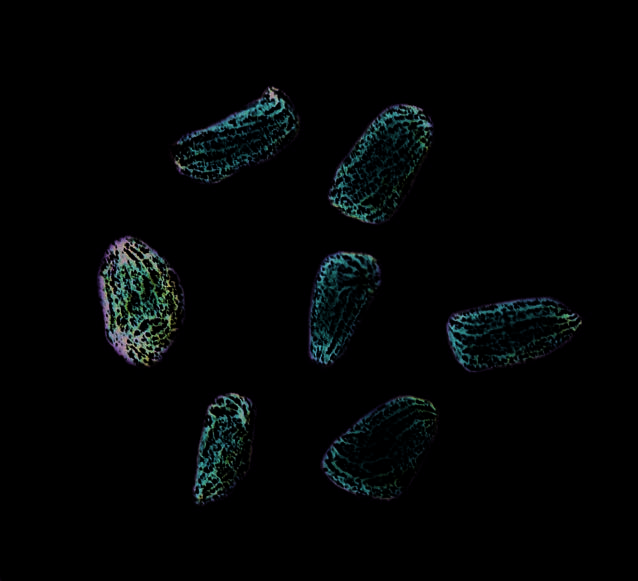
SCROPHULARIACEAE FAMILY The capsule is elongated-oval, laterally compressed, with a groove along the seam. Length 3.2–7.6 mm, width 2.5–3.2 mm. The seeds are rectangular-oval in outline, laterally flattened, brown in color, with a wavy or wrinkled surface. The seeds are very small, dust-like; seed length is 0.15–0.2 mm. There are about 195,000 seeds per 1 g. It infests many plants of the grass family, including wheat, oats, rye, sorghum, millet, sudangrass, corn, rice, sugarcane, and others. Witchweed (Striga lutea) also parasitizes weed plants of such genera as sorghum, barnyard grass, crabgrass, knotweed, and others. It does not infest winter cereals. It is not present in the territory of Russia. Distribution: Asia, Africa, Latin America, and the southern regions of North America. ALL SPECIES OF THE GENUS ARE INCLUDED IN THE "LIST OF PESTS, PLANT DISEASES, AND WEEDS OF QUARANTINE SIGNIFICANCE FOR THE RUSSIAN FEDERATION".
Read next
Seeds and varieties For agronomists
Morphological characteristics and features of common figwort seed
Seeds and varieties For agronomists
Characteristics of Solanum elaeagnifolium seed and risks of its spread
Seeds and varieties For agronomists