
Morphological characteristics and features of common figwort seed
1 min read
Family: Scrophulariaceae Juss.
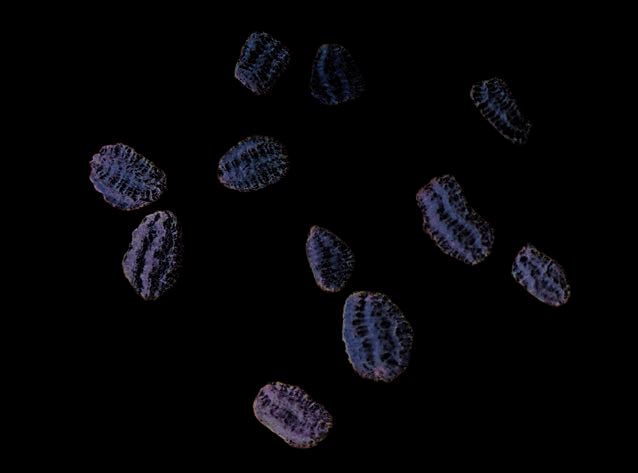
Common figwort is an unwanted weed that prefers excessively moist areas. This weed occasionally infests crops of grain legumes in low, damp places and also spreads actively in meadows. It is important for an agronomist to timely identify its presence in field conditions and monitor the purity of the seed.
The plant has poisonous properties. Prevent contamination of grain bulk and hay meadows with this weed.
Morphology and distinguishing characteristics of the weed seeds
Common figwort seeds have an egg-shaped, angular, slightly curved form. In cross-section, they appear polyhedral-rounded, and their matte, folded surface is colored dark gray, almost black. When analyzing seed material, the contaminant is easy to identify by the characteristic relief of its seed coat.
- The plant's capsules are bilocular, opening with two valves.
- The seed hilum is rounded and weakly expressed.
- The seed surface is longitudinally ribbed, with noticeable transverse wrinkling in the spaces between the ribs.
- Seed length — 0,751 mm
- Seed diameter — about 0,75 mm
- Number of ribs around the circumference — 7
The weed is characterized by a wide geography and easily adapts to various climatic zones. Its clusters are recorded almost everywhere in the European part of the country, including Crimea and the Caucasus. The plant also spreads actively in meadows and lowlands of Western and Eastern Siberia.
Read next
Seeds and varieties For agronomists
Characteristics of seeds and the distribution area of the parasitic weed witchweed (Striga lutea)
Seeds and varieties For agronomists
Botanical characteristics and distribution area of sun spurge seed
Seeds and varieties For agronomists