
Datura stramonium as a dangerous weed and poisonous plant
2 min read
Jimsonweed (Solanaceae family) infests crops of grain crops, orchards and vegetable gardens, and is also frequently found along riverbanks. For an agronomist, this weed poses a serious threat not only due to competition in crops, but also because of its extreme toxicity. If plant parts enter green feed or hay, it leads to severe poisoning of livestock animals. The weed's distribution geography is vast: it is found in the chernozem zone, the central and southern regions of the European part of the Russian Federation, in Crimea, the Caucasus, Western Siberia, the Far East, and Central Asia.
Warning: the entire plant is poisonous! Jimsonweed contains dangerous tropane alkaloids: atropine, hyoscyamine, and scopolamine. Poisoning in humans most often occurs when eating seeds (especially by children), self-medication, or contact with dry raw materials (leaf powder).
In horses, cattle, and geese, severe intoxication develops when consuming jimsonweed as part of hay or green feed. At the same time, the plant is not toxic to rabbits, rats, dogs, and certain birds (pigeons, chickens, and thrushes). If the presence of the weed in feed is suspected, it is important to recognize the symptoms of poisoning in sensitive livestock in a timely manner.
- dry mouth;
- swallowing disorders;
- bloody diarrhea;
- sharp motor agitation, followed by depression;
- impairment of CNS functions (disorientation, hyperreflexia, short-term memory impairment, pupil dilation).
Morphological features and identification of seeds
The fruit of the jimsonweed is an ovoid multi-seeded capsule, 34.5 cm long and 22.5 cm wide. The seeds themselves are rounded, irregularly kidney-shaped, strongly compressed, and slightly convex in the middle. They are rounded on the back, and almost straight or slightly concave on the ventral side. A triangular lateral seed scar of a grayish-yellow color protrudes slightly and is located in the thinner part of the abdomen.
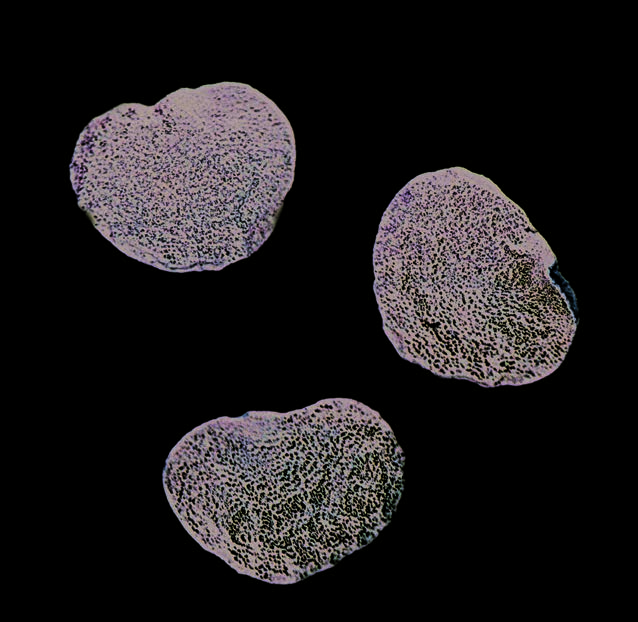
The surface of the seeds is matte, unevenly wavy, and coarsely reticulated. They are black or black-brown in color. The exact geometric parameters of the seeds are presented in the table below.
| Seed parameter | Size |
|---|---|
| Length | 33.5 mm |
| Width | 2.53 mm |
| Thickness | 1.52 mm |
Four species of jimsonweed grow wild in the Russian Federation, and all of them are poisonous. In the south of the country, Datura innoxia Mill. is also known as an introduced weed. In addition, the highly poisonous tree datura (D. arborea L.) is grown in the greenhouses of botanical gardens.
Read next
Seeds and varieties For agronomists
Botanical characteristics and identification methods for yellow hornpoppy seeds
Seeds and varieties For agronomists
Botanical description and morphological characteristics of bittersweet nightshade seed
Seeds and varieties For agronomists