
Characteristics and morphological features of the harmful weed Neslia paniculata
1 min read
Rapistrum (systematics classifies the weed into the Brassicaceae Burnett and Papaveraceae Juss. families) is one of the most common and harmful weeds affecting plant products. It actively infests crops of cereal crops, competing with them for resources and reducing the harvest quality. In addition to arable land, the plant is often found along roadsides, from where the seed is easily carried into fields. Its geographic distribution covers the European part of the country (primarily southern regions), Crimea, the Caucasus, and Central Asia.
When analyzing seed material for weediness, the pods and detached segments of rapistrum are officially classified as waste.
The weed has toxic properties, so its presence in feed and food grain is unacceptable.
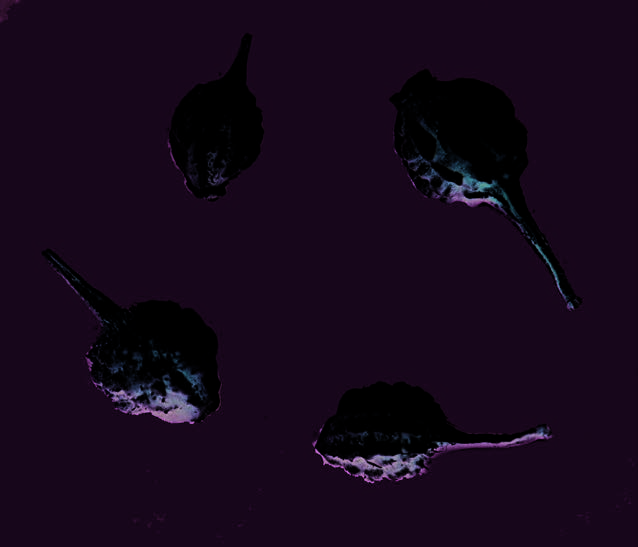
Morphological characteristics of fruits and seed
The fruits of rapistrum are two-jointed, club-shaped, indehiscent pods that break apart into individual parts during ripening and harvesting. Freshly harvested nutlets are covered with sparse bristly hairs and have a distinct wrinkled surface. The color of both upper and lower segments is straw-yellow or grayish-green, often with small black dots. The seed inside the fruits is oval, yellow, with a slightly tuberculate texture.
When analyzing seed purity, it is important to be able to identify parts of the weed fruit by their structure:
- Upper segment: spherical, with a dome-shaped appendage. More than eight thick, wavy-crenated rounded ribs run from the apex to the base. At the apex, there is a long cone-shaped style, almost equal to the length of the nutlet (it often breaks off). The fruit hilum is convex, widely rounded, without a rim.
- Lower segment: goblet-shaped, almost cylindrical, sterile, transitioning into the pedicel.
Linear parameters of the weed fruit parts are presented in the table:
| Pod element | Parameter | Size, mm |
|---|---|---|
| Upper segment | Length | 34 |
| Thickness and width | 23 | |
| Lower segment | Length | 34,5 |
Read next
Seeds and varieties For agronomists
Botanical description of pods and seed of wild radish
Seeds and varieties For agronomists
Morphological characteristics of seeds and distribution area of Eruca sativa
Seeds and varieties For agronomists