
Morphological characteristics and description of the seeds of the weed perennial wall-rocket
1 min read
Perennial wall-rocket (Brassicaceae family) is one of the most common weeds contaminating seed material and plant products. It is frequently found in grain crops and along roadsides in the central and southern regions of the European part. The problem of controlling it is exacerbated by the fact that its dry fruits easily break into individual segments, contaminating the seed material with pods and fragments.
Perennial wall-rocket possesses poisonous properties; therefore, its presence in feed and food grain is strictly limited.
Morphology of wall-rocket fruits and seeds
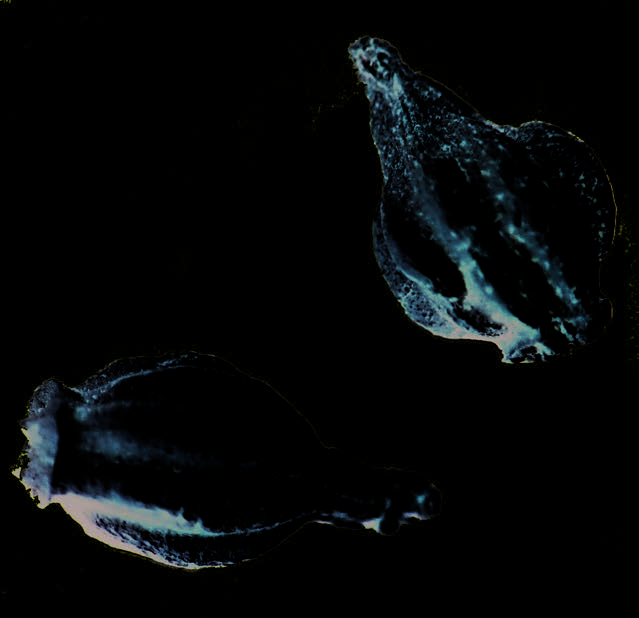
The fruits of the weed are two-segmented, club-shaped, and indehiscent pods. The upper segment of the fruit is spherical, with a dome-shaped appendage, usually one-seeded (rarely two-seeded). At its apex is a conical style, the length of which is equal to 1/4 of the segment's length. Eight wide, blunt ribs run from the apex to the base without noticeable crenation.
The lower segment of the pod, which articulates with the base of the upper one and transitions into a long, thin pedicel, is sterile. When analyzing seeds for contamination, it is classified as waste.
The pod segments are straw-yellow or grayish-green in color, often with small dark dots. Their surface is matte, glabrous, and wrinkled, while the fruit scar is broadly rounded, concave, and surrounded by a sharp rim. Wall-rocket seeds have an oval-ovate shape, a yellow color, and a finely tuberculate structure.
| Fruit segment parameter | Size, mm |
|---|---|
| Length of upper segments | 34 |
| Width and thickness of upper segments | 23 |
| Length of lower segments | 34,5 |
Read next
Seeds and varieties For agronomists
Botanical description of pods and seed of wild radish
Seeds and varieties For agronomists
Morphological characteristics and distribution patterns of ball mustard (Neslia paniculata)
Seeds and varieties For agronomists