
Rules for pruning and training garden raspberry bushes
3 min read
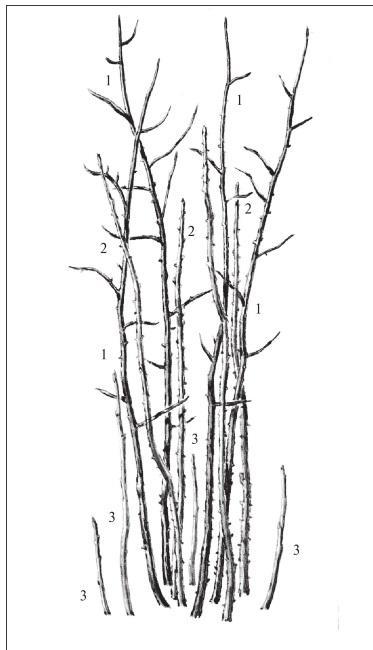
Raspberry is a perennial shrub with a biennial development cycle of branches, regenerating through root suckers. The intensity of sucker formation directly depends on the cultivar. When planning plantings and maintenance schemes, be sure to consider the specific crop's ability to actively propagate.
| Ability to form suckers | Number of suckers per bush | Cultivars |
|---|---|---|
| Strong | Up to 60 | Kirzhach, Lazarevskaya, Latham, Marlboro, King, Newburgh, Vislukha, etc. |
| Moderate | Average number | Novost Kuzmina, Progress, Aly Parus, Meteor, Barnaulskaya |
| Weak | No more than 15 | Kaliningradskaya, Nagrada, etc. |
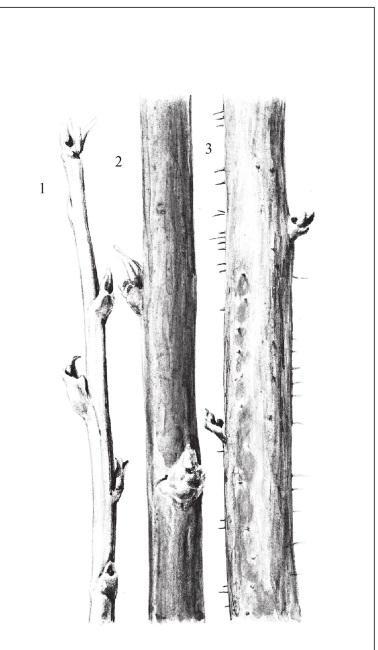
Buds on a raspberry stem develop unevenly along its length. In the lower quarter of the shoot, they are usually poorly developed: although potentially all are flower buds, they only start to grow if the top of the branch is heavily pruned or damaged. At the same time, the lowest buds perform a vegetative function and can produce replacement shoots, while relatively weak branches develop from the topmost buds.
Avoid shading the plants. In conditions of insufficient light, side branches of the raspberry do not develop, and if they do appear, they do not produce a harvest.
Rules for pruning and bush formation
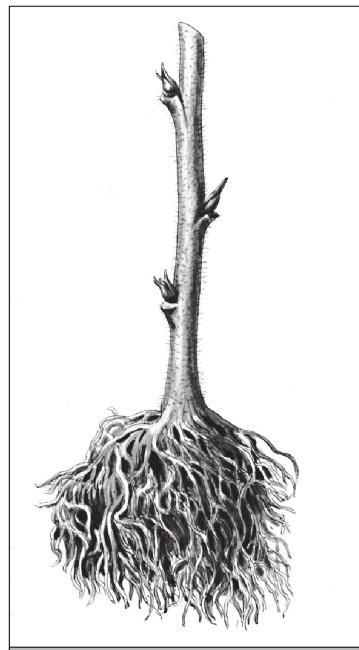
Proper pruning of raspberries does not require complex skills, but it must be performed in a timely manner. Immediately after planting or just before it, the nursery plant is shortened, leaving only 4–5 buds above the ground. Subsequently, annual pruning of the bushes is carried out on the plantation according to a strict schedule.
Biennial branches that have finished fruiting are pruned immediately after harvesting the berries. At the same time, excess renewal shoots are removed, primarily weak and clustered ones. For cultivars with upright stems, no more than 20 branches are left in a formed bush; for cultivars with drooping stems, no more than 10. Unripe shoot tips must be shortened, and if shoots have suffered frost damage in winter, they are pruned back to healthy wood in the spring.
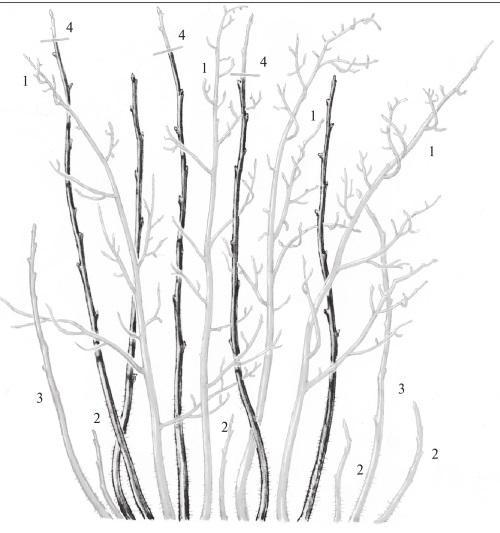
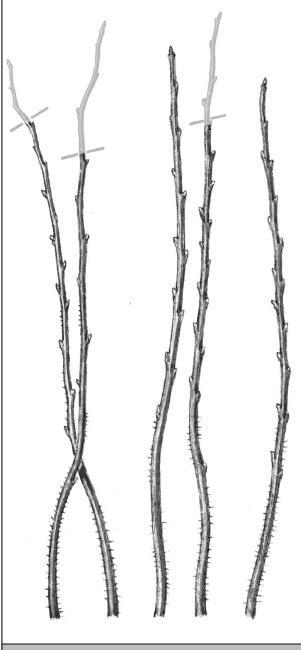
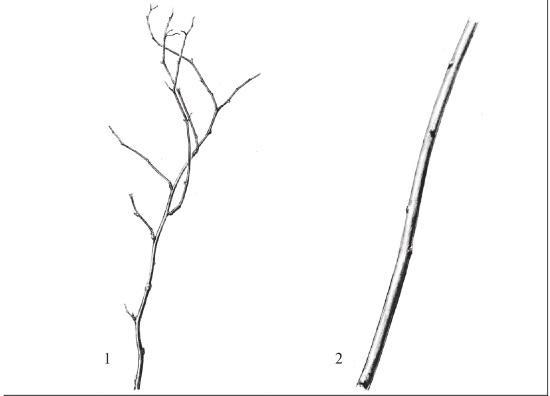
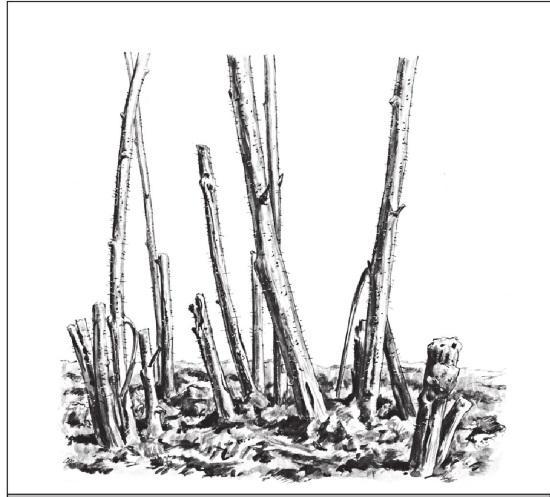
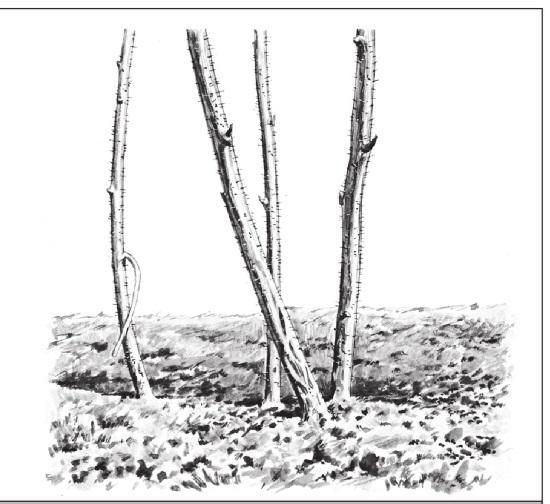
Pay attention to the cutting technique: remove fruiting branches strictly at the base. Leftover stumps can become a source of disease and a place for pests to overwinter.
Summer pinching is carried out when annual stems reach a height of about 1.5 m. This agricultural technique stimulates branching and significantly increases the productivity of the bush in the next season.
- Buds above soil when planting — 4–5 units
- Branches per bush of upright cultivars — no more than 20
- Branches per bush of drooping cultivars — no more than 10
- Shoot height for summer pinching — about 1.5 m
- Angle of bending branches for winter — 25–35°
The type of trellis is chosen based on the characteristics of the cultivar and the relief of the plantation. Support helps hold the branches under the weight of the harvest and prevents them from lodging due to wind. To create a reliable trellis structure, wire and twine are used.
- Single-wire — stems are tied directly to it.
- Double-wire — shoots are placed in the space between them.
- Unsupported — stems are tied in bundles to each other using twine or other makeshift materials.
- Two-sided — shoots grow freely or are attached alternately to one or the other wire (with a distance of 45–60 cm between them).
- Inclined — fruiting stems are tied to one side of the trellis, and new annual shoots are directed to the opposite side.
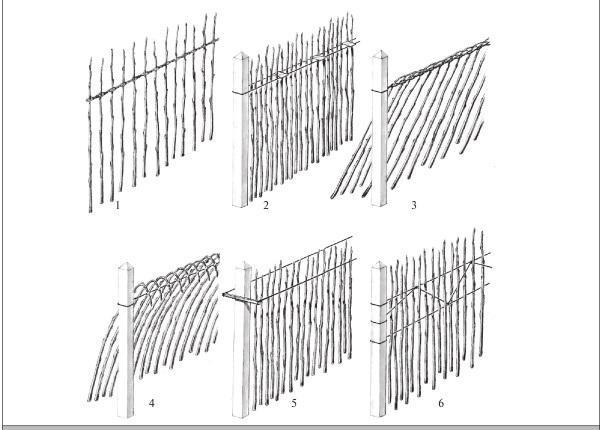
- Interweaving stems with twine
- Double-wire trellis
- Trellis for tall plants
- Trellis for tall plants, tying with bending tips
- Double-wire trellis, wires stretched at a distance of 40–50 cm, wide row, stems not tied
- Adjustable-width trellis (distance between wires changed as needed)
In regions with harsh climates, a special technology is used to prevent the freezing of branches and reduce labor costs for winter protection. It is based on the use of a movable hinged structure. All work is carried out in stages over two seasons.
- In the autumn of the first season, fix all young shoots between the wires of the hinged trellis and bend them toward the ground at an angle of 25–35° to the horizontal.
- The following year, leave the bent branches to fruit, while new young shoots will grow vertically.
- In the autumn, release the fruiting stems from the trellis wires, but do not cut them—leave them lying for the winter to trap snow.
- Clamp young annual stems between the wires and bend them at an angle of 25–35° towards the opposite row spacing.
- In the spring, completely remove the old branches that fruited in the previous season. Then the cycle repeats.
Read next
Pruning and training For gardeners
Specifics of pruning and forming red and white currant bushes
Pruning and training For gardeners
Peculiarities of growth and canopy formation of blackcurrant bushes
Pruning and training For agronomists