
Correcting typical canopy defects of fruit trees during pruning
3 min read
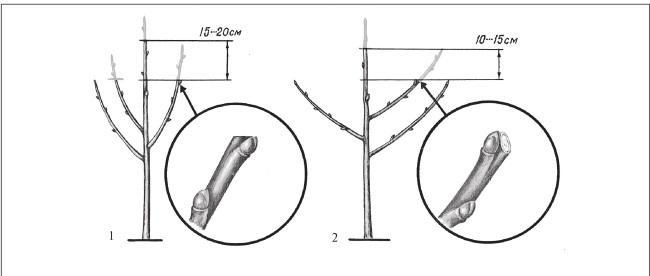
Errors during canopy training in the first years of a tree's life directly affect the longevity of the entire orchard. A trunk that is too high suffers severely from winter frost cracks and spring sunscald. To protect the bark from damage, be sure to limit the height of the first pruning of the nursery plant.
- Pruning height for a high trunk — 100–120 cm
- Number of main structural branches — 3 pcs.
- Time for removing a competitor to the branch collar — 1–2 years
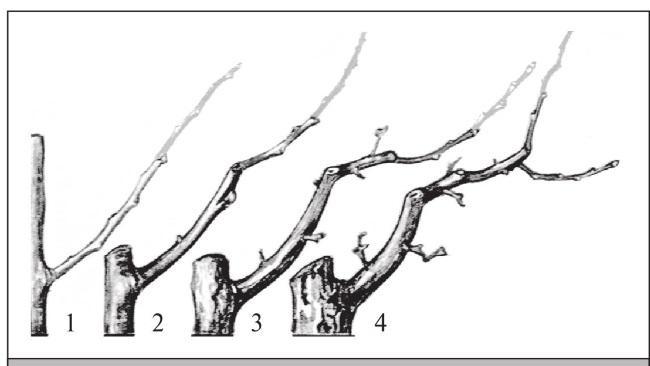
Do not allow shoots to emerge at sharp angles, which often happens with overly severe pruning. Under the weight of the harvest or wet snow, such branches easily break off, causing deep, slow-healing wounds to the tree. If dangerous sharp angles have already formed, the canopy will have to be corrected using radical measures.
- Completely cut out the central leader, the competitor branch, and one or two more branches located behind them.
- From the shoots located lower on the trunk, select a new leader and form the structural branches.
Methods for correcting canopy growth defects
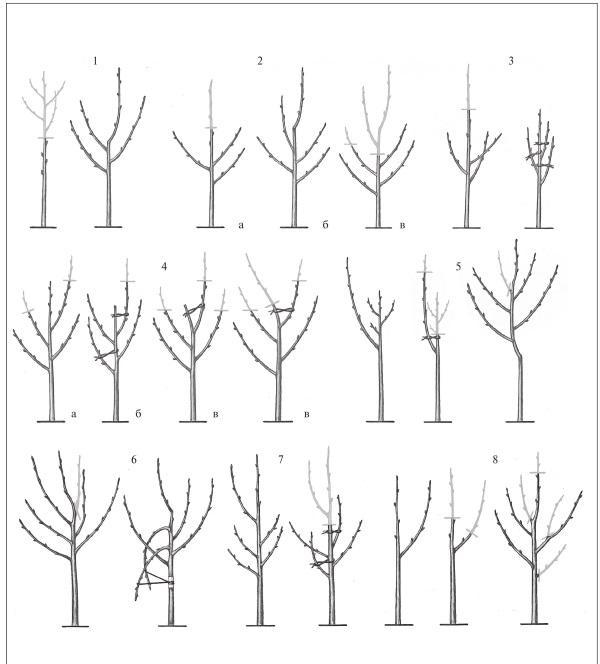
A leader that is too long takes up the main portion of nutrients. As a result, the lower branches lag in development, and the structural framework is established too high. To avoid losing time on re-training, shorten the leader and subordinate the side branches to it. If the leader is initially suppressed or broken, cut the trunk above a strong side branch, tie it up vertically, and shorten it at the desired height.
In case of weak growth of the main branches, direct them vertically using ties and shorten the leader. If this measure does not help, replace the leader with a strong side branch and establish the canopy anew. When there is uneven development of branches, apply a differentiated approach. Give weak shoots a vertical position to stimulate growth, and bend excessively strong ones to a horizontal position and shorten them.
In case of an excess of branches, choose the three strongest and best-positioned ones as the main structural branches. Bend the remaining branches to a horizontal or drooping position, turning them into temporary fruiting twigs. If only one branch has formed in the canopy establishment zone, you will have to start the formation from scratch. To do this, heavily prune the leader and this single branch to induce active branching.
Remember that a strong competitor to the leader significantly weakens the tree. Suppress its growth by pruning, and after one or two years, completely remove it to the branch collar. It is also acceptable to cut out the competitor along with the old leader, redirecting growth to a lower-lying branch, or to replace the leader with the competitor entirely.
Mastering these basic techniques will help quickly correct most growth deviations in young fruit trees. Regular monitoring of the canopy condition in the first years after planting will allow you to avoid complex surgical operations on mature plants. This guarantees stable fruiting and the strength of the tree's skeleton for many years to come.
Read next
Pruning and training For gardeners
Pruning and canopy formation of fruit-bearing trees in the orchard
Pruning and training For agronomists
Methods for forming columnar and spindle-shaped canopies of fruit trees
Pruning and training For agronomists