
Poultry breeds and the history of chicken domestication
9 min read
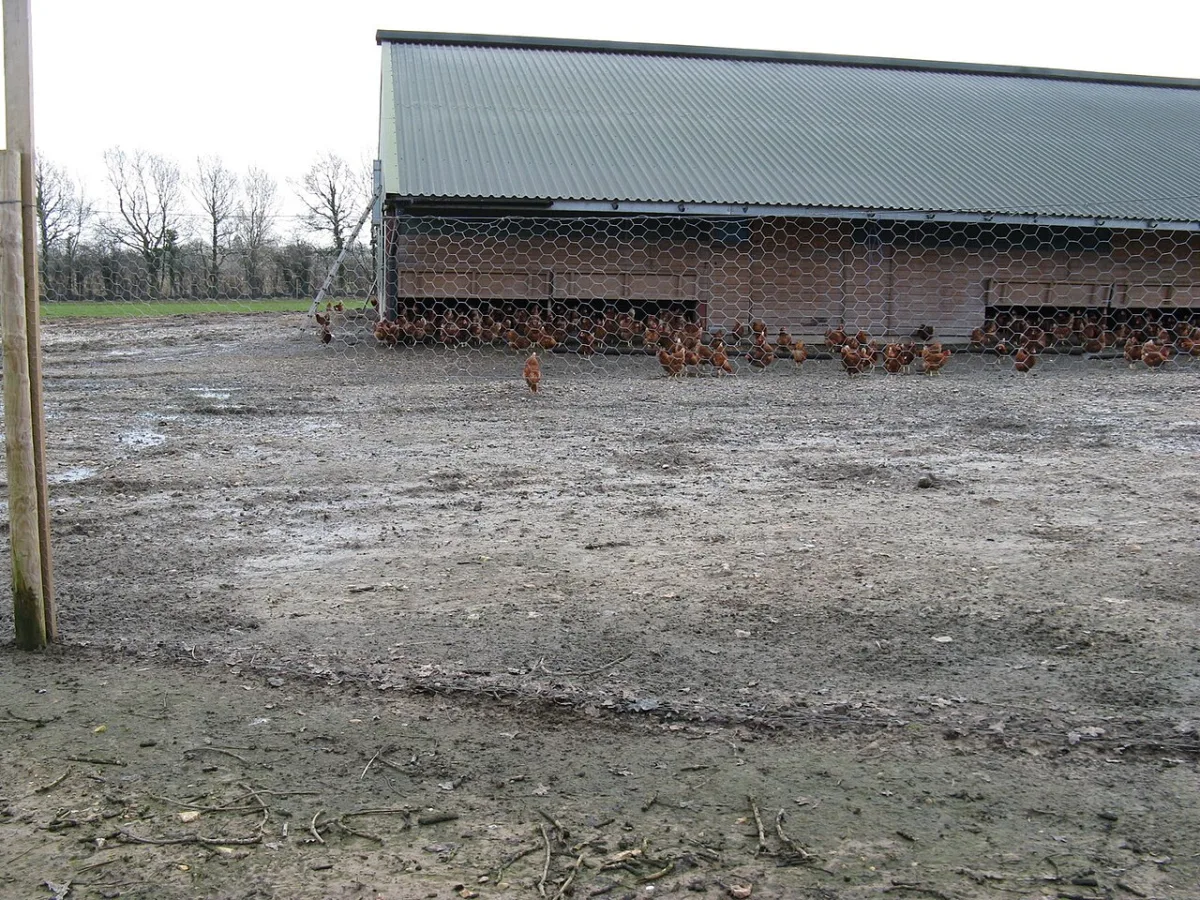
A breed is a large, integral group of poultry that shares a common history of origin and development, differs from other breeds in characteristic productivity traits and body type, and reliably transmits its qualities to its offspring. A breed, created by human labor under specific economic conditions, changes in accordance with egg and meat production technology in intensive poultry farming and the various natural conditions of its rearing. The structure of a breed includes lines and families, which are systematically used for breed improvement and the production of crosses and hybrid poultry. Hybrid poultry constitutes the main livestock in farms producing table eggs and meat.
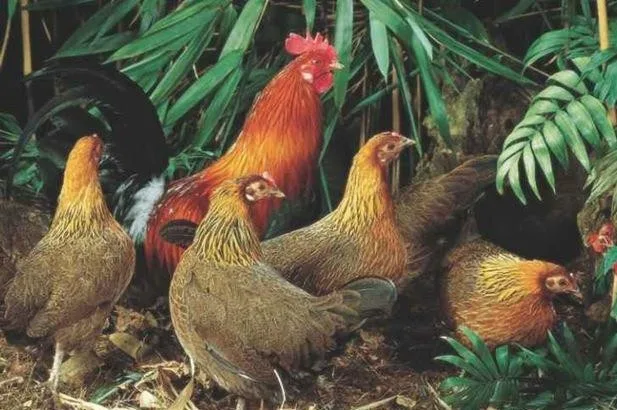
Poultry as a livestock animal appeared among humans much later than horses and dogs, coinciding with the transition to a sedentary lifestyle and primitive agriculture. Population growth led to the search for new food sources and the use of new types of plants and animals. The first scientific research on the origin of poultry belongs to C. Darwin. He established that domestic chickens descended from wild ones (genus Gallus). The genus includes four species: G. gallus, G. sonneratii, G. varius, G. bankiva. Comparing the possibility of domestic chickens originating from various species of the genus Gallus, C. Darwin pointed out that G. bankiva can be safely considered the ancestor of chickens of all domestic breeds, as there is an undeniable similarity in their coloration, build, voice, etc. When mating bankiva chickens with domestic ones, fertile offspring are obtained. The bankiva chicken is a small bird. It weighs 0.6—0.8 kg and lays 8—12 eggs per year.
Diverse changes during the formation of domestic chicken breeds occurred (according to Darwin) under the influence of natural and artificial selection; even the wild ancestor of domestic chickens (Gallus bankiva) underwent changes in natural conditions, and at present, there are a number of deviations from the main type. Later studies suggest that, in addition to G. bankiva, other species of this genus could have been the ancestors of domestic chickens.
The domestication of chickens occurred more than 5000 years ago in India, where wild chickens can still be found in the jungles today. From India, chickens spread both to the east and to the west. However, the system of subsistence farming, wars, raids by nomads, and weak connections
Fig. 18. Bankiva rooster and hen.
between nations hindered the development of agriculture. While more than 1.5 thousand years passed from the time of chicken domestication in India to their appearance in Egypt, several more centuries elapsed before chickens became livestock animals in ancient Greece. In the first period after their domestication and spread in the countries of Asia and Europe, chickens were few in number, and in Greece, they were kept at temples
Fig. 19. Depiction of a rooster on an Egyptian pyramid in 1450 BC (according to S. G. Petrov).
and considered sacred animals. The early observation of the aggressiveness of roosters led to the emergence of cockfighting, and this bloody pastime has persisted for millennia, and in some countries, it still exists today.
Beautiful plumage and hereditary variability in coloration, as well as in exterior traits, were used for breeding ornamental chickens. These chickens currently have no economic value, but their influence has affected the diversity of exterior traits, especially the plumage color of modern breeds. The sturdiness of constitution and meat qualities of some breeds are linked to the use of fighting poultry in breed formation.
However, even in the early period of human social development, chickens were valued as animals possessing economically useful qualities. Obviously, humans used poultry meat and eggs even back when hunting was the primary means of obtaining food.
| Fig. 20 | Greek vase (650—600 BC) |
In literary sources of ancient Greece and Rome, dating back to a period more than two millennia ago, one can find descriptions of domestic chickens, methods of fattening poultry, and farms supplying poultry meat to cities. According to Aristotle, domestic chickens produced up to 60 eggs or more per year.
With the development of large cities and the growth of culture, the demand for poultry products increased rapidly. This contributed to the spread and improvement of poultry. On the territory of the European part of the USSR, chickens appeared at the beginning of our era, first in the lands of the Black Sea region and in Kievan Rus, and then gradually spread throughout the country. In different climatic zones, their acclimatization and the increase in productive qualities occurred as a result of human labor. On this basis, populations appeared, in the creation of which natural selection was combined with artificial selection.
Centuries passed before the growth of material culture and human demand for food necessitated the creation of highly productive poultry breeds. In the 20th century, folk selection in our country created:
- the Yurlov chicken breed;
- the Kholmogory goose breed;
- the Arzamas goose breed, etc.
They are perfectly adapted to local conditions and possess a number of valuable economic qualities. In France, meat-type breeds emerged, named after the places where they were developed: Faverolles chickens, Rouen ducks, Toulouse geese, etc.; in England — Sussex and Dorking chickens. Cultural breeds also appeared in a number of other countries.
Improving game chickens led to the creation of the meat-type Cornish breed, or Cornish, which is currently widely used for broiler production. Meat breeds like the Cochin and Brahma, of East Asian origin, differ from European chickens in having a much higher live weight and distinct anatomical features, which prompted some scientists to suggest the origin of this poultry from different wild ancestors. This assumption is not yet supported by archaeological data and ancient cultural sources.
From wild ancestors to industrial crosses: specialization and origin of poultry
Modern poultry farming has completely moved away from dual-purpose meat-and-egg breeds in favor of narrow specialization. The use of specialized egg and meat lines allows for maximum productivity at minimal feed costs. Modern egg poultry farming is based on Leghorns, and broiler production is based on crossing meat lines with Cornish chickens.
Using Cochins for meat production is economically unprofitable due to slow growth, low egg production, and high feed consumption. For the same reason, meat-and-egg ducks are not used in industrial production. It is much more profitable to obtain commercial eggs from specialized egg-laying chickens.
Industrial poultry farming relies on the genetic resources of wild ancestors. The domestication of wild species in different regions of the planet allowed for the formation of specialized production directions. Today, this potential is used to create highly productive crosses:
- Leghorn chickens were created on the basis of local Italian chickens and have become the most widespread in the world. High-productivity hybrid layers are obtained by crossing egg lines of meat-and-egg breeds with Leghorns.
- Turkeys originated from wild turkeys (Meleagris gallopavo and Meleagris ocellata) inhabiting Mexico and North America. Modern meat breeds are divided into very large ones (for catering) and small but meaty ones (for domestic households).
- Ducks trace their origin to the wild mallard (Anas platyrhynchos), which is easily domesticated. The Pekin duck has become the main meat breed in global production.
- Geese descend from the greylag goose (Anser anser) and the swan goose (Cygnopsis cygnoides). In our country, the Shadrinsk breed was created based on wild populations of the Southern Urals through improved feeding and selection.
- Guineafowl were domesticated later than other birds and originate from wild species in West Africa. They provide dietary meat and eggs with a very hard shell.
- Pigeons descended from the wild rock dove (Columba livia). Only meat breeds are of importance in practical poultry farming.
- Period of turkey introduction to Europe — late 15th century
- Backcrossing in selection — III and IV generations
Methods of creating and maintaining productive breeds
The development of a new breed makes practical sense only if it has an economic advantage over existing analogues. In domestic practice, new breeds are created by combining the qualities of local poultry and highly productive imported stock. Through this method, breeders obtained the Russian White chicken breed, the North Caucasian turkey breed, the Large Grey goose breed, and a number of meat-and-egg chicken breeds.
The process of creating and consolidating a new breed requires strict adherence to technology. Violating housing conditions or unsystematic crossing can negate the results of years of work. To obtain a stable result, specialists work in stages:
- Selection of the best local poultry and its crossing with poultry of highly productive breeds.
- Breeding the crossbreds "inter se" or performing backcrossing with the improving breed in the III and sometimes IV generations.
- Creating conditions for feeding, housing, and rearing that facilitate the development of desired qualities.
- Formation of a breed group with subsequent consolidation of traits for its development into a breed.
The foundation of progress for any breed is the work with specialized lines. A line is understood as an intra-breed or inter-breed group of poultry descending from outstanding sires. Systematic crossing of such groups allows for the combination of the best traits of the poultry and the maintenance of the breed's structure.
Read next
Poultry For agronomists
Main meat breeds and breed groups of ducks and geese
Poultry For agronomists
The evolution of housing conditions and microclimate in modern poultry farming
Poultry For agronomists