
The evolution of housing conditions and microclimate in modern poultry farming
18 min read
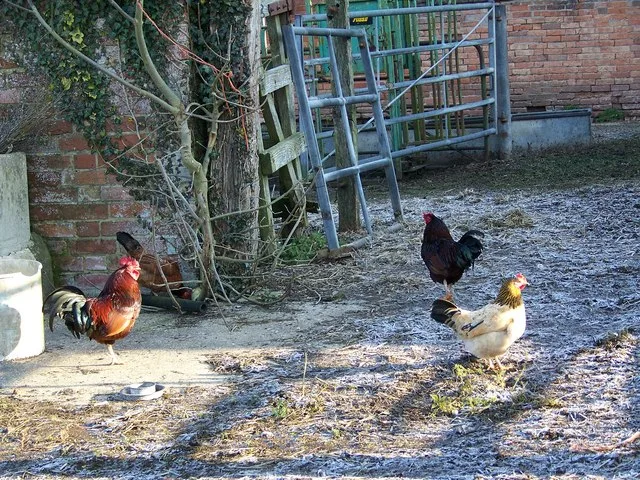
The wild ancestors of poultry live and reproduce under environmental conditions inherent to them in connection with the evolution of the species and their dispersal across climatic zones. Red junglefowl are adapted to and live a sedentary life in equatorial tropical and subtropical climates. Ducks common in our country overwinter mainly in the coastal regions of the Caspian Sea, and for nesting and raising ducklings, they make long flights to regions with a temperate climate. Both sedentary and migratory birds orient themselves toward the best possible environmental conditions for feeding and reproduction. In their habitats and nesting sites, the wild ancestors of poultry require a biologically determined microclimate for each species. For ducks, it is associated with water bodies, for geese — with water bodies and pastures, and for chickens and turkeys — with favorable conditions in all seasons of the year in their permanent habitats and reproduction sites.
Wild birds are capable of adapting to new environmental factors. Cases of individual migratory birds, such as geese, overwintering in their nesting sites are not uncommon. The domestication of wild birds and their spread across different continents is the best example of their organismal plasticity and ability to acclimate well. In primitive peasant farms, poultry was closely tied to natural living conditions. Domestic geese flew to natural pastures not far from home; it is not for nothing that such geese were popularly called "flyers"; ducks spent almost the entire day together with their brood of ducklings on a water body, where they searched for feed from early spring to late autumn. A dozen or slightly more chickens along with a rooster also managed with small amounts of top dressing, as they mainly obtained their own feed. Wintering birds in unadapted buildings was difficult; chickens and roosters often got frostbite on their combs and toes, and egg-laying, as a rule, ceased during the cold season.
The growing demand for poultry products from an increasing population necessitated the creation of farms on limited land areas. Here, humans had to take on all the care for the poultry and create conditions necessary not only for their survival but also for obtaining the greatest possible quantity of eggs and meat. On poultry farms, this was initially achieved by constructing simple, sufficiently insulated poultry houses with ventilation through windows and frames covered with fabric, and equipping the premises with perches, nests, feeders, and drinkers. Feeding of the poultry was mainly provided by local feed, and their maintenance during the warm season involved the use of outdoor runs, and in winter — areas near the poultry house. At the same time, poultry productivity increased, and the use of electric lighting contributed to obtaining eggs both in autumn and winter. However, free-range poultry keeping required large areas, for example, about a hectare of land for 1,000 chickens. Floor-rearing of chickens still persists today, but instead of extensive outdoor runs, solariums with hard soil surfaces, usually about 2—3 m wide, are arranged along the poultry house.
The growth of large cities, the increase in the demand for poultry products, and the increasing use of land for agricultural crops necessitated the intensification of methods for keeping poultry to obtain the maximum amount of products per hectare of land, per square and cubic meter of buildings with the lowest labor and feed costs; new methods of keeping poultry were developed and introduced into production. Laying hens and broilers began to be housed in facilities with deep litter without outdoor runs.
The concentration and specialization of the poultry industry in large poultry factories and mechanized farms of collective and state farms are closely related to the use of keeping chickens, chicks, and other types of poultry in battery cages. Placing poultry in cages increases land use by tens of times compared to free-range keeping, and building space by 3—5 times. This significantly increases the yield of products per 1 hectare of land and per 1 m² of floor space. With cage maintenance, due to the restriction of poultry movement and higher temperatures in the room, feed costs are slightly reduced. Labor-intensive processes for caring for poultry are mechanized.
Egg production on an industrial basis in our country is carried out mainly by keeping chickens in mechanized battery cages. At the same time, incubation, raising of replacement young stock, and the assembly of the industrial flock of layers are carried out throughout the year. Cage rearing of broilers — chickens, turkey poults, ducklings, and goslings for meat — is being used more and more widely. At the same time, intensive floor-rearing of poultry still finds great application, especially on collective and state farms. In pedigree poultry farming, floor-rearing is the main method of producing hatching eggs, although experiments on the reproduction of the parent flock and obtaining hybrids in cages are expanding. In some farms, parent flock chickens are already kept in cages.
Maintaining a poultry flock with high and stable productivity throughout all seasons of the year requires, along with providing complete feeding, the creation of a microclimate in the facilities that corresponds to the genetic characteristics, direction of productivity, and age of the birds of different species, taking into account zonal conditions. The most complete regulation of the microclimate is achieved in windowless poultry houses, although this requires additional expenditure of electricity and funds for air conditioning. In windowless poultry houses, prolonged interruptions in the power supply for lighting the birds and operating air conditioners should not be allowed, in order to avoid not only a deterioration in the condition and a decrease in the productivity of the birds, but also potential losses of the flock.
Regulation of the microclimate with different methods of keeping poultry is carried out with the help of various technical means, which are developed on the basis of information obtained by biological and agricultural science about the needs of high-productivity poultry for the necessary complex of environmental conditions. Among the microclimate parameters, the chemical composition and physical properties of the air, light, and bird stocking density are of paramount importance. Recently, much attention has been paid to eliminating stress factors, which, as is known, negatively affect not only the state of health but also the productivity of the birds. Considering the importance of factors individually, it must be kept in mind that they all act on the organism in mutual combination and each of them changes in mutual interdependence with the others.
The chemical composition of the air is quite constant. Its lower layers contain, by volume, about 21% oxygen, 0.03% carbon dioxide, 78.1% nitrogen, and small amounts of argon, neon, and some other gases. Harmful gases — hydrogen sulfide, ammonia, and carbon dioxide — accumulate in the air of premises with poultry. Ammonia is a colorless gas with a pungent odor that dissolves well in water. Hydrogen sulfide is one of the most toxic gases. The amount of hydrogen sulfide in poultry houses is insignificant, and in sheds where birds are kept in cage batteries, it reaches no more than 0.0001%.
Under production conditions, a significant decrease in the amount of oxygen and an increase in carbon dioxide in the air, which would quickly and sharply affect the condition of the birds, is not observed. However, with prolonged constant exposure to even a small amount of ammonia in the air, the general resistance of the organism and its individual organs and tissues to diseases decreases. Ammonia is especially harmful to the mucous membranes of the respiratory tract.
Poultry is very sensitive to harmful gases, which may be related to its high gas exchange.
According to Prof. M. I. Dyakov, one of the first Russian researchers in the field of poultry metabolism, oxygen consumption in roosters when fed in a respiration chamber reaches 18.9 L, and carbon dioxide excretion 18.6 L per 1 kg of body mass per day. With an air volume of about 1629 cm³ in the lungs and air sacs and a frequent rhythm of breathing (20–30 breaths per min), a chicken with a mass of 2 kg releases 50 L of carbon dioxide per day. Since exhaled air contains about 3.5% carbon dioxide, the air intake in poultry reaches 0.5 L per 1 kg of body mass per minute. Carbon dioxide excretion changes with the age of the bird and is highest during the period of rapid growth.
According to V. M. Selyansky, oxygen consumption and carbon dioxide excretion in Russian White breed chicks, in liters per kilogram of live weight per hour, were 2.1 and 1.8 in the first three days of life; by 20 days of age, when the bird's mass doubles, the indicators increase to 2.7 and 2.9, with a further decrease as growth slows down. This, however, does not mean that the oxygen demand and carbon dioxide excretion of several thousand chicks housed in a poultry house at 2–3 months of age are lower than those of 20-day-old ones, since the total requirement of the poultry flock for oxygen and the production of carbon dioxide are determined not only in accordance with the gas exchange calculated per 1 kg of live weight, but also by the total mass of all chicks, which increases significantly with the age of the bird. Oxygen consumption in egg-breed hens, in liters per 1 kg of live weight, at the beginning of egg laying is 0.9, and carbon dioxide excretion is 0.7; the same hens during the period of intensive laying in experiments consumed approximately 30% more oxygen and released 15% more carbon dioxide. Some differences in gas exchange related to the type of constitution are observed in hens of meat breeds, as well as in birds of different species.
Harmful gases are released both by the birds themselves and by the manure. Manure is removed daily, but when keeping poultry on deep litter — only when it is replaced. Therefore, the emission of harmful gases when using deep litter is 2–3 times higher.
It is desirable that the air in poultry houses be as close as possible to the atmospheric composition; however, in practice, this is almost impossible to achieve. It is conventionally considered acceptable for the air in poultry premises to contain the following levels of harmful gases:
| Carbon dioxide | no more than 0.16% |
| Hydrogen sulfide | 0.0001—0.0005 mg/l |
| Ammonia | 0.01 mg/l |
Efforts are made to reduce these indicators through effective ventilation and by maintaining cleanliness in the premises. It should also be remembered that under certain production conditions, the standards for the permissible content of harmful gases in the air require refinement.
Physical properties of air, primarily its temperature and humidity, are of great importance for the growth and development of poultry. Life is determined, along with other factors, by the balanced production and release of heat by the organism. Feed serves as the source of heat: the higher its energy value, the more heat is produced; a lot of heat is generated in skeletal muscles, and heat production increases during movement.
In a state of rest, heat is also produced and expended, associated with metabolism, protein synthesis, and other biochemical and physiological processes occurring in the organism. The biochemical and physiological characteristics of these processes require further study. Indirect data indicate their importance. For example, the intensity of basal metabolism in a chicken increases by 15—20% due to digestive processes.
How air temperature affects poultry productivity
It is important for the poultry farmer to remember that the poultry's capacity for natural cooling is extremely limited. Due to the dense feather cover, heat is dissipated mainly through the exposed skin areas of the head, comb, and wattles. At the same time, heat production increases sharply during periods of rapid growth in young birds, molting, and intense egg laying. Thus, a layer during a period of high productivity releases 30–40% more heat than when it stops.
- Normal body temperature of chickens — 40.5–42 °C
- Decrease in egg production — from -8 to -10 °C
- Risk of comb frostbite — about -15 °C
- Critical air temperature — 43 °C and above
Adult poultry maintain a constant body temperature, but its daily fluctuations depend on the time of day and environmental conditions. The highest values are recorded around noon, and the lowest in the night hours. In chicks, the thermoregulation mechanism is not yet developed in the first days of life. Heat dissipation per 1 kg of live weight in young birds increases from the daily age to 6 weeks, and then gradually decreases as growth rates slow down.
When the temperature in the poultry house drops to -8...-10 °C, egg production drops sharply, and with further cooling, it ceases completely. Frost of about -15 °C leads to frostbite of the combs and wattles in hens and roosters, which causes long-term illness in the birds and a decline in productivity and fertility.
High temperatures are no less dangerous for the flock. An increase in air temperature from 29 to 32 °C increases the body temperature of chickens by 0.3–0.8 °C. Most individuals can withstand air heating up to 40 °C for several hours, but the 43 °C limit is fatal for them. Overheating disrupts metabolism, respiration, and heart rhythm, and moisture loss in a chicken weighing about 1.8 kg increases from 5 to 18 g per hour. Only constant access to water helps reduce these losses and improve survival rates.
Air humidity and ventilation in the poultry house
Air humidity directly affects the heat exchange of poultry. In a damp and cold room, moisture actively absorbs radiant energy, accelerating the cooling of the organism. In the heat, high humidity, conversely, prevents water evaporation and leads to poultry overheating. An excessive deficit of moisture in the organism is also dangerous: for example, in pigeons, the loss of 10% of body water causes tremors and weakness, and the loss of 21% leads to death.
The source of dampness in a poultry house is the birds themselves, drinkers, and droppings. Experiments have shown that every 1,000 chickens release from 220 to 250 kg of water vapor per day through exhaled air and evaporation. With an increase in air temperature, these indicators increase.
To prevent heat stress, it is necessary to strictly control the ratio of temperature and humidity in the room. Adult chickens are able to tolerate high temperatures only on the condition that air humidity is reduced. For example, chickens can withstand an air temperature of 38 °C only under conditions of low humidity.
| Air temperature | Permissible air humidity |
|---|---|
| 32 °C | up to 75% |
| 35 °C | up to 60% |
Forced ventilation helps to regulate the parameters of the air environment. In modern industrial poultry farming, ventilation systems operate on the principle of air conditioning: they heat the intake air in winter and cool it in summer. This allows for maintaining an optimal microclimate under conditions of high stocking density in a limited room volume. The intensity of air exchange is adjusted taking into account the season, the design of the poultry house, the breed, and the degree of acclimatization of the imported birds.
Impact of light regime on poultry productivity
Natural sunlight is a powerful stimulant of poultry vital activity. Under its influence, metabolism is activated, and hematopoiesis and skeletal mineralization are enhanced. Hemoglobin, calcium, and phosphorus levels increase in the poultry's blood. Calcium absorption requires vitamin D, which is formed most intensively under the influence of ultraviolet rays in the comb and wattles, which are abundantly supplied with blood vessels.
Solar radiation has a complex positive effect on the organism:
- increases immunobiological properties and activates oxidative enzymes;
- increases egg fertilization and hatchability;
- stimulates sexual activity, growth, and development of young stock;
- increases overall productivity and flock viability.
When keeping a breeding flock in poultry houses with solariums, natural sunlight fully covers the vitamin D requirement, eliminating the need to add artificial supplements to the diet.
In regions with hot climates, intense summer insolation can lead to poultry overheating. During this period, it is necessary to implement measures to protect the flock from direct sunlight.
In intensive industrial poultry farming, where poultry is kept in closed buildings, natural light is replaced by artificial ultraviolet radiation. This ensures rapid growth, proper development, and high flock productivity without adding vitamin D preparations to the feed. Under the influence of ultraviolet light, calcium metabolism is normalized: young stock is protected from bone diseases, and the adult flock produces eggs with strong shells.
The biological mechanism of the effect of light on poultry has been known for more than 50 years, and artificial lighting has been used in practice even longer. Light acts through visual receptors and nerve connections with the brain, stimulating the pituitary gland to produce gonadotropic hormone. This accelerates the growth of follicles in the ovary, yolk release, and egg formation, which directly increases egg production. Blind poultry does not react to changes in lighting; therefore, during fattening, the flock is kept in darkened rooms to reduce sexual activity.
Differentiated light regimes have been developed for different technological groups, depending on the species of bird, age, and management method. By regulating light intensity, day length, and the placement of lighting fixtures, it is possible to manage flock development. For example, shortening the daylight hours for young stock during puberty delays egg-laying by several weeks. As a result, hens produce larger, high-quality eggs and increase annual productivity. In turkey farming, pre-lighting of males before mating stimulates spermatogenesis, which ensures high egg fertilization from the very beginning of the laying period.
Stocking density and reduction of stress factors
The efficiency of floor space utilization directly determines the productivity and general condition of the flock. With excessive crowding of birds in cages, egg production drops, mortality increases, and feed conversion worsens. At the same time, overly sparse stocking is not economically justified, as it reduces the gross egg yield per unit of poultry house area. The optimal density is calculated taking into account the equipment design, feeding type, production direction, and poultry cross.
Stocking density standards require regular improvement with regard to specific housing conditions, breeds, and climatic zones. Along with optimal placement, it is critically important to eliminate technological stress factors. Removing irritants helps maintain poultry health, supports stable egg production, and ensures maximum flock survival.
How to protect poultry from stress: stocking rules, noise levels, and air speed
Disruption of established groups in a poultry house is a frequent cause of fighting and disturbance in the flock. If new individuals are introduced to an already established flock, the birds will start to conflict. As a result, young stock lags in growth and development, and egg production drops in laying hens. Cage-free or floor-based continuous rearing helps to avoid this.
Never introduce new birds into an already established group. To eliminate fighting and stress, stock poultry houses strictly with birds of the same age.
On broiler farms, each poultry house is stocked with day-old chicks and the entire batch is raised until slaughter without intermediate regrouping. This same rule should be followed when raising and keeping adult poultry of any other species. A stable group composition helps to avoid unnecessary injury and drops in productivity.
Another dangerous stress factor is industrial noise. Its sources are the birds themselves, nearby operating heating and ventilation equipment, as well as passing tractors and cars. Sharp, sudden sounds frighten the flock, causing panic, crowding, and injuries.
Poultry quickly gets used to a uniform hum. It has been proven through experience that constant low-frequency noise in the 60–80 dB range does not disrupt physiological processes in the organism.
Directed air movement causes serious discomfort to poultry. Even adult geese and ducks in the outdoor run try to take shelter from strong winds. In enclosed poultry houses, ventilation must be adjusted so that the airflow speed complies with technological limits.
| Species and age of poultry | Optimal air speed, m/s | Maximum air speed, m/s |
|---|---|---|
| Young birds | 0.2—0.3 | 0.5 |
| Adult chickens and turkeys | 0.3 | 0.6 |
| Geese and ducks | 0.5 | 0.8 |
Read next
Poultry For agronomists
Organization of industrial production of table eggs at poultry farms
Poultry For agronomists
Technology of hatching egg production and management systems for breeding poultry
Poultry For agronomists