
Crossbreeding and hybridization methods in industrial poultry farming and breeding
12 min read
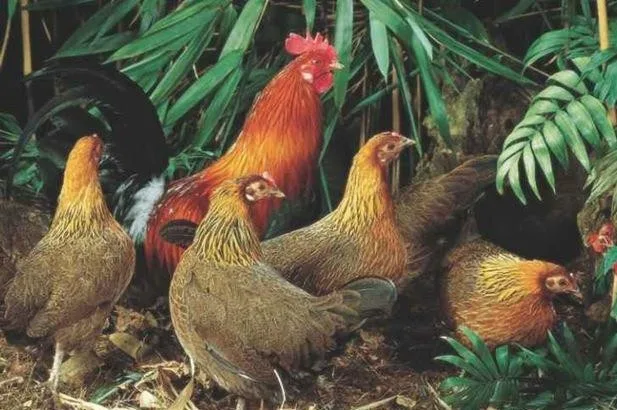
Crossbreeding allows for the production of industrial poultry that outperforms parental forms in terms of productivity and viability. This result is achieved through the heterosis effect. For crossbreeding, breeds and specialized lines are selected that have been tested for good compatibility with each other. It is important to consider that hybrid poultry shows maximum productivity precisely in those conditions and regions where it was bred.
Do not mate hybrids with each other: in the second and subsequent generations, the heterosis effect fades, leading to a sharp decline in the productivity of the commercial flock.
To manifest the maximum productivity of heterotic poultry, the conditions of its feeding and management must fully correspond to the biological characteristics of the type being created.
- Commercial production — 1st generation crossbreeds
- Reproductive crossbreeding — 2nd–3rd generation crossbreeds
- Absorptive crossbreeding — 4th–5th generation crossbreeds
Breeding methods: creation and improvement of breeds
Reproductive (stud) crossbreeding is used to create new meat-and-egg breeds. This method was used, for example, to develop North Caucasian turkeys by combining the high fertility and viability of local birds with the excellent meat qualities of Broad Breasted Bronze males. In the process of work, it is usually limited to obtaining 2nd–3rd generation crossbreeds. Subsequently, the best birds are bred "inter se," maintaining strict selection for productivity, conformation, and breeding qualities.
Introductory crossbreeding, or "infusion of blood," is used for the targeted improvement of an existing breed. It allows for the preservation of all valuable properties of the population while adding only one desirable trait. For this, the blood of the improving breed is infused once into the breed being improved, and then one returns to breeding "inter se."
Absorptive (transformative) crossbreeding is aimed at the fundamental improvement of low-productivity stock. 4th–5th generation crossbreeds are already almost indistinguishable in their economic qualities from the improving breed. In industrial poultry farming, this method is almost never used, as it is simpler and faster to replace the flock entirely with purebred or hybrid young stock. However, it is used to improve local poultry while maintaining their adaptability, ceasing crossbreeding as early as the 2nd–3rd generation.
Industrial methods: commercial crossbreeding and hybridization
Commercial crossbreeding serves for the direct production of commercial meat or eggs. A widespread example is the mating of Cornish roosters (paternal form) with White Plymouth Rock hens (maternal form). The resulting broilers grow quickly, have excellent meat condition, and high feed efficiency. For a stable result in this method, strictly selected poultry must be used.
Rotational crossbreeding is a variety of the industrial method that allows for the constant maintenance of the heterosis effect. Under this scheme, crossbred hens are alternately mated with roosters of two source breeds. The poultry farmer does not need to keep their own purebred flock — it is sufficient to regularly purchase breeding males from multipliers.
| Role in crossbreeding | Initial crossbreeding | 2nd generation | 3rd generation | 4th generation | 5th generation |
|---|---|---|---|---|---|
| Father | 100% A | 100% B | 100% A | 100% B | 100% A |
| Mother | 100% B | 50% A | 25% A | 62.5% A | 31.3% A |
Interline hybridization consists of crossbreeding compatible lines of one or several breeds. This method provides the maximum and guaranteed increase in productivity compared to ordinary interbreed crossbreeding. Birds obtained in this way are called hybrids (hybrid broilers or layers). They significantly outperform simple interbreed crossbreeds in their performance indicators.
In poultry farming, the word hybrid has a double meaning; hybrids are also referred to as birds obtained from interspecific crossbreeding. Interspecific hybrids between a pheasant and a chicken, a turkey and some others are known, but none of them have practical significance. Although it should be noted that the hybridization of domestic ducks with wild Muscovy ducks has made it possible to obtain hybrids possessing a large-mass liver, which has a market as a gourmet product.
Hybridization in poultry farming is linked to selection for heterosis, the greater or lesser manifestation of which in the progeny determines the success of the work. The prerequisite for this is the use of lines valuable for economically useful traits, which alone can produce highly productive hybrid poultry. Therefore, when starting hybridization, great attention must be paid to the choice of source breeds and lines.
It is equally important that these lines are well-matched, however, this is by no means the case in all instances. Thus, essential elements of selection for heterosis are the development of compatible lines and the testing of created lines for compatibility. The development of compatible lines is based on the analysis of the patterns of general and specific combining ability. It has been established that the combining ability in the hybridization of highly heritable traits, such as meat qualities, is higher than that of weakly heritable traits. Among these traits, the most important are egg production, fertility, and viability, which complicates the work of developing compatible egg-laying lines.
In the second stage, expanded reproduction of the best poultry is carried out based on purebred breeding and mating within a line, family, or breed. In the third stage, the reproduced poultry is used for the production of industrial hybrid poultry via group mating of males and females that have proven to be the best in terms of combining ability according to the data from previous reciprocal recurrent selection tests. The identification of new superior combinations continues, and essentially, the scheme of the first stage is repeated.
The breeding of hybrid poultry is usually carried out on a large scale, and simultaneously, several lines of different breeds are created for the purpose of crossing. The work may not end with the production of simple hybrids from crossing two lines of the same or different breeds. Two-line hybrid poultry are often involved in further crossing with another line of the same or different breeds to obtain three-line hybrid poultry. If two-line hybrids are crossed, four-line hybrid poultry is obtained.
In one of the crossing variants, roosters from inbred lines and hens from non-inbred lines are used; this method is called topcrossing. It is used to evaluate the general combining ability of inbred lines—a test topcross, in which form form Initial lines A AND “A y FA iy 98 Grandparent AA 88 RO. ChAhFA 4 $8 AA 88
Parental 4 y ov inbred y
Paternal form. — Maternal form Paternal Maternal Paternal Maternal
Initial lines 44 #8 and 27 Initial 98x98 Czech 3x E Grandparent A x y Czech r Grandparent B Ty No xo] Four-line ol8r
Fig. 40. Scheme of the relationship between individual flocks in two- and four-line crosses (according to K. V. Zlachevskaya, G. E. Penionzhkevich, and L. V. Shakhnova).
roosters of all inbred lines are mated with hens of one outbred flock (test group).
The combining ability of individual inbred lines is evaluated based on the productivity of the hybrid offspring. If the productivity of hybrids obtained from crossing one of the lines with the test group is higher than the average for all hybrid offspring, their general combining ability is assessed as positive. Such lines are used for the production of industrial hybrid poultry with a pronounced heterosis effect. However, this method requires long and expensive work in developing an inbred line.
When developing specialized lines in connection with reciprocal recurrent selection, the cyclic selection method is also used, which mainly consists of alternating roosters in established groups of hens.
Table 23. Scheme of assembling groups of hens and changing roosters in cyclic selection (according to data from the All-Union Research Institute of Breeding and Genetics of livestock animals)
Group number in the line Year of work Poultry sex -
1st Hens 1 2 3 4 5 Roosters 1 2 3 4 5
2nd Hens 1 2 3 4 5 Roosters 2 3 4 5 1
3rd Hens 1 2 3 4 5 Roosters 3 4 5 1 2
4th Hens 1 2 3 4 5 Roosters 4 5 1 2 3
5th Hens 1 2 3 4 5 Roosters 5 1 2 3 4
The application of homogeneous selection makes it possible to consolidate the selected traits in subsequent generations. Groups of line hens can be assembled according to the breeding work plan using young hens and second-year hens, but roosters are always used only when young. For cyclic selection, the poultry best in terms of productivity and breeding qualities is selected. In modifications of reciprocal recurrent selection, artificial insemination, year-round testing for combining ability, reproduction of the best combinations under cage housing of poultry, and other methods and technological processes of poultry breeding are used.
The breeding of specialized combining lines and the creation of crosses and hybrids for egg and meat production are being carried out on a large scale in our country. The population of line and hybrid laying hens exceeds 175 million, of which over 63 million head belong to high-class poultry. Due to the growth in the population of line poultry and crosses on Ptitseprom USSR farms, egg production in 1976, with year-round assembly of the layer flock, increased to 226 eggs, and egg output rose to 26 billion units.
Crosses created in our country at international competitive trials in the Czechoslovak Socialist Republic (1971–1974) were characterized by high productive qualities. For instance, the egg production of the "Start" cross was 248 eggs, average egg weight was 55 g, and feed consumption per 1 kg of egg mass was 3.1 kg. Crosses from the Belarusian Zonal Poultry Experimental Station and the Fabricius Breeding Farm had the following indicators: egg production of 237 eggs, average egg weight of 56 g, and feed consumption of 3–3.2 kg; the cross from the Ukrainian Poultry Research Institute, respectively, 225 eggs, 59 g, and 3.2 kg. Ducks of the "X" cross from the Belarusian Poultry Experimental Station weighed 3.1 kg at 53 days of age and took first place in the control trial.
S.I. Smetnev 129 In many cases, the productivity of crosses on the farms where they were developed and are multiplied is higher than in competitive trials, which is possibly linked, to one degree or another, to the degree of genotype-environment interaction.
Breeding centers and scientific institutions have developed and are continuously improving many crosses, including egg-laying types: "Yantar", "Volzhsky-3", "Kristall-5", "Belarus-9"; and broiler crosses: "Baltika", "Broiler-6", "Neva-2", etc. The use of the best crosses under the conditions of progressive industrial poultry farming technology makes it possible to obtain 250—270 eggs or more per layer and broiler chickens weighing 1.6—1.8 kg at 7 weeks of age with low feed consumption.
Work on improving lines and developing crosses continues, and farms are receiving increasingly productive hybrid poultry — the primary means of producing eggs and poultry meat on an industrial basis. The production of eggs and poultry meat in countries with developed poultry farming is based on the use of hybrid poultry. Practically all broilers on the market are hybrid, and laying hens in industrial farms are obtained as a result of crossing Leghorn breed lines.
At the same time, in industrial foreign and domestic poultry farming, hybrid layers obtained from crossing compatible lines of dual-purpose breeds, selected for egg productivity, with lines of egg-type chicken breeds are increasingly being used for egg production. Birds of these breeds and lines, as a rule, possess a robust constitution, are more resistant to stress and diseases, and when cross-bred or line-crossed with Leghorn lines, they produce a hybrid with a pronounced heterosis effect for a number of traits. The eggs of such birds are large, of good quality, and often have a slightly tinted shell.
Read next
Poultry For agronomists
Technologies and selection methods in modern meat poultry farming
Poultry For agronomists
Methodology for evaluating breeding poultry and fundamentals of selection planning
Poultry For agronomists