
Methodology for evaluating breeding poultry and fundamentals of selection planning
18 min read
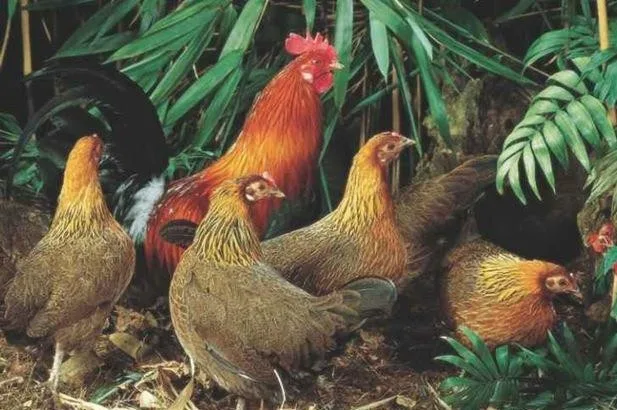
Effective breeding in poultry farming requires processing vast amounts of information on thousands of poultry and tens of thousands of their descendants. In modern breeding farms, electronic computers are used for this purpose. Computer processing allows for the prompt acquisition of reliable information on the productivity of lines, families, and the quality of individual sires. Based on these data, a breeder can accurately assess current results and plan work for the next season.
- Influence of the male in the 1st generation — 10–15 times higher than the female's
- Assessment of early egg production — during the first 3–4 months
- Formation of breeding pens — 2–3 times a year
- Deviation in one additional trait — no more than 2 classes
Rules for evaluation (bonitirovka) and the structure of the breeding plan
Evaluation (bonitirovka) of poultry is carried out according to specialized scales developed for specific species and directions of productivity. The final class is determined by a complex of indicators, but the main breeding traits are of decisive importance. When evaluating by additional traits, only minor deviations from the basic standards are allowed.
- Deviation in additional traits is permitted by no more than one class for each of the two traits or by two classes for one of them.
- Only line-bred poultry from the breeding core with fully known origins, both from the father and the mother, can be classified as "elite."
It is recommended to form breeding pens 2–3 times a year. This ensures maximum occupancy of poultry houses and increases the overall intensity of breeding work on the farm.
The basis of a breeding farm's work is a long-term breeding plan, which is integrated with regional poultry development programs. The document defines goals for productivity growth, increasing the number of livestock, and the production of eggs or meat. In multiplier farms, the plan regulates the reproduction of compatible lines to obtain hatching eggs and hybrid young stock.
- characteristics of the work direction, history of the flock, and its current state;
- breeding goals, methods of selection and pairing, structure and characteristics of the created lines;
- methods of targeted rearing of breeding young stock;
- system for testing breeding pens and sires by progeny quality;
- plan for housing and movement of adult livestock and young stock;
- organization of the farm territory, veterinary-preventive measures, and construction of facilities.
Methods for assessing sires and line breeding
Purebred breeding serves as the basis for creating specialized lines and their subsequent crossing. The main task here is to fix the individual valuable qualities of an outstanding sire in the characteristics of an entire group of poultry. Since a male leaves far more descendants than a female, his influence on the genetics of the flock is decisive.
| Poultry generation | Ratio of sire influence over maternal influence, times |
|---|---|
| I generation | 10—15 |
The use of artificial insemination maximizes the sire's role in line breeding. Reproducing his qualities through brothers and sons allows valuable traits to be passed on to offspring numbering in the thousands. To assess the male's ability to consistently pass on his traits (prepotency), the correlation coefficient in mother-daughter pairs is calculated.
Pay attention to the interpretation of results: a low mother-daughter correlation coefficient indicates high prepotency of the father for a given trait. A high correlation indicates insufficient prepotency of the male.
Based on the assessment results, sires are ranked by breeding value, and improvers are identified for specific groups of poultry. Additionally, the productivity and viability of the male's sisters, as well as his half-sibs in the pens, are assessed. To accelerate breeding, a preliminary assessment based on the correlation of early traits with indicators for the entire productive period is applied.
- egg production for the first 3–4 months of laying with annual egg production;
- weight of young stock at an early age with the slaughter weight of the poultry.
The importance of the sire in breeding work with poultry is also explained by the fact that such important economically useful qualities as egg production, sexual maturity, fertilizing capacity, breast muscle development, and several others are inherited primarily through the male line.
However, it should be kept in mind that a number of traits, including egg production and egg weight, can only be directly accounted for in females. In addition, hens and females of other poultry species, more so than males, pass on economically significant traits to their offspring:
- egg weight;
- viability, expressed in the hatchability and survival of young stock;
- growth rate at an early age.
It should also be remembered that the initial stages of embryo ontogenesis take place in the maternal organism. Therefore, to obtain high-quality hatching eggs, the diets of the parent flock are enriched with vitamins, macro- and microelements, as well as biologically active and other substances.
In intensive poultry farming, this is especially necessary due to high egg production and poultry reproduction throughout all seasons of the year, which makes it possible to obtain several dozen descendants from a single breeding hen. Therefore, in breeding work, lines are usually associated with a number of families. The formation of families facilitates and expands breeding work with a line.
Due to the specialization of poultry farms and inter-farm cooperation in the production of eggs and poultry meat, specialized meat or egg lines are necessary. In turkey, duck, and goose farming, all lines are meat-producing, which is explained by the biological characteristics and the direction of productivity of these poultry species. When breeding chickens, meat lines are created for broiler production, and egg lines are created for laying hens.
When developing meat lines of chickens, meat breeds are used; the most widespread among them are Cornish and Plymouth Rock. Egg lines are established and developed mainly within the White Leghorn breed. Dual-purpose breeds, as their name implies, possess dual productivity and, through selection methods, can be brought closer to meat or egg breeds. This especially applies to lines of dual-purpose chicken breeds. For example, long-term and consistent selection has essentially turned the dual-purpose White Plymouth Rock breed into a meat breed of chickens. At the same time, egg lines have been developed within dual-purpose chickens.
The realization of genetic reserves inherent in combining lines is achieved through their crossing. To achieve the greatest effect in this and due to the preferential transmission of various traits through the male or female, paternal and maternal lines are created. For example, in broiler production:
- paternal lines are formed within the Cornish breed so that the offspring have more pronounced valuable traits, such as rapid feathering and chest width, which results in a higher yield of white meat;
- maternal lines are created in the White Plymouth Rock breed, which has more pronounced inherited traits of egg productivity, growth rate of young birds, and viability.
Combining the hereditary properties of paternal and maternal lines makes it possible to obtain broilers of the desired quality. Also of no small importance is the higher egg production and hatchability of eggs from hens of this breed, which allows obtaining, on average, more eggs from each of them, and therefore more broilers.
Maternal and paternal egg lines are selected taking into account the inheritance of economically useful traits related to sex and their combination in crosses to obtain laying hens. In practice, the work of breeding and improving lines is complicated by the fact that the desired type of poultry is characterized by a number of traits, for example, for egg lines of chickens:
- high egg production;
- good egg mass and shape;
- shell strength;
- absence of blood spots in eggs;
- low live weight of laying hens;
- high egg fertilization and hatchability;
- viability of the poultry, as well as other selected qualities.
The intensity, or percentage of selection, is also significant. The percentage of poultry selection is the number of selected birds left for further breeding, expressed as a percentage of the initial flock. For example, if a breeding flock consists of 1,000 hens and 100 roosters, then the percentage and results of selection will be higher when using the best 300 hens and 30 roosters in breeding work than 600 hens and 60 roosters. Increasing the intensity of selection depends both on the breeding resources of the farm and on the achieved level of improvement of each trait. Usually, at the beginning of the work, selection is very strict, and then it is limited.
The attention of breeders is drawn to the creation of lines of poultry resistant to diseases. Selection for resistance to certain types of leukemia has shown its effectiveness, and among the existing lines, more or less resistant ones to the disease were identified.
A factory line has a genealogical structure that reflects its development. Developed lines must exceed the flock from which they originate by 10—15% or more in terms of a complex of traits or any one of them, for example, egg production, egg mass, etc. As a result of planned combination of lines possessing high individual selected traits, poultry with the desired complex of productive qualities is obtained. For example, in an experimental farm at the "Krasny" state farm, egg lines of chickens were developed. In lines selected for egg production, over five years of work, annual productivity increased from 168 to 213 eggs; in lines selected for egg mass, this indicator increased from 58.2 to 62.2 g.
Creating highly productive hybrid poultry and synthetic lines requires a precise balance between the intensity of selection and the preservation of a valuable gene pool. In practice, the breeder must combine in a single line a set of traits that often have no direct link between them. To achieve this, specialized methods of selection and breeding are applied.
Selection methods: independent culling levels and selection indices
When developing specialized lines, minimum threshold values are often set for each selection trait. In this case, any poultry that does not meet the limit for at least one indicator is culled. This happens even if it significantly exceeds target standards in other qualities.
| Poultry group | Annual egg production, pcs. | Average egg weight, g | Breeder's decision |
|---|---|---|---|
| Line target benchmark | 250 | 59 | Selection for breeding group |
| Substandard due to egg weight | 260 | 55 | Culling |
| Substandard due to egg production | 195 | 62 | Culling |
The independent culling levels method simplifies the work, but leads to the loss of valuable breeding material. Individuals outstanding in productivity may be culled due to a minor deviation in an accompanying trait.
To avoid such losses, the selection index method is used. Each trait is assigned a weight coefficient, taking into account its economic importance, heritability, and correlations. The final index mathematically reflects the actual breeding value of the poultry under specific farm conditions.
When selecting egg-type chickens, the index usually includes the most important productivity and viability indicators. This helps balance selection for multi-directional traits. The structure of the index includes the following parameters:
- egg production;
- egg weight;
- shell quality;
- poultry viability under industrial use conditions;
- feed conversion efficiency.
The simplest evaluation method is scoring; however, its accuracy is not always sufficient for industrial poultry farming. Currently, modern mathematical methods are being introduced to construct indices. To monitor selection results, the selection differential (the difference between the average productivity of the selected group and the entire flock) is calculated, and genetic progress is evaluated by comparing it with an unselected control population.
Line breeding and inbreeding management
Line breeding allows for the creation of heterogeneous groups within a breed, differing in type and productivity, which stimulates overall breed progress. The viability of new lines depends directly on keeping conditions: feeding must strictly comply with their physiological characteristics. When moving poultry to farms with different climatic conditions, acclimatization occurs, which temporarily reduces productivity, but subsequent adaptation allows for the stabilization of high indicators in new zonal conditions.
- Target egg production — 250 eggs/year
- Target egg weight — 59 g
- Inbreeding coefficient in lines — 15–20%
- Genetic similarity coefficient — more than 50%
Inbreeding is used to fix the valuable qualities of outstanding progenitors and for the genetic differentiation of the initial material. At the initial stages, close-relative mating helps to quickly identify valuable genotypes.
Close inbreeding is applied with great caution and only for a short term. During this process, strict selection of viable offspring, similar in type to the parental forms, is conducted.
Subsequently, to fix traits, one transitions to moderate inbreeding (e.g., I-III, II-II, III-IV types). Under such a scheme, the inbreeding coefficient in lines is kept within 15–20%, while the coefficient of genetic similarity with an outstanding ancestor can exceed 50%. This allows for the preservation of the line's valuable properties without the risk of inbreeding depression.
For establishing new lines, populations of highly productive poultry from domestic or foreign breeding with a robust constitution are used. Work is carried out exclusively in closed flocks guaranteed to be free from infectious diseases. This provides a reliable foundation for further breeding work.
Evaluation of line combining ability and crossbreeding schemes
To create highly productive crosses, breeding poultry is selected based on a complex of traits with mandatory health verification. The work is based on individual evaluation of sires when mating the best males with females assigned to them. This allows for the identification of the most successful combinations and the implementation of targeted offspring selection for heritable traits.
The process of establishing new lines and keeping breeding records includes sequential stages of work in the selection poultry house:
- Selection of poultry based on conformation, productivity indicators, and general state of health.
- Formation of individual pens by assigning selected females to the best males.
- Separate housing of groups in the selection unit on the floor or in cages, or the use of artificial insemination.
- Obtaining offspring with accurate pedigree records to conduct targeted selection for valuable traits.
The best sires and their families are kept for further reproduction, taking into account the specialization of the lines for specific traits. At the establishment stage, the general combining ability of the lines is necessarily evaluated using diallel and polyallel crosses. To obtain reliable results, there must be at least 75 hens in each test group.
At the initial stages of breeding work, a classic crossbreeding scheme for lines is used:
| Crossing | Line A | Line B | Line C | Line D |
|---|---|---|---|---|
| Line A | AA | AB | CA | — |
| Line B | BA | BB | — | — |
| Line C | — | — | CC | CD |
| Line D | DA | DB | CD | DD |
At the start of selection work, strict culling with a high selection rate is applied. As target traits are consolidated in lines and families, this rate is reduced, leaving more poultry for breeding.
Consolidation methods and creating new poultry lines
To fix valuable economic traits in lines, inbreeding is used. In breeding practice, a telling example is the development of line B, originating from the progenitor rooster No. 7235. It was evaluated for breeding qualities and conformation, while the line was continued through its son No. 9589, grandsons No. SO447 and No. SO470, as well as hen No. 24603 with high egg production.
In the second generation, to fix the traits, close inbreeding of the "brother × sister" type was applied (rooster No. SO470 × hen No. 24003). The resulting offspring were mated according to the 1-1 and 1-IV systems. In the fifth generation, roosters were obtained that surpassed their parents in productive qualities with a moderate inbreeding coefficient. Subsequently, they were used as progenitors of new commercial lines.
- Egg production of sisters in 10 months — 58–60 eggs
- Egg production of father's sisters — 55–58 eggs
- Egg production of 106 sisters in 10 months — 73–75 eggs
- Annual egg production of 106 sisters — 232 eggs
- Egg weight — 56–58 g
- Live weight of hens — 2.2–2.4 kg
To avoid inbreeding depression during strict selection for a complex of traits, timely introduce outstanding individuals from unrelated lines into the mating scheme.
To expand genetic diversity and overcome the limited gene pool of commercial poultry, the polycross method is applied. In breeding centers, several genetically different lines from different sources are crossed. After a short period of closed breeding, the resulting polycross serves as initial material for establishing new lines, followed by testing for combining ability.
The development of specialized egg-laying lines begins with mass selection for a complex of traits: egg production, egg weight, viability, constitutional strength, and the absence of brooding instinct. For this purpose, young poultry at the age of 5 months, showing the best external traits, are selected from the general flock and transferred to individual cages or sections with control nests.
Based on data for the first 39 weeks of life, a preliminary assessment of the poultry's productive qualities is conducted. Hens whose productivity exceeds the average productivity of the entire group by at least 25% are kept in the breeding group. Individual productivity of the best selected poultry is recorded throughout the year. Subsequently, the focus shifts to evaluating the selected poultry for breeding qualities by placing each group of females with one male in a separate compartment of the breeding house or in a group cage intended for mating; during artificial insemination, the hens and the rooster assigned to them are kept separately. Roosters are selected when young, with a strong constitution and high sexual activity, descending from mothers with the best productivity. A mandatory condition for setting up breeding nests in this case is the uniformity of hens in terms of productivity.
At the next stage of establishing lines, selection and mating of poultry evaluated by offspring quality are applied, accounting for their origin from both mother and father. When assessing breeding qualities, the following indicators are considered: sexual maturity, egg production, intensity and duration of laying, cycle length, egg quality (weight, shape, presence of blood and meat spots, shell quality, etc.), egg fertility, chick hatchability, and the survival rate of young and adult poultry. In terms of constitution and conformation, the poultry must meet the requirements of the breed.
When selecting egg-laying lines, evaluation and selection are carried out based on a complex of traits or the main ones among them, for example, egg production or egg weight, shell quality, etc., in order to combine desirable properties when crossbreeding lines. It is better to evaluate
Progenitor of line 87235-35...
...80 80 80 80 8873 $
Fig. 38. Genealogical...
...2.0949 weight: Rooster | 3-egg production of sisters...; 4 offspring; | 5 EGG PRODUCTION...; 5-weight of daughters' eggs | р |
2 live weight; 3-EGG PRODUCTION...; 4-egg weight
X [520773-25 208;58 Coefficient
...the entire offspring without selection and culling, but at least 6—10 daughters from each hen and 100 daughters from a rooster must be evaluated. The best breeding hens and roosters are those whose offspring significantly exceed the peers in the flock and the offspring of poultry from other families used in nest matings in terms of the complex of productive properties. Poultry tested for a complex of productive qualities, with well-expressed individual traits (egg production, egg weight, etc.) in their offspring, are used to establish new lines. Subsequently, the poultry is evaluated in all generations.
Read next
Poultry For agronomists
Technology of hatching egg production and management systems for breeding poultry
Poultry For agronomists
Organization of breeding work and principles of selection in modern poultry farming
Poultry For agronomists