
Breeding methods for improving the productivity of poultry lines
5 min read
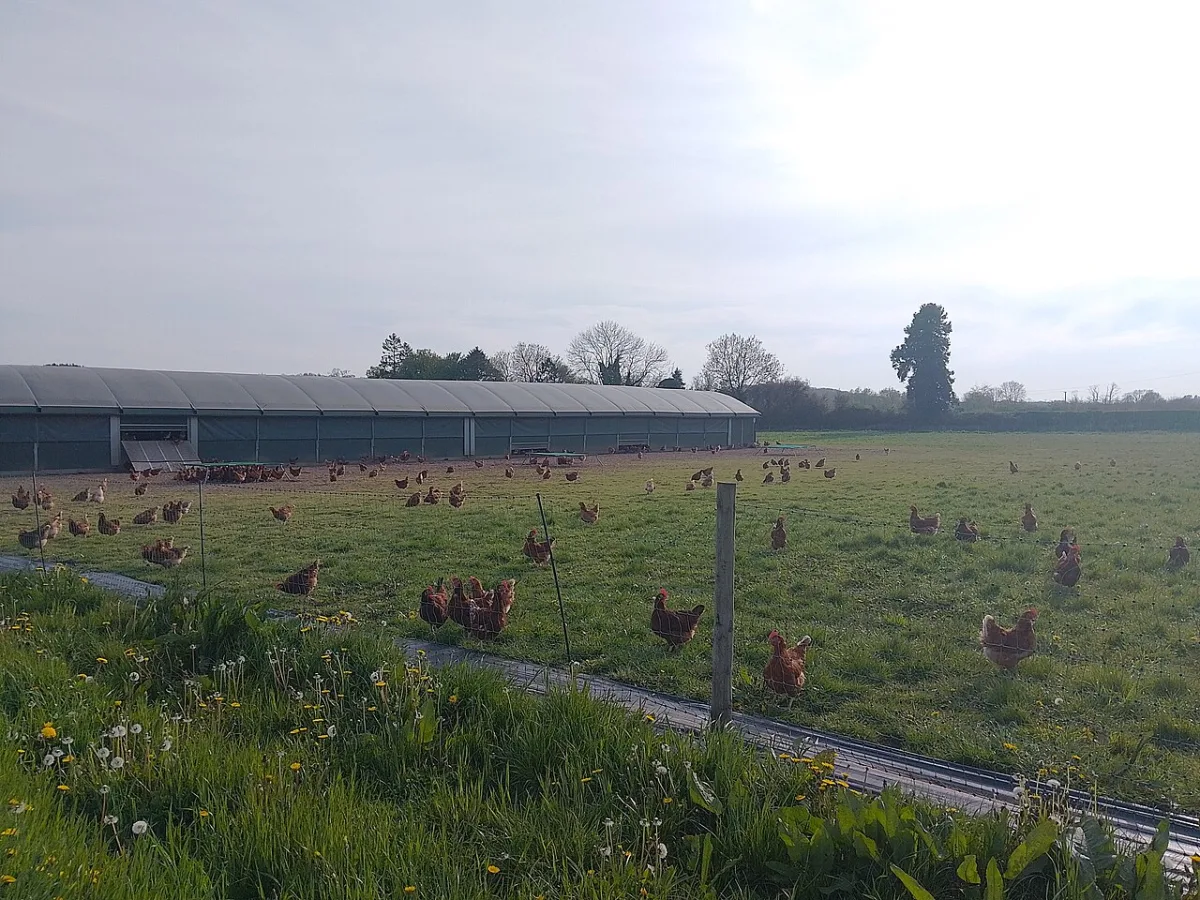
If it is possible to acquire poultry of known valuable lines for the farm, breeding work begins by determining its productivity and breeding qualities under farm conditions, and then continues in the direction of subsequent reproduction and improvement of the best birds of these lines. The main goal of line improvement is to consolidate and further increase the productive and breeding qualities of the poultry. In this regard, the best roosters and hens are considered those whose offspring possess the highest productive traits; they are selected for further work with the lines.
To identify the best combinations, roosters and hens from several pens of the same line are mated. To obtain young birds that are most uniform in age, a rotational change of roosters in the pens is used during artificial insemination and natural mating. For this, in accordance with the mating plan, hens and roosters are selected for the pens, and from the eighth day after the pens are set up, egg collection begins. After a sufficient number of eggs is obtained from the hens, the rooster is removed from the pen. It is believed that hatching eggs collected for the next 5—6 days were obtained using the first rooster. On the fifth or sixth day, the hens are artificially inseminated with the sperm of the second rooster, which is then placed in the pen. Eggs from these hens are not incubated during the following 5—6 days; after this period, the offspring hatched from these eggs are considered to belong to the second rooster. Then the process is repeated following the same scheme. To increase the population of poultry being evaluated for breeding qualities, pedigree mating is conducted at least three times a year.
Subsequently, the line is improved by evaluating the results of the mating. Inbreeding is permitted, mainly moderate, with careful monitoring of the quality of the offspring. Poultry with high productivity, strong constitution, and good viability are kept for use.
As the line develops, they move on to group mating of brother-roosters with highly productive layers, mainly of the same line. From each rooster, one can obtain about 400 pullets and as many breeding roosters in two years, which, upon further mating, will produce several tens of thousands of heads of breeding poultry of this line. Consequently, the initial investment of funds and time in producing outstanding sires — the founders of the line — is quickly recouped by the growth in the population of highly productive poultry.
Development and improvement of meat lines of chickens. Meat lines are created by selecting and pairing poultry based on qualities related to meat productivity and obtaining the highest possible number of chicks from each hen. The most effective breed and line combinations are used for developing paternal and maternal forms, their further improvement, and reproduction. Paternal lines of chickens are selected for meat conformation, especially for the development of the breast muscle, growth rate, and speed of feathering in young birds. Maternal lines of chickens are selected for egg production, hatchability of eggs, viability, and the meat quality of the young birds.
When developing lines, the heritability of individual traits and the degree of their correlation are taken into account. For improving meat qualities, the positive correlation between the live weight of the mothers and the weight of the eggs they lay, as well as the weight of the young birds; between the speed of feathering at 10 days of age and the live weight at 7 weeks of age; and between the breast angle of the chicks and the meat qualities of the poultry is of great importance.
At the first stage of work, hens are selected based on traits of superior meat precocity, with high live weight and good egg production, egg hatchability, and viability of adult birds and young birds. For mating, roosters are selected that were obtained from hens distinguished by high egg production, fast growth and feathering, with good traits of meat productivity and a strong constitution. In one and the same pen, hens are mated sequentially with different roosters; in addition, artificial insemination is used. Although the indicators vary slightly by season, the evaluation of the roosters remains equally reliable. This allows for an increase in the number of sire roosters evaluated for breeding qualities.
In the second stage of work, selection and pairing of poultry evaluated by the quality of their offspring are applied, and pens (one rooster and several hens) are formed. At the same time, it is desirable to start 3—4 lines of paternal and maternal forms on each farm. In the third and fourth stages, selection and pairing continue while increasing the level of the traits being selected, with a possible shift toward the specialization of the created lines by growth rate and live weight of young birds or viability, egg production of hens, etc. Practice has shown that the higher the percentage of selection, the faster the improvement of the desired line properties occurs. However, excessively high culling of poultry slows down population growth. Usually, in the [] generation, more than half of all families are culled, and subsequently — only 25—30%. These indicators change depending on the results achieved and the goals of selection.
The assessment of meat-type poultry lines for compatibility begins from the [generation. Lines characterized by high compatibility in offspring for desirable traits and heterosis effect are selected for breeding. Approved lines are propagated using group mating of roosters with half-sister hens of the same line. Crossbreeding of lines specialized for different traits, the combination of which is necessary to obtain new synthetic lines, is carried out.
Standard methodologies for developing egg-type and meat-type poultry lines serve only as a basic guideline for the breeder. In real practice, poultry farmers use flexible, adapted schemes, combining domestic and foreign experience. The success of breeding work depends on how accurately specialists consider the laws of heritability and variability of traits in a specific herd. Scientifically grounded selection of parental pairs allows for the purposeful improvement of the productive qualities of poultry in each generation.
Any breeding program requires adaptation. Template-based transfer of external schemes without considering the genetic potential of a specific herd will not yield the expected result.
Specifics of goose, duck, and turkey breeding
Line breeding of turkeys, ducks, and geese has much in common with breeding work on chickens. The similarity is most noticeable when creating meat-type lines, where target productivity indicators largely coincide. However, one cannot copy chicken methodologies exactly due to biological differences between species. When developing breeding programs for waterfowl and turkeys, it is necessary to adjust the selection scheme taking into account the reproductive and behavioral characteristics of each species.
Read next
Poultry For agronomists
Inheritance and variability of economically useful traits in poultry
Poultry For agronomists
Technology of hatching egg production and management systems for breeding poultry
Poultry For agronomists